
Last updated November 2, 2026
 Wrought iron
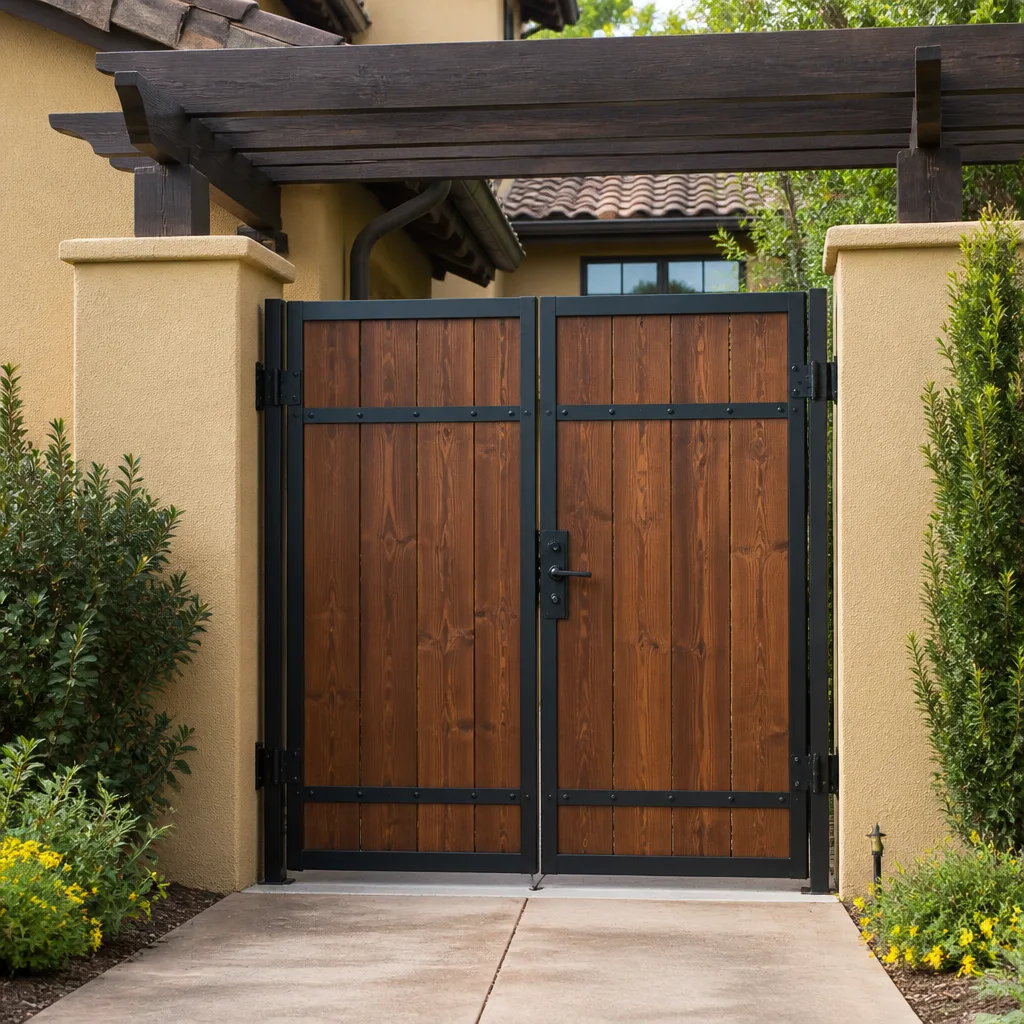 Wood & steel frame
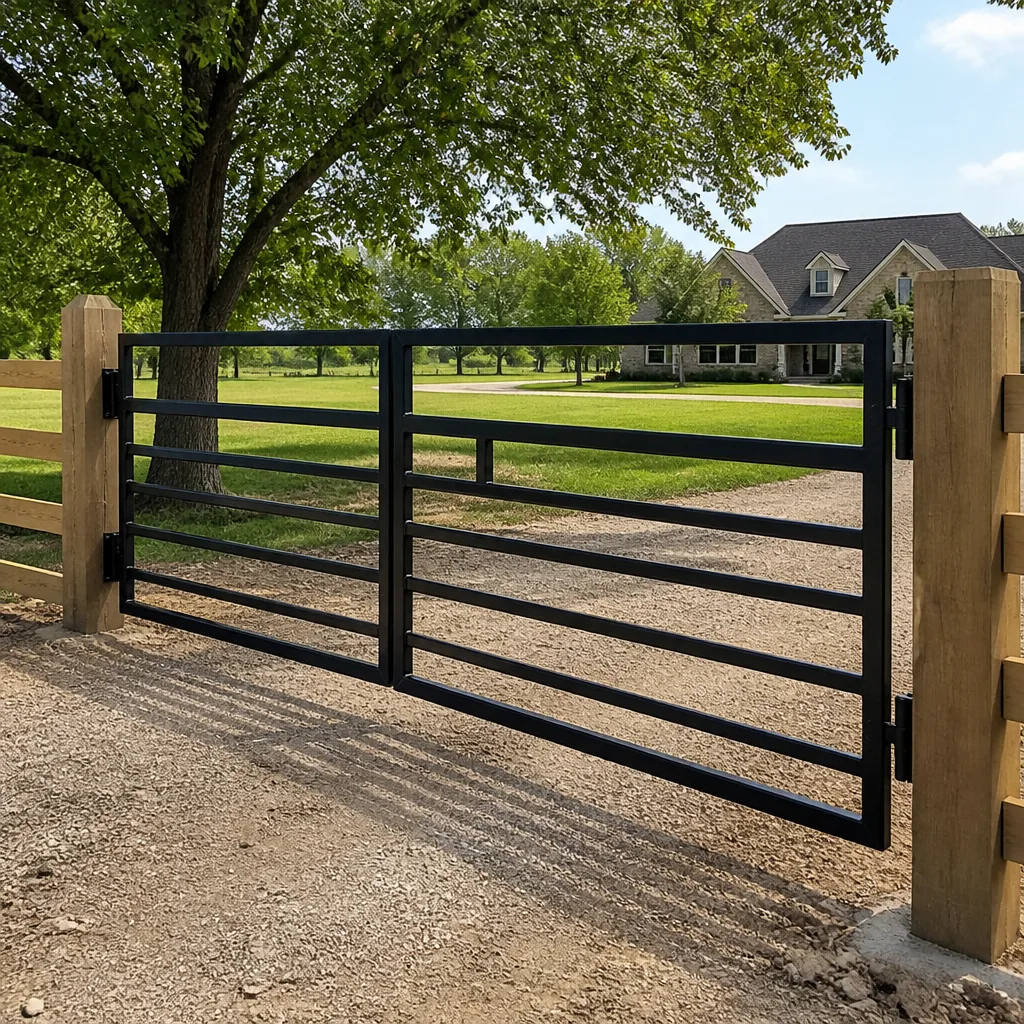 Farm & ranch
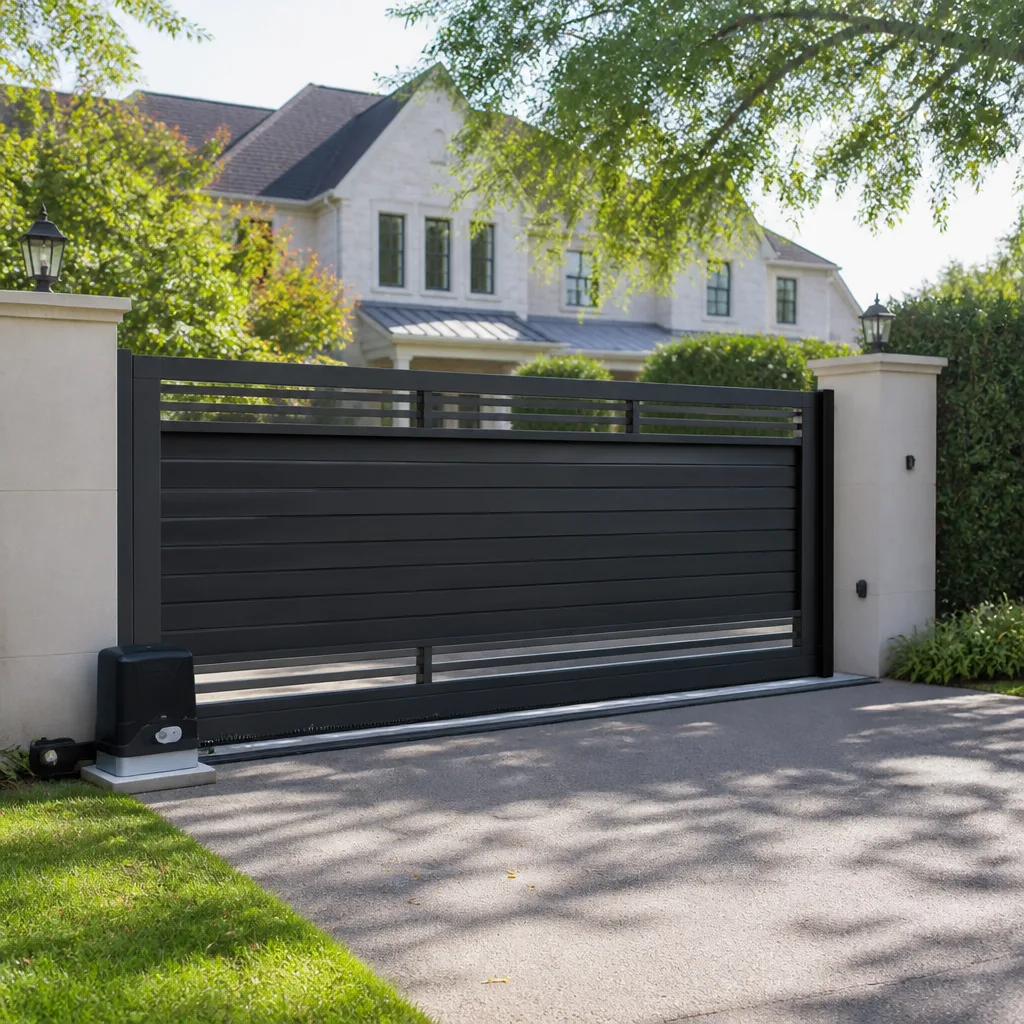 Sliding driveway gates
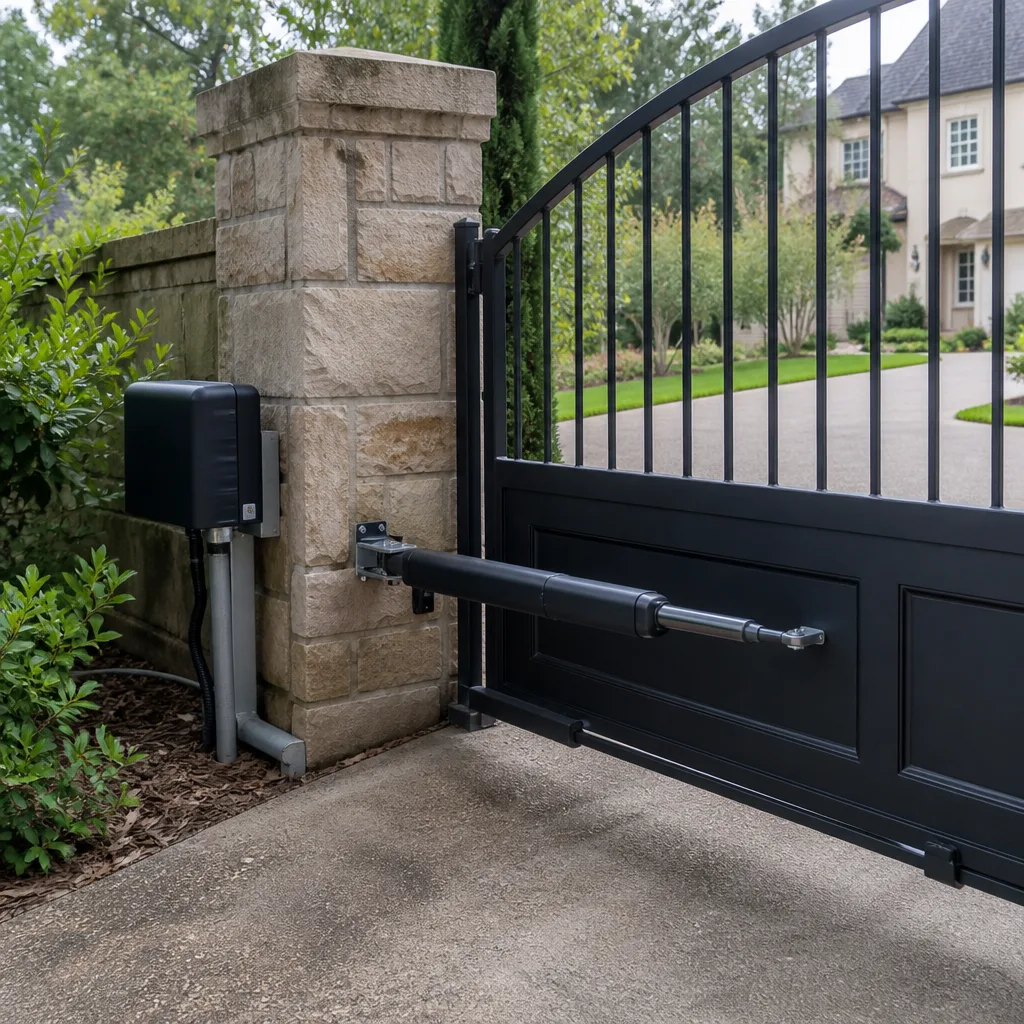 LiftMaster operators
Free on-site gate assessment - hinges, posts, and your LiftMaster or Nice gate operator checked before anything is quoted
The assessment is free and the quote is the invoice.
Get your free estimateSeasonal Gate Repair Care for Rialto: Year-Round Homeowner’s Guide
Rialto’s “mild climate” reputation is accurate for humans and completely wrong for gate hardware. The combination of 100°F+ summer heat and 20 – 40°F winter night drops creates a thermal cycling stress that cracks welds and fatigues hinges faster than most rainy climates ever would. Homeowners who treat gate maintenance as a once-a-year visual check end up replacing components that should have lasted decades. This guide breaks down what actually happens to your gate through Rialto’s three real seasons: the UV and heat stretch, the Santa Ana wind months, and the brief winter wet period. You’ll learn what to inspect, when to inspect it, and which tasks genuinely prevent failures versus which ones are busywork.
Quick Answer
Seasonal gate care in Rialto means adjusting sliding gate wheel gaps before summer heat arrives, checking latch security and opener force settings before Santa Ana winds, weatherproofing electrical components before winter rains, and scheduling a full drive system inspection in October before cold-night thermal contraction starts stressing welds and hinges. Most gate failures in Rialto are preventable with about two hours of seasonal attention spread across the year. The single highest-value task is an annual October inspection of the entire drive system, including the motor, control board, sensors, and track alignment.
Styles & brands we work with
- Wrought iron
- Wood & steel frame
- Farm & ranch
- Sliding driveway gates
- LiftMaster operators
Table of Contents
- Summer Prep: Thermal Expansion and Sliding Gate Tracks
- Santa Ana Wind Season Protocol
- Winter and Rain Prep: The Three Vulnerable Electrical Components
- Spring Post-Rain Inspection: Catching Footing Infiltration Early
- The October Drive System Inspection: Rialto’s Highest-Value Annual Task
- Hinge and Weld Care Through Thermal Cycling
- Common Mistakes to Avoid
- When to Call a Professional
Summer Prep: Thermal Expansion and Sliding Gate Tracks
Sliding gates in Rialto face a specific enemy during summer: thermal expansion of steel and aluminum track components. When daytime temperatures climb past 100°F, the metal in your gate frame and track expands measurably. A 20-foot steel gate can grow by roughly a quarter inch under full summer sun. That doesn’t sound like much until the gate wheel gaps were already tight, and suddenly the gate binds mid-travel, the motor strains, and the drive gear wears prematurely.
The right time to adjust wheel gaps is before July, not after the gate starts binding. Here’s the sequence we recommend in Rialto:
- Measure the gap between each gate wheel and the track rail on a mild morning, before direct sun hits the metal.
- Check the manufacturer’s specification for your gate model. Most residential sliding gates need between 1/8 and 1/4 inch of clearance per wheel.
- If the gap is tighter than spec, loosen the wheel bracket bolts and reset the position. Do this on the shaded side of the gate if possible, when the metal is coolest.
- Test the gate through a full open-close cycle at 3 p.m. on a hot day. Listen for scraping or hesitation. If you hear either, the gap is still too tight.
- Re-torque all bracket bolts after adjustment. Thermal cycling loosens hardware over time.
UV exposure is the second summer factor. Rialto’s sun breaks down plastic wheel rollers, nylon guide blocks, and rubber weatherstripping faster than coastal climates. We’ve seen roller wheels disintegrate within three to four summers if they were cheap replacements rather than OEM parts. If your gate uses plastic wheels, inspect them for cracking or flat spots every June. Metal wheels with sealed bearings hold up far better here. The right fix is upgrading worn components during the summer prep window, not waiting for a mid-August failure that leaves the gate stuck open or closed.
For homeowners with electric gates, summer heat also stresses the motor’s duty cycle. Operators running a binding gate in 105°F heat overheat faster. If your gate motor shuts down on thermal protection, the gate itself is usually the problem, not the motor. That’s why the pre-July wheel gap adjustment is the foundation of summer preparedness. It takes thirty minutes and prevents most seasonal failures. This is precisely the kind of work our Gate Repair in Rialto service handles every June, along with track cleaning and lubrication.
Santa Ana Wind Season Protocol
Santa Ana winds hit Rialto between September and February, with the strongest gusts typically arriving October through December. These winds routinely reach 40 – 60 mph in the foothill corridors, and they attack gates in two ways: direct wind load on the gate leaf and accumulated debris that jams tracks, hinges, and sensors.
A gate that handles calm weather without complaint can fail catastrophically in a Santa Ana event because the latch is doing one job in normal conditions but a completely different job under sustained wind pressure. Wind catches a gate like a sail. Every gust hammers the latch mechanism, the hinge welds, and the opener’s internal gears. Here’s the pre-wind checklist we recommend for Rialto homeowners:
- Inspect the gate latch and receiver post for wear or looseness. The latch should seat fully without slop. A latch that only partially engages fails in wind.
- Check the opener’s force settings. Most operators have adjustable force limits. If the limit is set too high, a wind gust that pins the gate can damage the drive gear instead of triggering a safe reversal. If set too low, normal operation fails. The correct setting reverses the gate under resistance but completes a normal cycle on calm days.
- Recalibrate obstruction sensors. Wind-blown debris that lands in the gate’s path should trigger a stop or reverse. If the sensors are dirty or misaligned, the gate may crush debris or bind against a branch.
- Clear the track and the gate swing path of anything wind can move: potted plants, trash bins, lightweight furniture, and loose yard tools.
- Check that gate hinges and post brackets are tight. A single loose hinge under 50 mph gusts turns a small wobble into a bent gate frame.
For electric gate owners, the Santa Ana season is the right time to confirm that your system’s manual release functions properly. In a prolonged power outage, which Rialto experiences during major wind events when lines come down, you need a way to open or close the gate without the motor. A manual release that has never been tested since installation is often frozen from corrosion or lack of lubrication. Test it in September, before the wind season starts, so you’re not discovering a seized release at 2 a.m. with the gate stuck and the wind howling.
If you have a Viking, Linear, or DoorKing operator, the force calibration and sensor alignment procedures vary by model. Doing it wrong doesn’t just fail to protect the gate; it can damage the operator’s control board. Our Electric Gate Repair in Rialto team recalibrates these settings to brand-specific specifications, which matters more than most homeowners realize.
Winter and Rain Prep: The Three Vulnerable Electrical Components
Rialto’s rain comes in short, intense bursts, mostly between December and March. The total annual rainfall isn’t much by national standards, but for gate electronics, it’s not the total that matters. It’s the combination of water and the dust that accumulated during the dry months. Wet dust becomes a conductive slurry that shorts out connections and corrodes terminals. Three electrical components take the worst of it.
First: the control board. Most residential gate control boards sit inside a plastic or metal enclosure on the gate post or column. Those enclosures are rated for weather resistance, but the rating degrades as the seals age. A control board that has been running dry for years suddenly fails during the first real rain because moisture finds a path through a hairline crack in the enclosure or a conduit fitting that loosened over the summer. Prevention means checking the enclosure gasket integrity before the wet season, tightening conduit fittings, and confirming the drain holes at the bottom of the enclosure aren’t plugged. If the enclosure shows signs of internal condensation, that’s a red flag.
Second: the photo-eye sensors. These are the small light-beam units mounted near the ground on either side of the gate opening. Water pooling at the base of the sensor posts wicks into the wire connections and corrodes them. The gate then behaves erratically: refusing to close, reversing for no visible reason, or losing its obstruction detection entirely. Before winter rains, clear debris away from sensor bases, seal any exposed wire connections with outdoor-rated silicone, and make sure the sensor lenses are clean and properly aimed.
Third: the keypad and intercom. These get the least attention and fail the most. Keypad housings crack after enough UV exposure, and rain enters through the key seams. The result is a keypad that works intermittently or not at all, which locks you out of your own gate. Pre-wet-season service means inspecting the keypad housing for cracks, replacing the weather gasket if it’s brittle, and confirming the mounting screws are sealed. If the keypad is older than five or six years and has spent its entire life in Rialto sun, preemptive replacement is cheaper than an emergency call during a storm.
This seasonal prep work is part of what we handle in our gate repair service for homeowners across Rialto. The goal is that the first real rain arrives with the electrical system already prepared, not reacting to failures after the fact.
Spring Post-Rain Inspection: Catching Footing Infiltration Early
The damage that matters most after Rialto’s rain season isn’t visible on the surface. It’s happening underground, in the concrete footings that anchor the gate posts. When water infiltrates a post footing, it erodes the bond between the post and the concrete over time. The post begins to move. First it’s a millimeter. Then it’s a visible lean. By the time you can see the lean, the footing is already compromised and the repair involves excavation and re-setting the post.
The early signs are subtle, which is why a spring post-rain inspection catches them before they become structural problems:
- A hairline crack in the concrete around the post base that wasn’t there last year, especially if it forms a ring or arc pattern
- Rust staining at the base of a steel post, indicating water has been sitting in the joint
- A gate that scrapes or drags at one end after rain but levels out after a few dry days, suggesting the post is shifting with soil moisture changes
- Loose or cracked grout around the post if the post was set in a masonry column
- A small gap between the concrete and the post that widens after rain and closes during dry spells
Any of these signals warrants a closer look. The fix at this stage is typically filling and sealing the joint, potentially with an epoxy injection, and relocating any drainage that’s directing water toward the post. Left alone, the same signal becomes a leaning gate that binds, tears out hinges, and eventually requires a full post re-set with new concrete. Spring is the right time to do this inspection in Rialto because the ground is still damp from winter, making movement easier to detect before everything dries and hardens in summer.
For gate posts that are set in masonry columns rather than bare concrete, which is common in Rialto’s older neighborhoods, water infiltration through the masonry cap is the leading cause of post failure. Check the cap for cracks and seal any openings with a masonry-appropriate sealant. If the column has weep holes, make sure they’re clear so water has an exit path.
If your gate is electric, spring is also the time to check the low-voltage wiring where it exits the ground near the post. Saturated soil plus an unprotected wire splice is a recipe for intermittent operation all summer. We regularly find corroded wire nuts inside junction boxes during spring inspections, especially on gates that were installed by general fencing contractors who didn’t specialize in electric systems. That’s where our electric gate service comes in for Rialto homeowners dealing with intermittent electrical issues after rain.
The October Drive System Inspection: Rialto’s Highest-Value Annual Task
If you do one thing for your gate each year, do a full drive system inspection in October. Here’s why October specifically: it sits after the hottest months, when summer heat has already stressed every metal component to its maximum expansion, and before the cold-night thermal contraction season that starts in November. Rialto’s winter nights routinely drop into the 30s and low 40s, and the repeated daily swing from a 65°F afternoon to a 35°F night puts weld joints and hinge barrels through a fatigue cycle that most people associate with much colder climates.
The October inspection should cover:
- Motor and gearbox internals: listen for unusual noise, check for oil leaks at seals, and confirm the motor mounts are tight. A motor that’s slightly loose in October will be chattering loudly by February.
- Drive chain or belt tension: too loose and the gate jerks on startup. Too tight and the bearings wear out before their time. The correct tension is brand-specific and matters more than most homeowners realize. A Ghost Controls opener, for example, has a different tension procedure than a Linear model.
- Track alignment and wheel condition: this is the summer-prep task repeated, but now accounting for the contraction that will occur as temperatures drop. Gaps that were correct in July are too tight in January if you never re-check them.
- Control board and capacitor health: capacitors age with heat exposure, and Rialto summers give them a beating. A swollen or leaking capacitor is a failure waiting for the first cold night when the motor needs extra starting current.
- Sensor alignment and lens condition: clean lenses, confirm alignment, and check that the mounting brackets haven’t shifted from summer heat or early wind events.
- Lubrication of moving metal parts: hinges, wheel bearings, and the drive chain or screw receive the correct lubricant in the correct amount. Over-lubricating collects dust; under-lubricating accelerates wear.
We’ve seen this repeated in Rialto hundreds of times: a gate that ran perfectly all summer fails in November or December, and the root cause is always something that would have been caught in an October inspection. The cold-night contraction cycle is the most underappreciated gate killer in this city. Homeowners think about heat, they think about rain, but nobody thinks about what a 30-degree overnight temperature swing does to a welded steel structure that sits outside through it, night after night, all winter.
For homeowners who want this done thoroughly, our Gate Repair in Rialto service includes this full drive system inspection. We’re gate-only specialists, so the inspection isn’t a quick visual once-over tucked into a long list of other home maintenance tasks. It’s the kind of check that someone who works on gates every day, on every brand from DoorKing to Viking, can do in an hour and do right.
Hinge and Weld Care Through Thermal Cycling
Hinges and welds are the parts of a gate that feel Rialto’s thermal cycling most acutely. A steel weld isn’t a single solid piece of metal. It’s a join between two pieces that expand and contract at slightly different rates because they’re different thicknesses or different alloys. Do that tens of thousands of times and the weld develops micro-cracks at the toe, where the weld meets the base metal. Most homeowners never see this until the weld fails entirely and the gate drops.
The seasonal response is to inspect hinge welds and pivot welds twice a year: once in spring after the winter contraction season, and once in fall before the next contraction season starts. Look at the weld itself, not just the hinge. The early signs are:
- A faint rust line along the edge of the weld where the paint has cracked
- Visible hairline fractures that weren’t there at the last inspection
- Misalignment between the hinge leaf and the gate frame, even by a sixteenth of an inch
- A gate that sags slightly at the far end but rebounds when lifted by hand, indicating hinge play
For bolt-on hinges, seasonal care means checking the bolt torque. For welded hinges, the fix is re-welding and then grinding, priming, and painting the repair. The paint step matters more than people think. A bare weld in Rialto air starts rusting within days, and rust accelerates crack propagation. If you have an electric gate, hinge wear also affects motor load. A sagging gate makes the motor work harder every cycle, which shortens motor life and increases the chance of a board failure. The mechanical and electrical sides of a gate are never really separate; that’s why we approach every repair from both directions, from the motor to the hinge.
Weld failure at the hinge is also one of the most dangerous gate failures, because a gate that drops off its post can injure anyone nearby. That’s a point worth repeating: if you see weld cracks, schedule the repair. Don’t wait. A dropped gate weighs hundreds of pounds.
Common Mistakes to Avoid
- Lubricating with WD-40. WD-40 is a solvent and a temporary water displacer. It washes existing grease out of hinge barrels and wheel bearings. Use a proper lithium grease or the lubricant specified by the gate and operator manufacturer.
- Ignoring the gate until it stops working. By the time a Rialto gate fails, the root cause has usually been developing for months. The October inspection and the pre-July track adjustment catch problems when they’re still cheap to fix.
- Setting opener force limits by feel. Too much force and the gate keeps pushing against an obstruction until something breaks. Too little and it reverses every cycle. The correct setting is dictated by the operator brand and model, not by what seems right.
- Skipping the sensor recalibration after wind events. Santa Ana winds knock photo-eyes out of alignment. A gate that starts reversing for no reason after a windstorm usually has misaligned sensors, not a bad motor.
- Treating all gate brands as interchangeable. A Linear opener and a Viking opener have different force calibration procedures, different control board layouts, and different failure modes. Generic advice often does more harm than good.
- Sealing every opening on electrical boxes. Weatherproof enclosures need drain holes at the bottom. Sealing everything traps condensation inside, which is worse than the rain you were trying to keep out.
- Waiting to fix a sagging gate. A gate that’s sagging slightly is already stressing its hinges, motor, and latch. The repair cost after years of sagging is several times what a hinge adjustment would have cost when the sag first appeared.
When to Call a Professional
Some seasonal maintenance tasks are genuinely DIY-friendly: clearing debris from the track, cleaning photo-eye lenses, checking that bolts are tight. Others are not. If you see weld cracks, if your gate post is leaning, if the control board shows signs of moisture damage, or if your electric gate is reversing unpredictably, get a specialist involved. These are not problems that self-resolve, and the attempted fixes can make things worse. A gate that drops off its hinges or an electric gate that fails to reverse on obstruction is a safety hazard, not an inconvenience. Gate Repair Rialto offers free estimates in Rialto – call (866) 569-6584 to schedule a seasonal inspection or diagnose a specific issue before it turns into an emergency.
See the difference
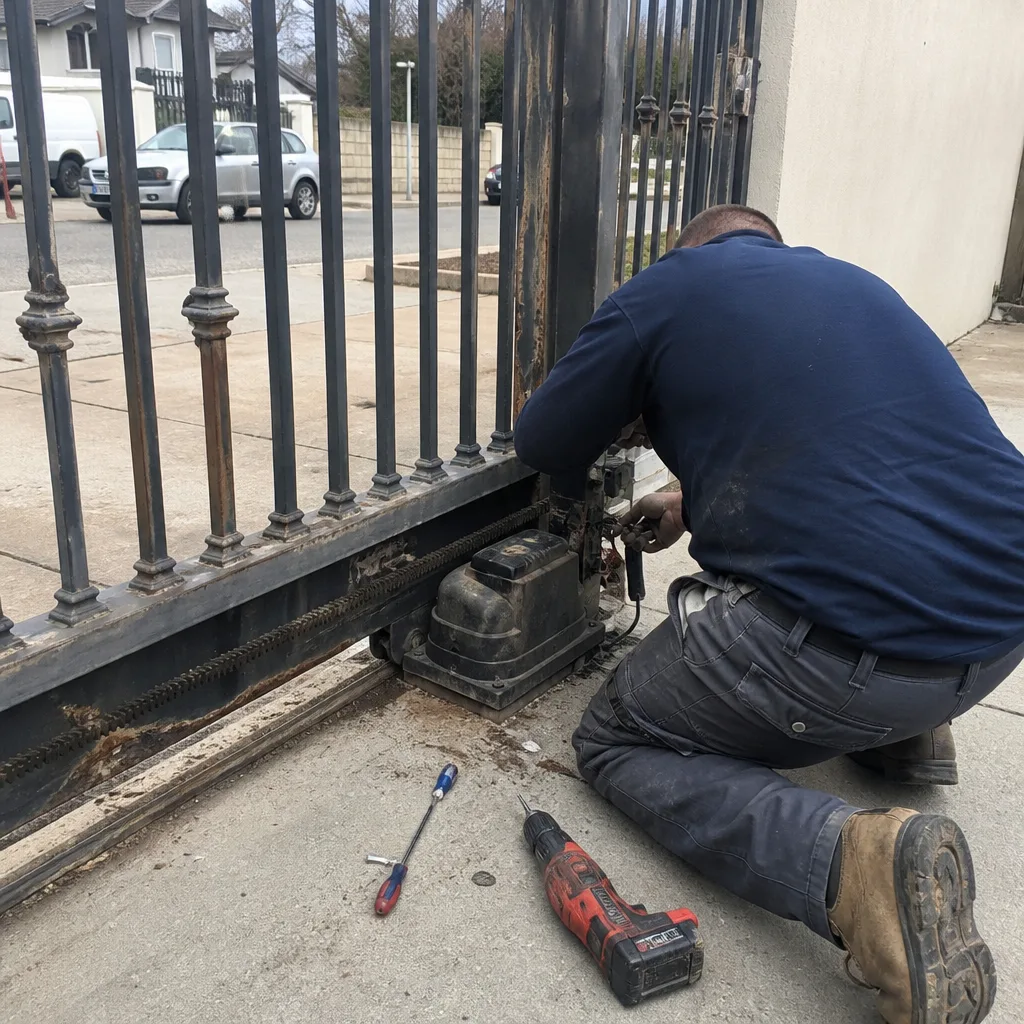 Before
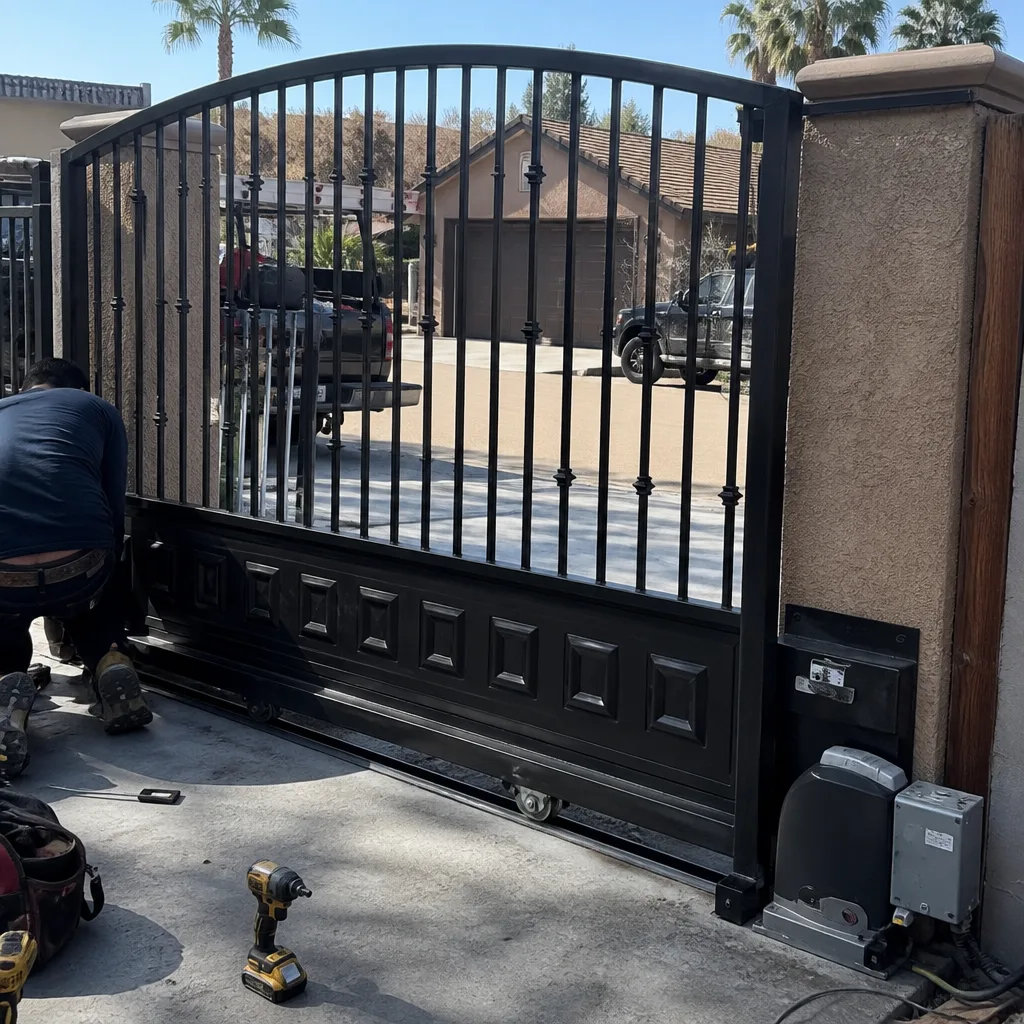 After
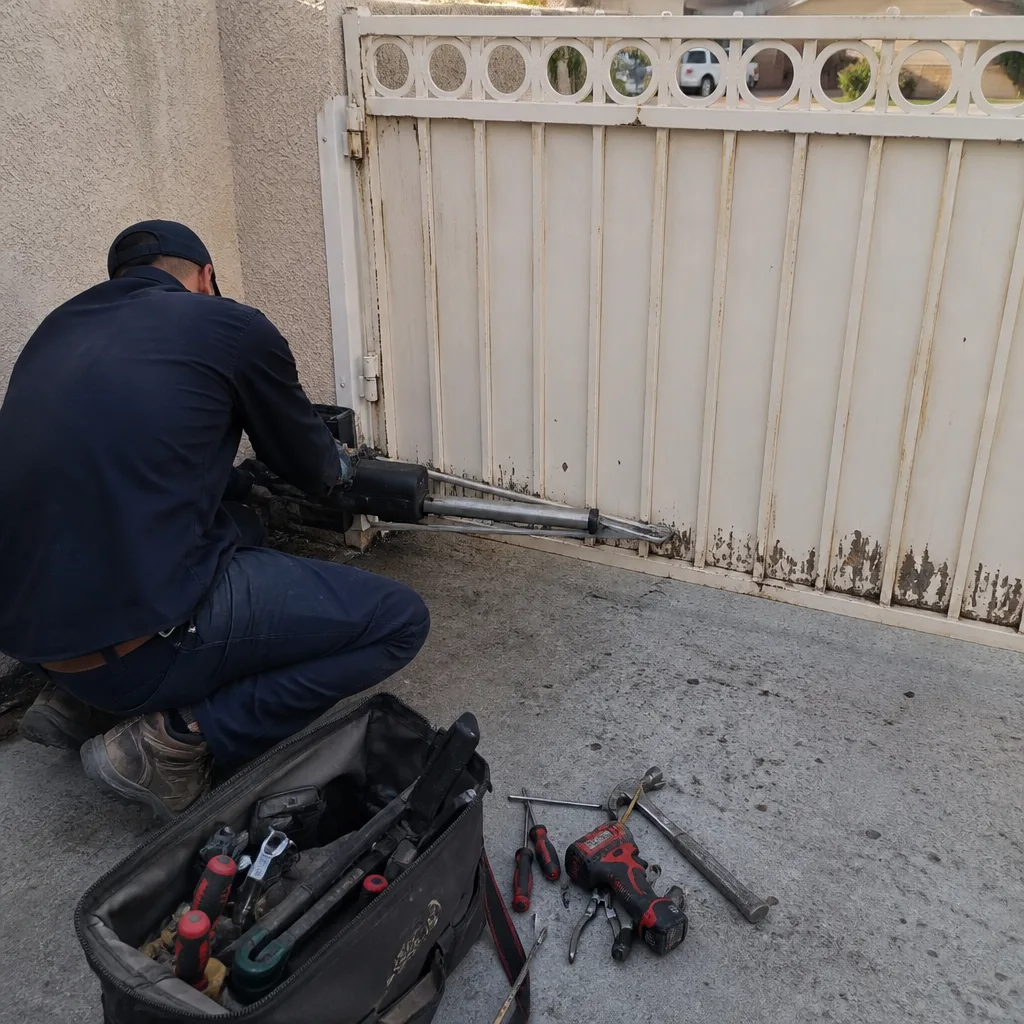 Before
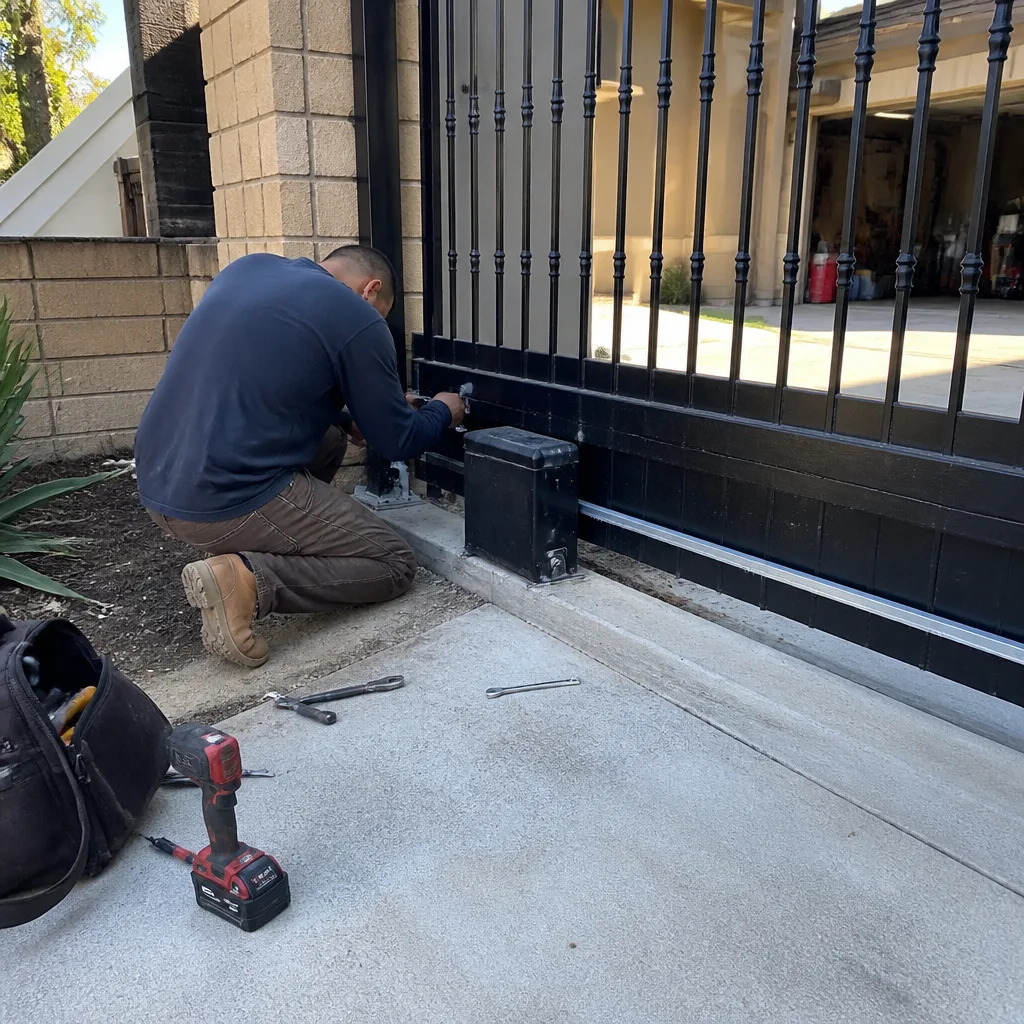 After
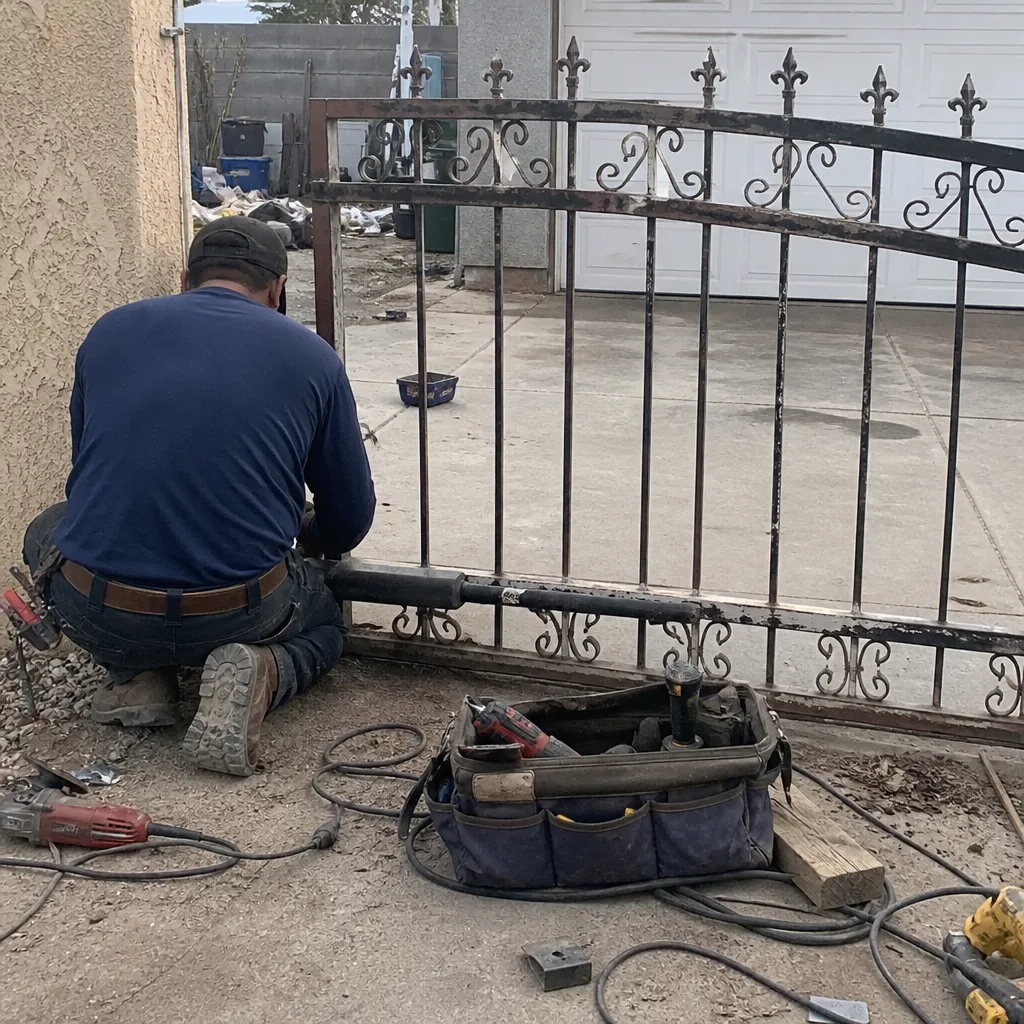 Before
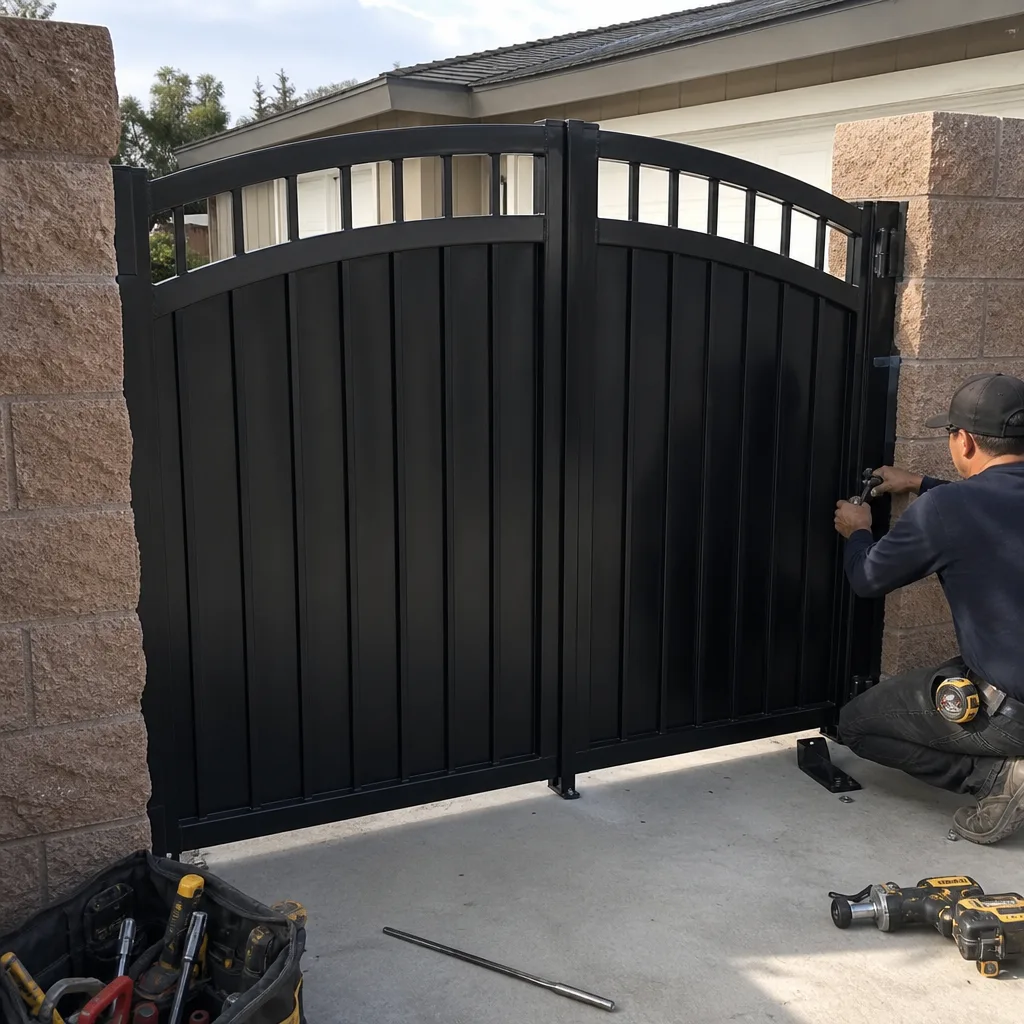 After
Frequently Asked Questions
A basic seasonal inspection and tune-up in Rialto typically runs between $100 and $250 depending on the gate type and the number of operators, while a full drive system inspection with adjustments and lubrication runs $180 to $350. Electric gate service calls that include diagnostic work and component replacement start around $150 to $300 for labor, plus parts. The best way to get an exact number is to call (866) 569-6584 for a free estimate based on your specific gate and operator.
Yes, for emergency repairs we can often dispatch a technician to Rialto the same day, especially when a gate is stuck open or closed and the property is unsecured. Emergency service calls are available for situations like a failed gate motor, a broken weld, or a control board failure. Call (866) 569-6584 and describe the problem; we’ll tell you if it’s a same-day call or a scheduled appointment.
A full gate installation includes the gate leaf itself, the post and footing work, all hinges and hardware, and the operator and control system if the gate is automated. For electric gates, the installation also includes the motor, control board, photo-eye sensors, keypad or intercom, and the low-voltage wiring run from the power source to the gate. Our Gate Installation in Rialto service handles the entire job from measuring and fabrication through final programming and testing.
Yes, as gate specialists we handle the full electrical scope including the low-voltage power run, safety edges, photo-eye sensors, and control wiring. This is one of the areas where a dedicated gate company differs from a general fencing contractor: the electrical work is part of our core trade, not an afterthought. We service and install operators from DoorKing, Linear, Viking, and Ghost Controls, among others in Rialto.
A properly maintained gate motor in Rialto typically lasts 10 to 15 years, while one that runs a binding gate through Rialto summers and never gets a seasonal inspection often dies in 5 to 7. The biggest factors in motor lifespan are whether the gate rolls or swings freely, whether the operator force settings are correct, and whether the control board enclosure stays dry and free of internal condensation. Regular seasonal maintenance is the difference between the two lifespans.
Check the power supply first, then the manual release, then the photo-eye sensors. In Rialto, we see a high number of “dead gate” calls that turn out to be a tripped GFCI outlet, a tripped breaker, or a manual release that was left disengaged after a power outage. If those aren’t the problem, the issue is usually the control board, the capacitor, or a wiring fault, and that’s when a diagnostic visit from our Electric Gate Repair in Rialto team pays for itself.
The Bottom Line
Rialto doesn’t have four equal seasons, and your gate doesn’t need four equal maintenance routines. What it needs is a summer prep that accounts for thermal expansion, a fall wind-season protocol that strengthens latches and recalibrates sensors, a winter prep that protects the three electrical components most vulnerable to rain, and a spring inspection that catches footing infiltration before the post starts leaning. The October drive system inspection is the single task with the highest return: it prevents more gate failures in Rialto than any other maintenance activity. Do these things and your gate will outlast the neighbors’. Skip them and you’ll be replacing components that should have lasted decades. For professional seasonal service or any gate repair, call (866) 569-6584 for a free estimate.
Return to the Gate Repair Rialto home page for more information about our services.
Written by the team at Gate Repair Rialto, serving Rialto since 2013.