
Last updated November 3, 2026
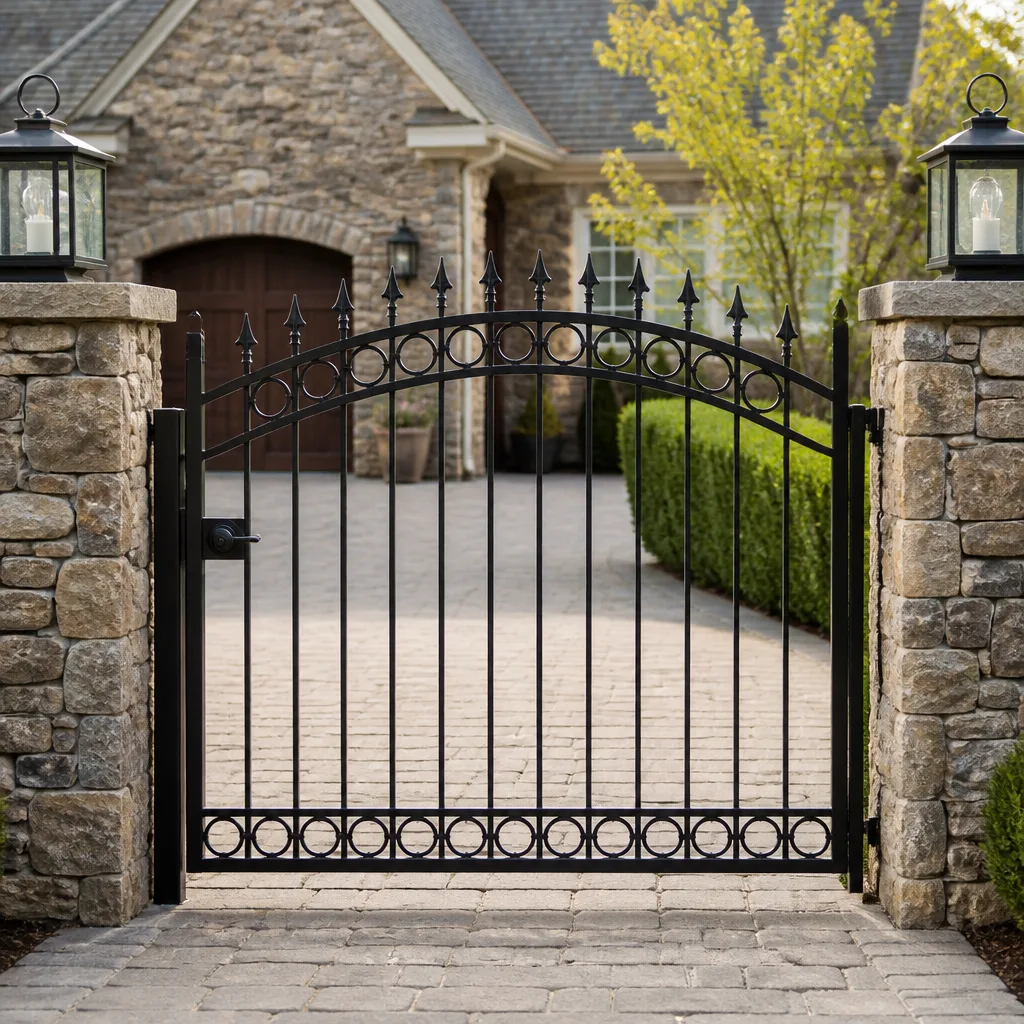 Wrought iron
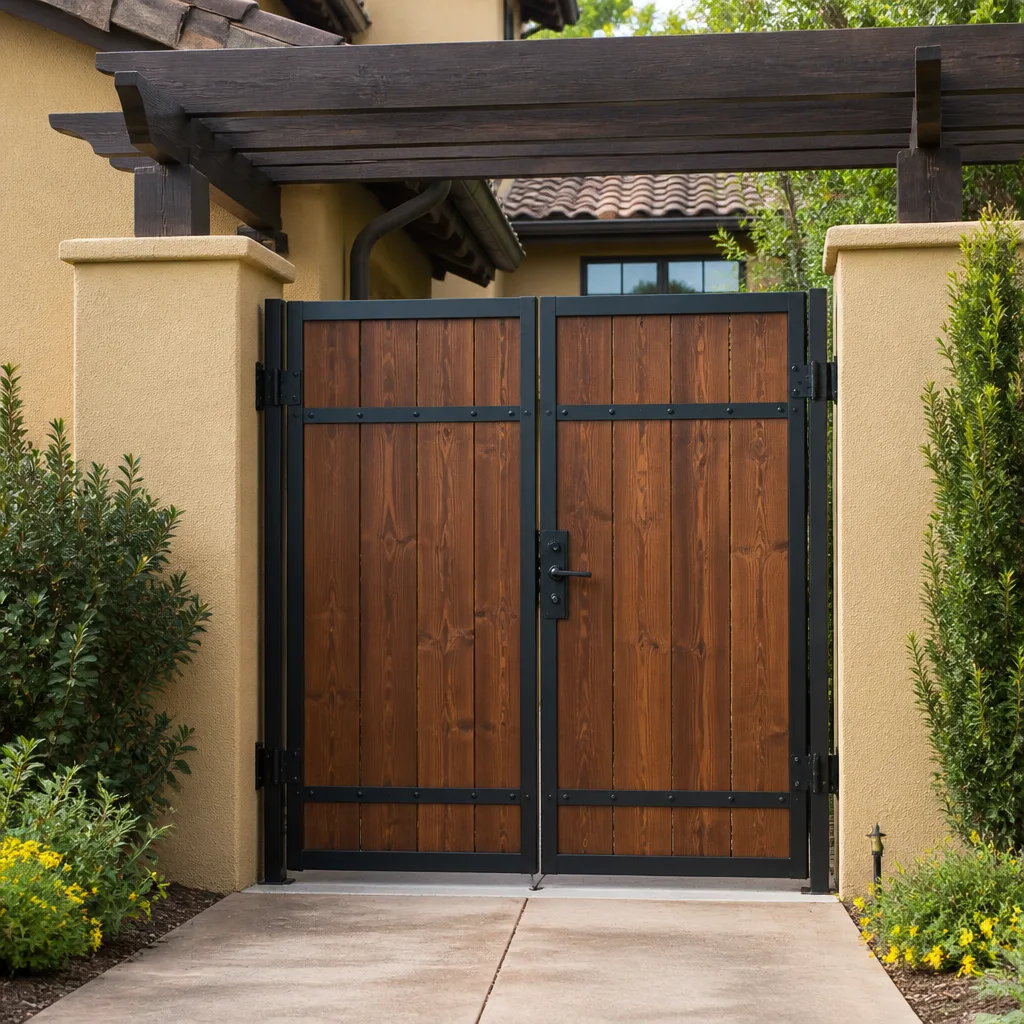 Wood & steel frame
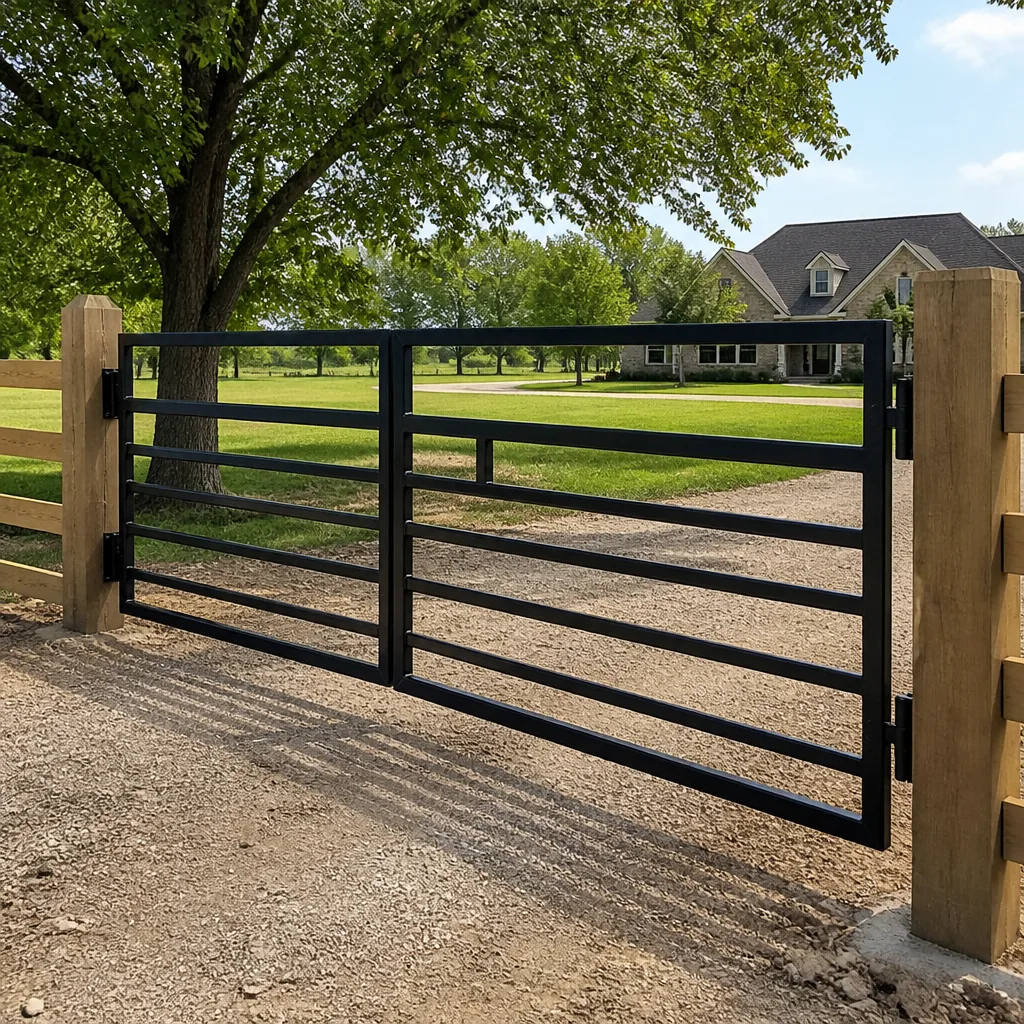 Farm & ranch
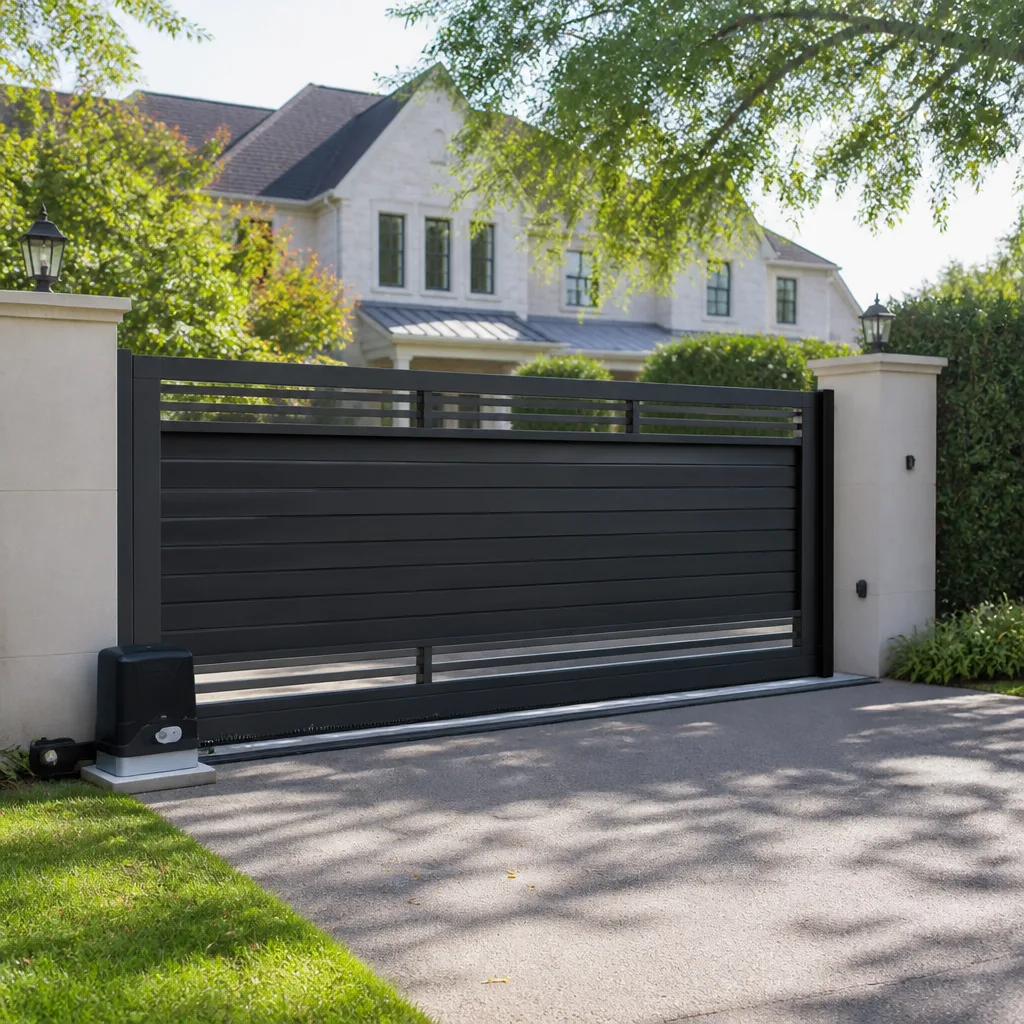 Sliding driveway gates
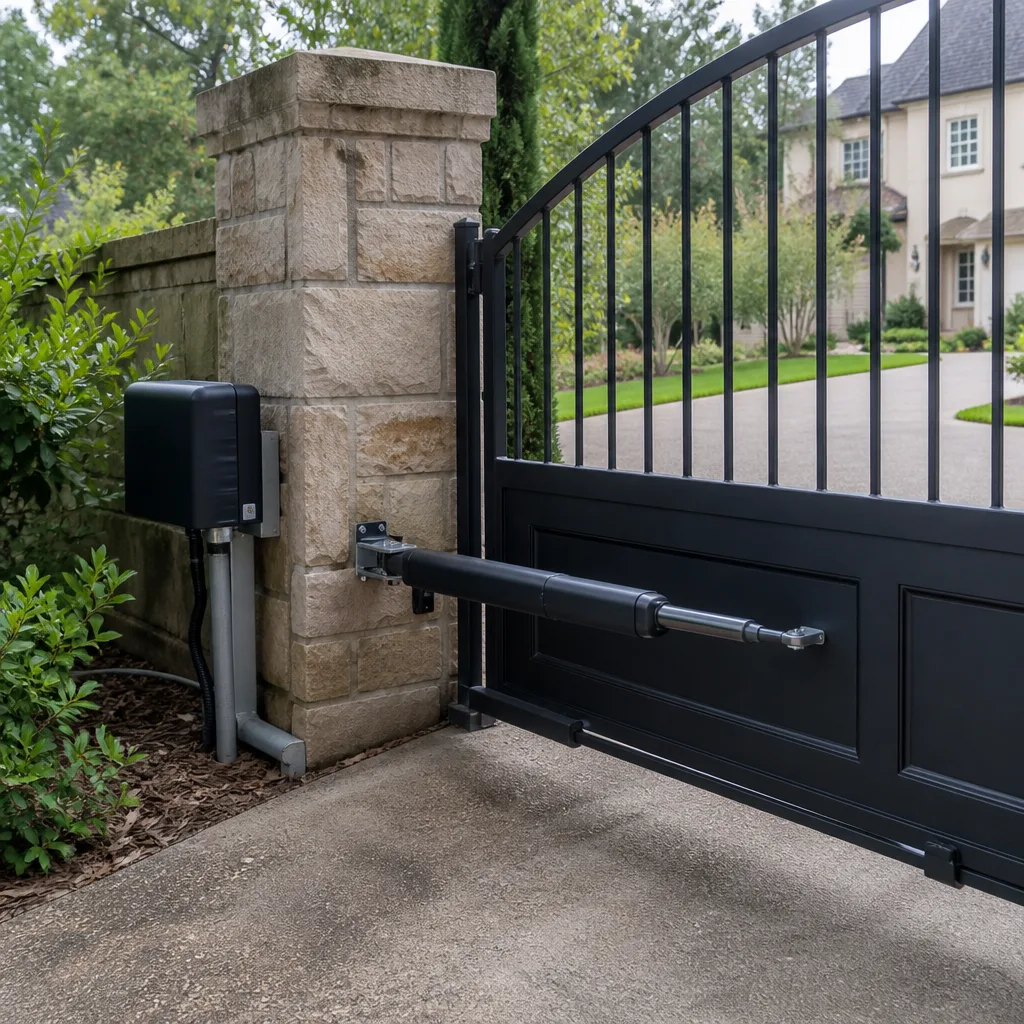 LiftMaster operators
Free on-site gate assessment - hinges, posts, and your LiftMaster or Nice gate operator checked before anything is quoted
The assessment is free and the quote is the invoice.
Get your free estimateThe Complete Gate Repair Guide for Rialto Homeowners
Rialto sits at the edge of the Inland Empire’s heat corridor, where summer pavement temperatures exceed 150°F and the air stays dry enough to crack lumber in a season. That detail matters more than most homeowners realize. Gate components rated for “outdoor use” fail prematurely here because manufacturers test for generic weather, not for Rialto’s specific combination of triple-digit heat, caliche soil movement, and hard water that leaves mineral scale on every metal surface. This guide maps the most common gate failures in Rialto to the conditions that cause them, so you can diagnose what’s actually wrong and know whether to repair, adjust, or replace before spending money. For deeper reading, see The Complete Guide to Gate Repair in Rialto.
Quick Answer
Most gate failures in Rialto trace back to three environment-specific culprits: high desert heat that degrades electronics and warps metal, caliche soil expansion that shifts posts seasonally, and hard water corrosion that seizes hinges and sensors. You can safely handle basic hinge lubrication and manual latch adjustments yourself. Electric gate problems, motor failures, and post integrity issues should go to a gate repair specialist who understands both the mechanical and electrical sides of the system, because misdiagnosing a control board problem as a motor failure is the most expensive mistake we see.
Styles & brands we work with
- Wrought iron
- Wood & steel frame
- Farm & ranch
- Sliding driveway gates
- LiftMaster operators
Table of Contents
- Why Rialto’s Heat Corridor Kills Gate Components Early
- How Caliche Soil Shifts Gate Posts and Causes Sagging
- Material-Specific Failure Timelines: Wrought Iron, Aluminum, and Chain-Link
- What You Can Legally DIY in Rialto vs. What Needs a Licensed Pro
- Decision Tree: Repair, Adjust, or Replace Your Gate
- Electric Gate Failures: Motors, Boards, Sensors, and Wiring
- Documenting Gate Condition for HOA Compliance in Rialto
- Why Gate Brand Knowledge Changes the Diagnosis
Why Rialto’s Heat Corridor Kills Gate Components Early
Rialto’s location at the base of the San Bernardino Mountains puts it in a thermal pocket that behaves differently from coastal Southern California. Daytime highs above 100°F persist from June through September, and the temperature swing between day and night can exceed 30 degrees. That daily expansion and contraction cycle is what breaks gates, not the heat itself.
Metal gates expand in the afternoon heat and contract at night. A 12-foot wrought iron gate can change length by an eighth of an inch across a single day. Over five or six summers, that repeated movement fatigues welds, cracks paint, and loosens hinge bolts that were torqued correctly when installed. The gate doesn’t fail during the hottest day of the year. It fails the first cool morning in October, when everything contracts back and a hairline crack finally pulls apart.
Electronics suffer from a different heat problem. Electric gate control boards and capacitor-based operators are rated for outdoor use, but that rating usually assumes ambient temperatures under 120°F. Inside a metal operator housing sitting in direct Rialto sun, the internal temperature can exceed 160°F by mid-afternoon. Capacitors dry out. Solder joints on control boards crack. Battery backups drain faster than their rated lifespan. This is why electric gate failures cluster in late summer and early fall in Rialto rather than spread evenly through the year.
What to do about it:
- Check hinge bolts for looseness every spring, before the hottest stretch begins.
- Look for hairline cracks at every weld point on wrought iron gates, especially where pickets meet horizontal rails.
- Mount electric gate control boards on a shaded wall or inside a ventilated housing when possible. Direct sun on the housing is a slow killer.
- If your gate stops working on an afternoon above 100°F, let the operator cool for 20 minutes before assuming the board is dead. Thermal shutdown is common and temporary.
In our experience across Rialto, gates that receive a ten-minute hinge check each spring last years longer than identical gates that get ignored until they bind or sag.
How Caliche Soil Shifts Gate Posts and Causes Sagging
Caliche is a hardpan layer of calcium carbonate that sits beneath the topsoil across much of Rialto. It looks like chalky white rock and behaves like concrete when dry. When moisture does get through, it expands. When it dries, it contracts. That cycle moves every post set into it, a little more each year.
A gate post set at the standard 24-inch depth in caliche soil will shift within two to three years. The post heel, the part below ground, gets gripped unevenly as the caliche around it expands and contracts. The post leans. The gate sags at the latch end. The automatic opener starts fighting the gate’s changed geometry, which wears the motor faster.
Signs of caliche-related post movement in Rialto:
- The gap between the gate and the latch post widens at the top and narrows at the bottom, or the reverse.
- The gate drags on the ground on one side but clears it on the other.
- The gate swings freely in winter and binds in late summer, or follows the opposite seasonal pattern depending on the post’s orientation.
- Fresh cracks appear in concrete around the post base, radiating outward.
The fix depends on how far the post has moved. A quarter-inch shift can usually be corrected by re-shimming the hinges and re-aligning the latch. A half-inch or more means the post needs to be removed and reset deeper, ideally below the caliche layer into stable material. Some properties in Rialto’s older neighborhoods near Baseline Road have caliche so thick that it extends eight feet down, which is why we recommend core-drilling new post holes rather than hand-digging on replacement jobs.
If your gate sags seasonally, the post is moving. Adjusting the hinges without addressing the post will fix the symptom for one season. The sag will return.
Material-Specific Failure Timelines: Wrought Iron, Aluminum, and Chain-Link
Different gate materials fail on different schedules in Rialto’s high-UV, low-humidity climate. Knowing what your gate is made of tells you what to expect and when to budget for work.
Wrought Iron (Actually Steel)
Most “wrought iron” gates installed in Rialto after 1990 are hollow steel tube with decorative scrollwork. In this climate, factory powder coating lasts about 5 to 8 years before chalking and surface rust appear at joints and welds. Structural failure typically starts at the bottom hinge weld between years 8 and 12, because that’s the point carrying the most weight through every open-close cycle. Rust works from the inside of tubes outward, so a gate can look fine and be paper-thin at the bottom rail. Tap the bottom rail with a screwdriver handle every couple of years. A dull thud means corrosion is hollowing it out.
Aluminum
Aluminum gates don’t rust, which makes them popular in Rialto. But aluminum has roughly one-third the stiffness of steel, so it flexes more on every cycle. Bolts loosen faster. Welds crack sooner on large gates because the metal itself is working back and forth. Expect hinge bolt re-torquing every year on an aluminum driveway gate and structural inspection every 5 to 7 years. Aluminum’s worst enemy in Rialto is electrolytic corrosion where steel hinges or steel bolts contact the aluminum body. The two metals react in the presence of hard water minerals, creating white powdery corrosion that seizes the hardware.
Chain-Link
Chain-link gates handle heat and UV well. The mesh doesn’t warp and the galvanized coating lasts 15 to 20 years in dry climates. What fails first is the hardware: gate hinges, latch mechanisms, and the tension wire. Hard water accelerates galvanic corrosion on hardware fasteners, and the constant dust in Rialto air grinds into hinge barrels every time the gate moves. Expect to replace hinge hardware and latch assemblies every 3 to 5 years rather than the gate itself. On chain-link gates with automatic openers, the same mineral buildup shortens wheel and track life on sliding designs.
Material matters less than maintenance. A steel gate that gets its hinge bolts checked yearly will outlast an aluminum gate that’s ignored. The failure timelines above assume zero maintenance, which is what most gates in Rialto actually get.
What You Can Legally DIY in Rialto vs. What Needs a Licensed Pro
California law draws a bright line between mechanical gate hardware work and electrical work. Understanding where that line sits saves you money and keeps you out of trouble with code enforcement and your insurer.
Work you can legally do yourself:
- Hinge lubrication and bolt tightening. Use a silicone-based lubricant, not WD-40, which attracts dust and thickens in Rialto’s dry air.
- Replacing manual gate latches and handle hardware. This is mechanical work, no permit required. Some Rialto HOAs require prior approval for aesthetic changes, so check your CC&Rs before swapping a black latch for a brass one.
- Adjusting the drop rod or cane bolt on a double gate. The rod that holds the inactive leaf in place is homeowner-adjustable.
- Cleaning solar panels on a gate opener. Dust from the Santa Ana winds coats panels fast. A wipe-down with a damp cloth is maintenance, not modification.
- Clearing debris from the gate track on a sliding gate. Leaves, gravel, and built-up dust can block a slide gate. Clearing it is safe and simple.
Work that requires a licensed professional:
- Any wiring inside the gate operator or control board enclosure. This is electrical work. California requires a licensed electrician or a licensed contractor for energized wiring changes, period.
- Replacing or rewiring the motor on an electric gate. Even if the motor is 12-volt, the supply line feeding it is line-voltage, and the control components carry live power.
- Installing or relocating safety sensors, photo eyes, or edge sensors. These feed into the control board and must be wired and calibrated correctly to prevent injury. An improperly wired sensor can cause a gate to close on a person or vehicle.
- Any work on a gate serving a pool enclosure or required safety barrier. In Rialto, a gate that separates a pool from a residence is a life-safety device under California pool safety law. Do not modify its self-closing or latching functions yourself.
The rule we tell every Rialto homeowner: if you can see it and it doesn’t have wires, you can probably maintain it. If it has wires, a connector, or a control board, call someone who works on gates specifically, not a generalist electrician who’s never seen a FAAC board.
Decision Tree: Repair, Adjust, or Replace Your Gate
Every gate problem falls into one of three categories. Walking through this decision tree before you call anyone will save you from paying for a replacement when a $40 part fixes the problem, and from pouring money into a gate whose posts are done. For help deciding whether to DIY or hire out, read our DIY vs Professional Gate Repair: The Rialto Homeowner’s Decision Guide.
Step 1: Check the Posts
Put a level on each post. If a post is out of plumb by more than a quarter-inch over its height, evaluate why. Surface-level lean with a stable base means the hinge mounting has shifted and can be re-shimmed. Lean at the base means the post is moving in the soil. If the post moves when you push on it with moderate force, the gate is only as stable as the post, and adjusting hinges off it is wasted money.
Decision: Stable posts → proceed to Step 2. Moving posts → the repair is a post reset or replacement, not a hinge adjustment. This is a bigger job and should be quoted before any work begins.
Step 2: Check the Gate Itself
With the gate closed, lift the latch end. Upward movement of more than half an inch means the hinges are worn or the gate frame is fatigued. On steel gates, inspect every weld with a flashlight. Hairline cracks at welds can be re-welded for a fraction of replacement cost if caught early. On aluminum gates, look for cracked weld zones around the hinge plates. If the frame rail itself is cracked or rusted through at the bottom, welding won’t hold for long. Replacement is the honest answer.
Decision: Sound gate frame with worn hardware → repair the hardware. Cracked or rusted-through frame → replace the gate leaf.
Step 3: Check the Automation (If Equipped)
Disconnect the operator using the manual release handle. Swing or slide the gate by hand. If it moves smoothly, the gate itself is fine and the problem is in the motor, board, sensors, or wiring. If it’s stiff or binds, the problem is mechanical and the opener is just the messenger.
Decision: Smooth manual operation → troubleshoot the electrical side. Stiff manual operation → fix the mechanical problem first. Gate repair in Rialto should address the mechanical root cause before touching the opener, because an opener fighting a binding gate will fail again in months.
Step 4: Consider Age and Brand Support
If your gate operator is over 15 years old and the control board has failed, check whether replacement boards are still manufactured for your brand. Some older LiftMaster and Elite boards are discontinued, and the only reliable source is used stock. If your operator is obsolete and the gate needs mechanical work too, bundling a new operator with the gate repair is usually cheaper than resurrecting discontinued electronics.
Decision: Active brand support → repair makes sense. Discontinued electronics and aging mechanics → replacement cost-benefit favors new.
Every price is quoted and agreed before any work starts. A written estimate is the standard, not the exception.
Electric Gate Failures: Motors, Boards, Sensors, and Wiring
Electric gates fail in predictable patterns in Rialto. The most common failure we see is not the motor, despite what homeowners assume. It’s the control board, followed by safety sensor misalignment, followed by wiring degradation from heat exposure.
Control Boards Before Motors
A gate operator that won’t respond at all, or that responds intermittently, points to the board first. Rialto’s heat pushes control boards past their thermal limits every summer, and the solder joints on older boards develop microfractures from daily temperature swings. The board fails slowly: the gate works in the morning, stops in the afternoon, works again after sunset. That’s a classic thermal stress pattern. A motor failure usually announces itself differently: the gate moves slowly for weeks, makes grinding or humming sounds, or trips a breaker.
Sensor Problems
Safety sensors on electric gates use infrared beams that must stay aligned. Rialto’s caliche soil movement shifts posts just enough to knock sensors out of alignment, even on gates where the visible alignment looks fine. If your gate reverses immediately after closing or refuses to close at all, check the sensors before assuming the board is dead. Blow the dust out of the sensor lenses with compressed air. In Rialto, dust accumulation is a year-round problem, not a seasonal one.
Wiring Degradation
Underground wiring to gate operators is vulnerable to two local conditions: caliche expansion that can crush conduit, and hard water minerals that corrode terminal connections inside junction boxes. A wire that reads fine on a continuity test can fail under load because of a corroded terminal screw. If your gate works intermittently and the board and sensors test fine, suspect the wiring connections before replacing expensive components.
Brand Differences Matter
FAAC hydraulic operators behave differently from LiftMaster electromechanical units, and both differ from Viking and Ghost Controls systems. A technician who only knows one brand will misdiagnose a FAAC hydraulic pressure issue as a motor failure, replace the motor, and hand you an invoice for a repair that didn’t work. Gate Repair Rialto home technicians work on all the major brands, which means the first diagnosis is the right one more often. The list includes LiftMaster, FAAC, BFT, Linear, Viking, Ghost Controls, DoorKing, Elite, and Mighty Mule.
Electric gate work carries real risk. Line voltage inside the operator housing can injure or kill, and a gate that closes unexpectedly can cause serious injury. If your electric gate is behaving strangely, disconnect the operator with the manual release and call a gate specialist. Do not open the control board enclosure unless you are qualified to work on energized equipment.
Documenting Gate Condition for HOA Compliance in Rialto
Many Rialto neighborhoods with planned communities have HOAs that regulate gate appearance and function. When a gate starts to sag, rust, or fail, the HOA will typically send a letter giving the homeowner a deadline to address the issue. How you document the gate’s condition determines whether you get a simple extension or a fine.
What HOAs in Rialto typically require:
- That gates be fully functional, closing and latching under their own power or through a working opener.
- That visible rust, peeling paint, and sagging be corrected within a specified window, usually 30 to 60 days from notice.
- For electric gates, that safety sensors and auto-reverse features be operational, because those requirements align with state and municipal safety codes.
- That any repair or replacement match the community’s original gate aesthetic if the property is in a themed development or has a uniform streetscape.
How to document your side of the story:
- Photograph everything before any work starts. Date-stamp photos of the gate from multiple angles, the post bases, the operator, and any visible damage. These establish the condition at the time you received notice.
- Keep the written estimate or report from every gate professional who looks at the job. A third-party assessment noting that a post has moved due to caliche soil, or that a board is on backorder from the manufacturer, is usually enough to get an extension from a reasonable HOA board.
- Don’t start unapproved work. Many Rialto HOAs require written approval before gate replacement or significant modification. Replacing a broken hinge is maintenance and usually exempt. Replacing a steel gate with an aluminum one is a modification and needs approval. Working out of order can trigger a fine even if the work itself is done well.
- Escalate politely with evidence. If the HOA denies an extension, a short letter with the professional assessment attached, sent within the original deadline window, creates a paper trail that protects you if the dispute goes further.
In our experience, Rialto HOAs are more reasonable when the homeowner shows evidence of good-faith effort, meaning a scheduled consultation or a written estimate, than when the homeowner goes silent and hopes the deadline passes.
Why Gate Brand Knowledge Changes the Diagnosis
Every gate operator brand has its own failure signature. A Mighty Mule opener behaves differently from a LiftMaster, and a FAAC behaves differently from both. When a technician walks onto a Rialto property and sees an Elite operator, the diagnostic path should branch immediately, because Elite’s swing-arm geometry fails differently than FAAC’s hydraulic ram.
What brand-specific knowledge changes:
- Diagnostic speed. A technician familiar with Ghost Controls’ board architecture can pull the fault codes in minutes instead of guessing through a generic checklist.
- Parts availability. Some FAAC and BFT parts have long lead times from European distributors. Knowing this changes the repair timeline and the customer conversation. A technician who doesn’t know the brand won’t warn you that a board could take three weeks.
- Repair vs. replace decisions. A failing Mighty Mule unit often costs less to replace than repair because the entire unit is designed around a price point. A failing LiftMaster with a robust existing structure often makes more sense to repair. The right call depends on knowing the brand’s economics, not just its electronics.
- Preventive advice. Viking operators used on Rialto commercial gates have specific contactor maintenance intervals. Homeowners with Viking units don’t need that depth, but knowing which advice applies to which brand prevents unnecessary upsells.
Multi-brand expertise is not a marketing bullet point. It’s the difference between a repair that lasts and one that fails again in four months because the root cause was a board voltage issue specific to one brand’s design. Gate installation in Rialto follows the same logic: what gets installed should match the property’s gate geometry, the soil conditions, and the homeowner’s expected maintenance budget, not whatever brand is cheapest this week.
The brands we service include LiftMaster and FAAC among the full list: LiftMaster, FAAC, BFT, Linear, Viking, Ghost Controls, DoorKing, Elite, and Mighty Mule. Your gate brand, our expertise.
Common Mistakes to Avoid
- Lubricating hinges with WD-40. WD-40 is a solvent, not a lubricant. In Rialto’s dusty air, it leaves a sticky residue that traps grit and accelerates hinge wear. Use a dry silicone or graphite lubricant instead.
- Adjusting hinges without checking the posts. If the post is moving in caliche soil, re-shimming the hinge fixes the symptom for one season. The sag returns because the problem was never the hinge.
- Replacing the motor when the board has failed. This is the most expensive misdiagnosis we see in Rialto. Intermittent operation points to the board or wiring, not the motor. Test the board before the motor.
- Ignoring seasonal binding. A gate that binds every August and frees up in November is telling you the post is moving. Waiting until it permanently binds turns a post reset into a full replacement.
- Painting over rust without treating it. Slapping paint on a rusty steel gate in Rialto’s dry heat looks fine for six months, then the rust blooms through. You have to mechanically remove the rust and prime the bare metal first.
- Using a generalist handyman for electric gate work. Electric gates carry line voltage, safety sensors, and control boards that require brand-specific knowledge. A handyman who can do twenty different trades is not the person you want inside a FAAC control panel.
- Assuming the lowest quote addresses the root cause. Low quotes often cover surface-level fixes: re-shim the hinges but leave the moving post, replace the sensor but not the corroded wiring causing the fault. The cheap repair fails, then the real repair costs more because new damage has accumulated.
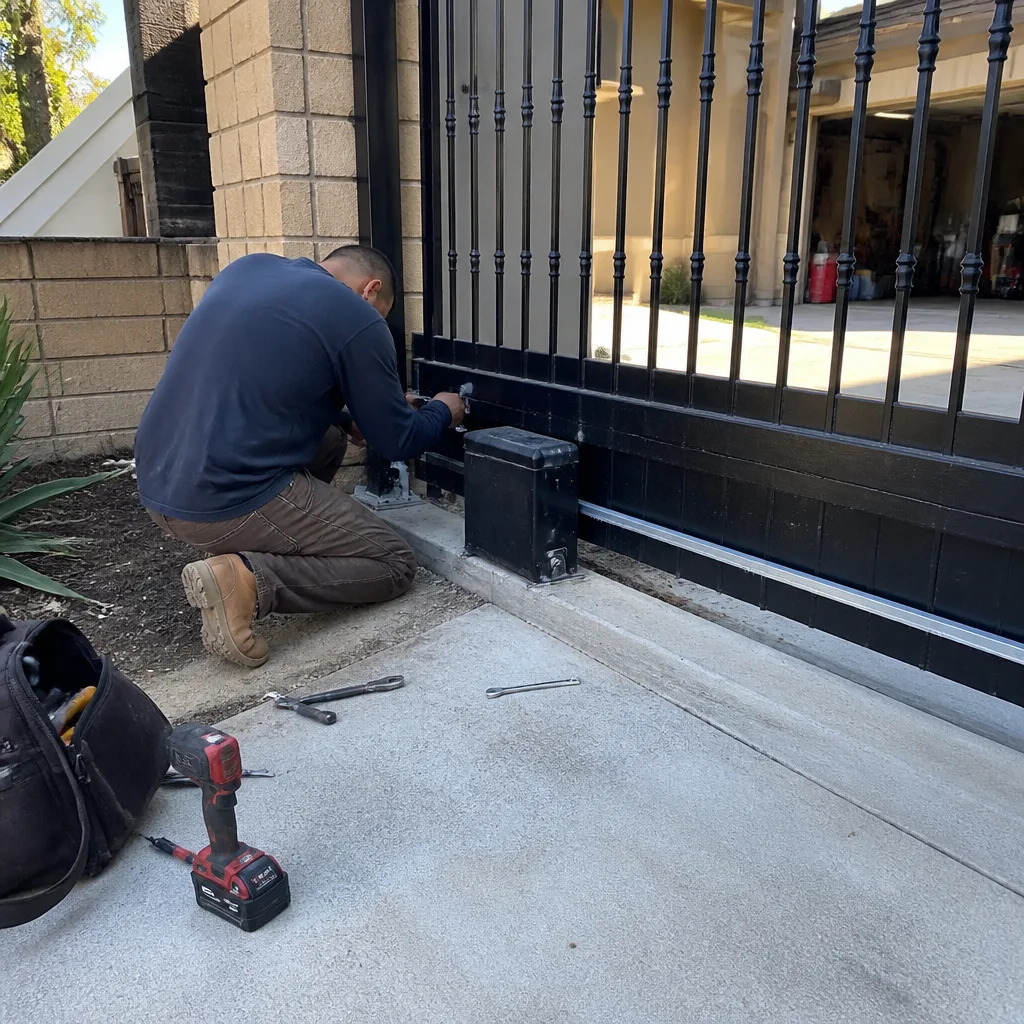
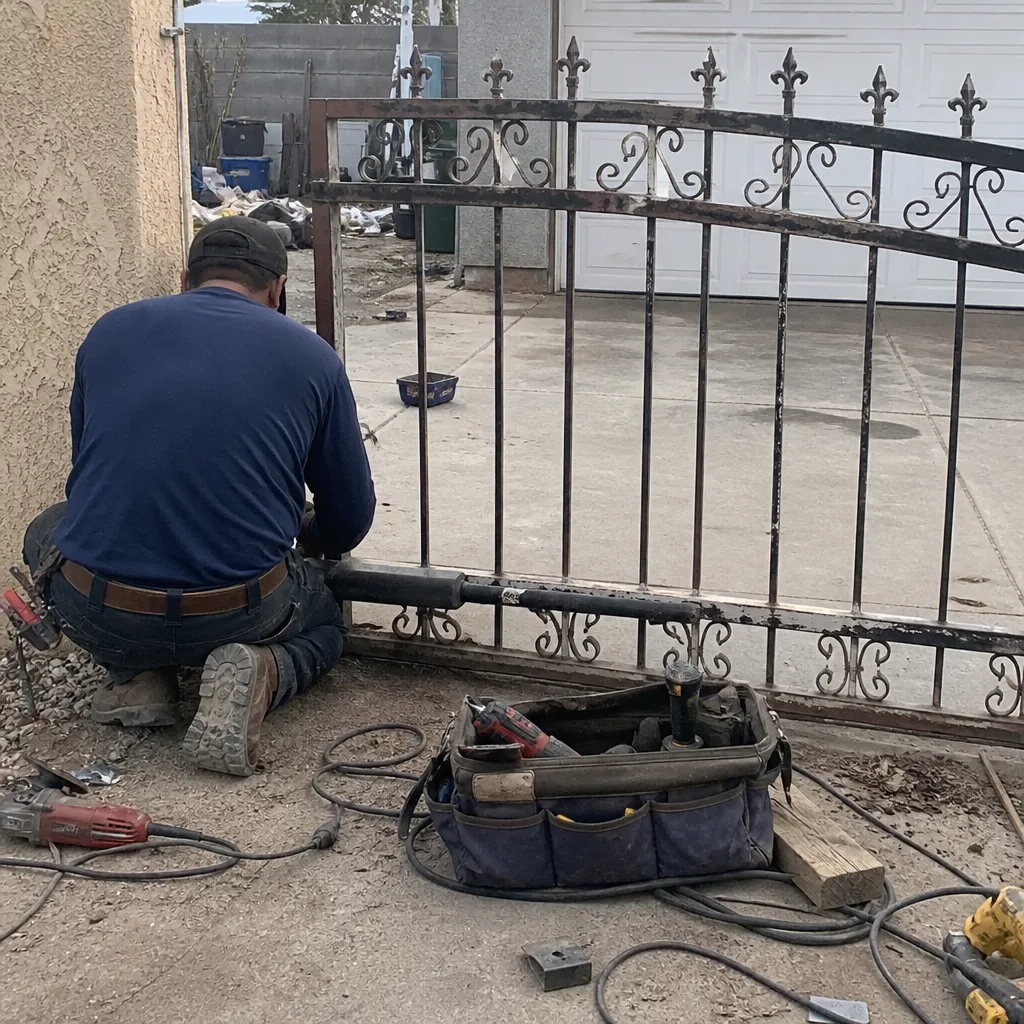
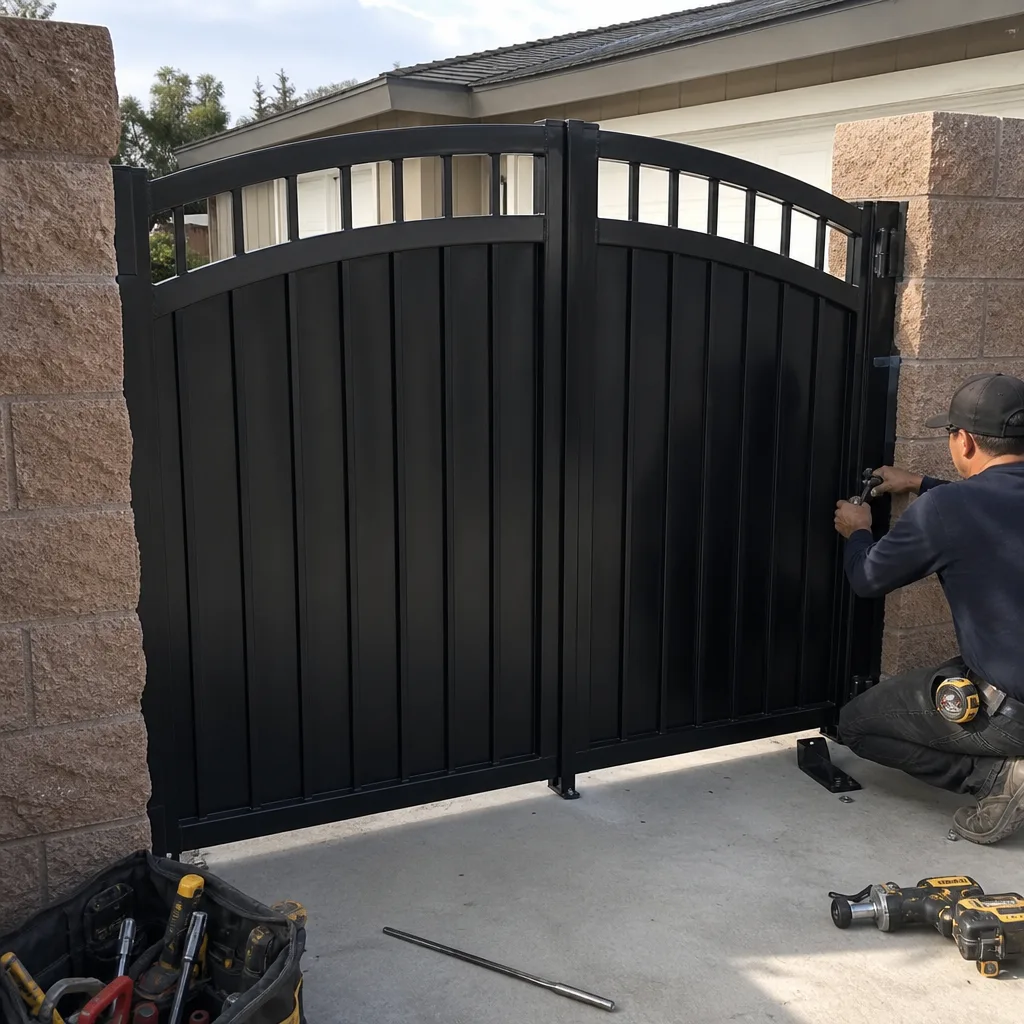
See the difference
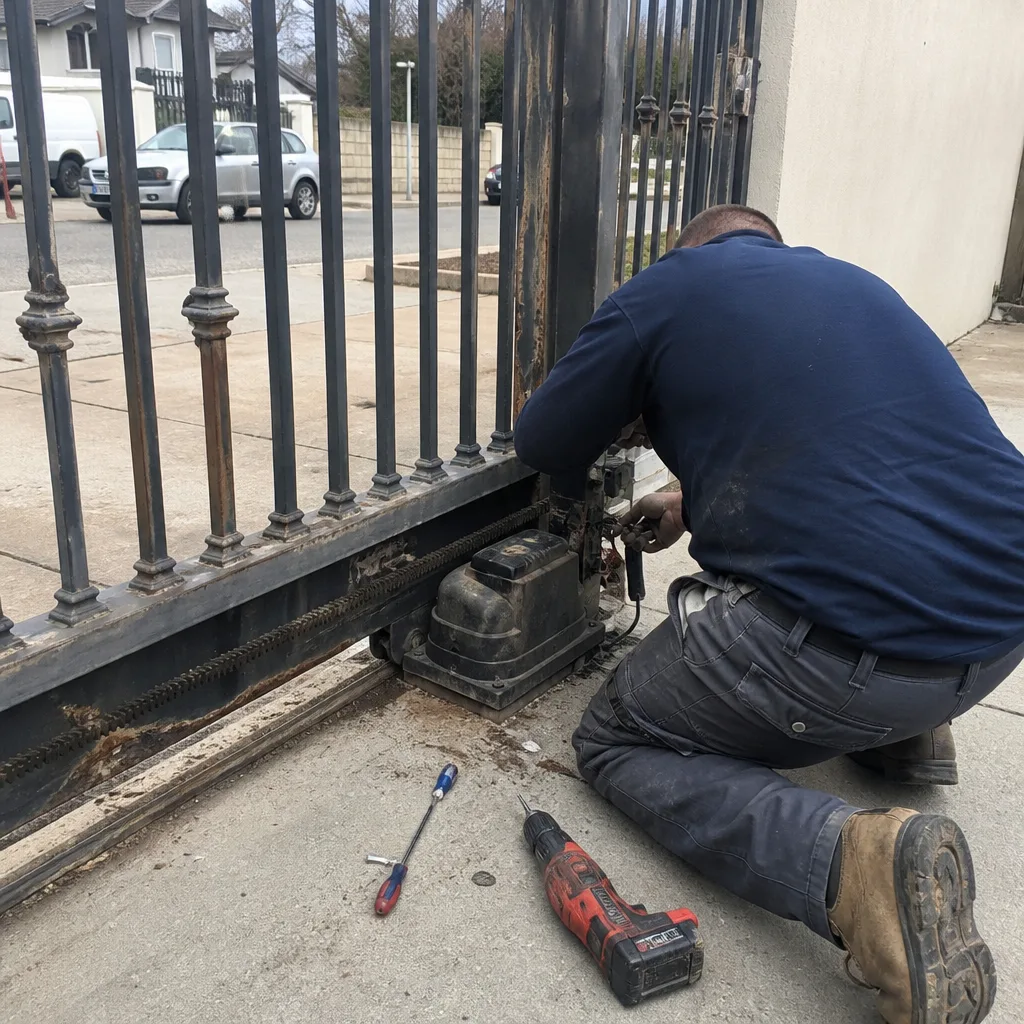 Before
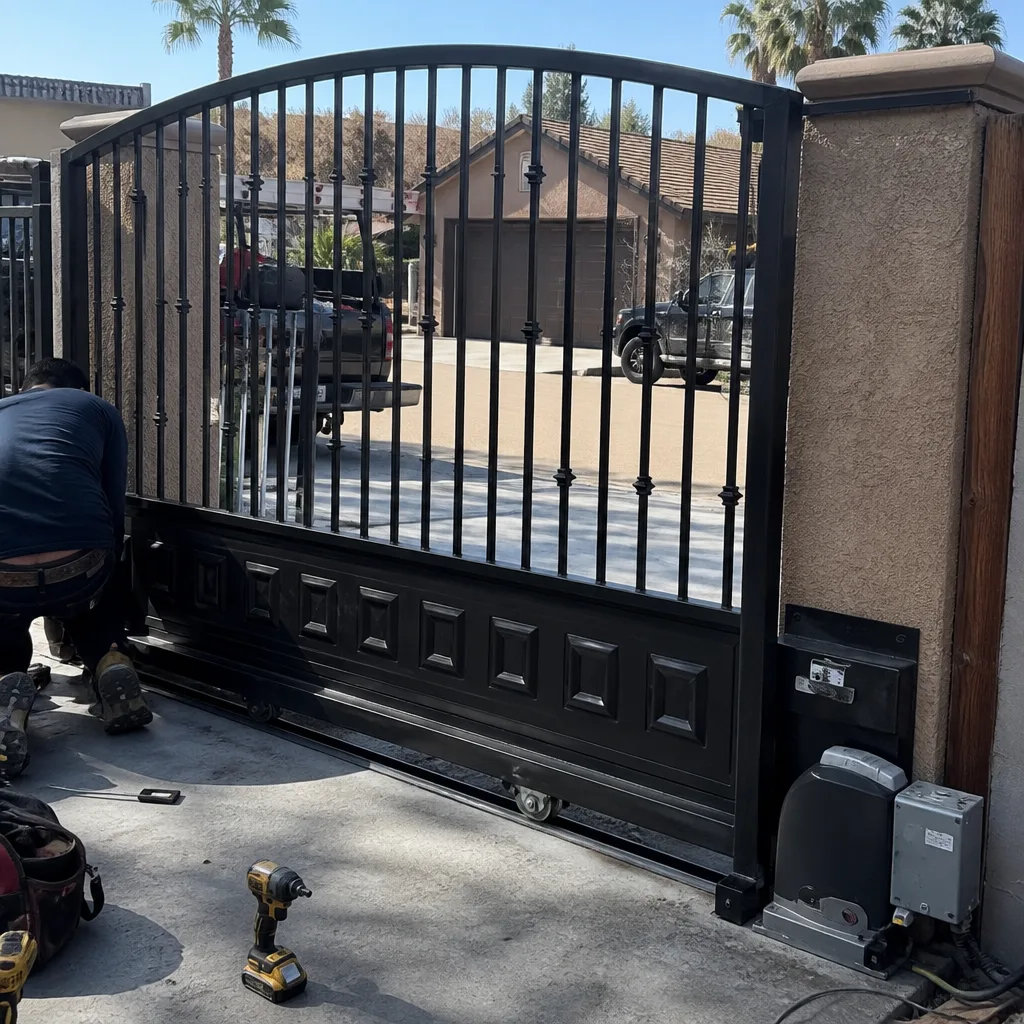 After
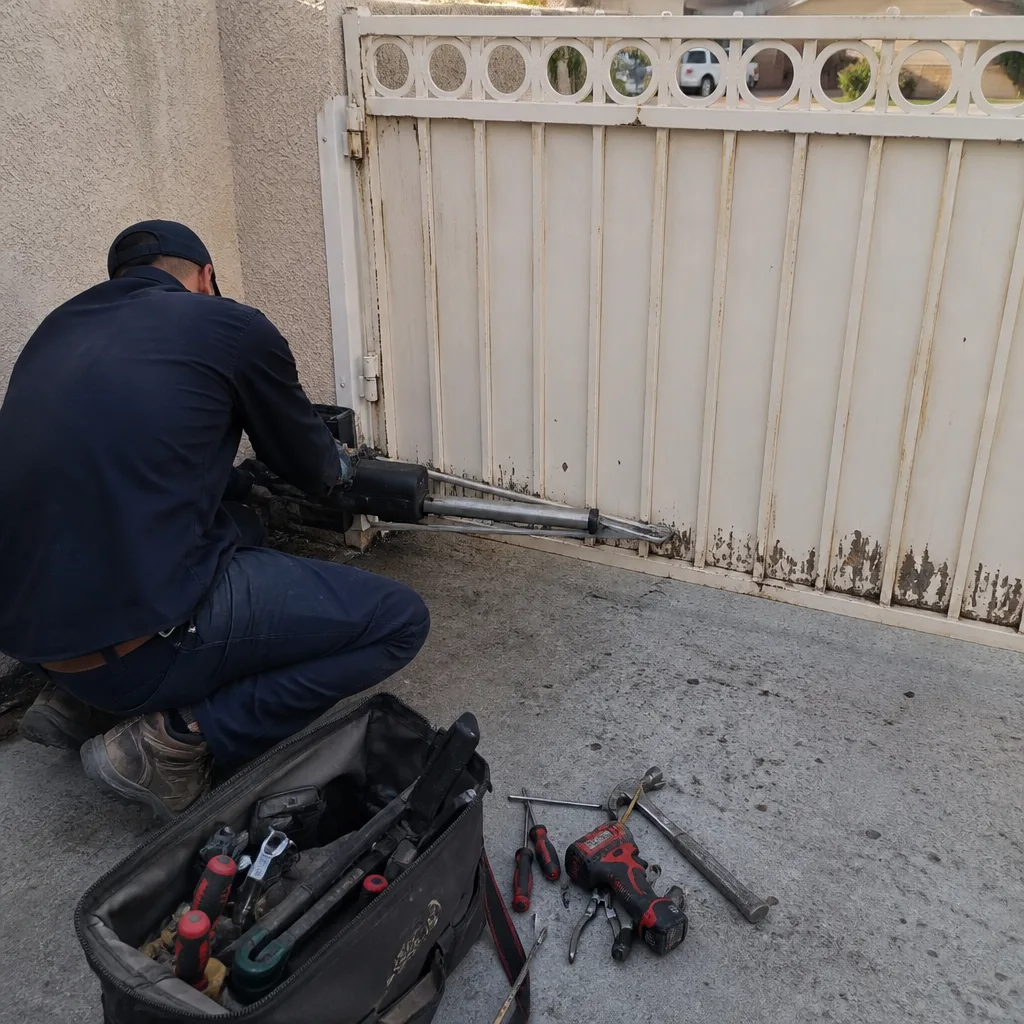 Before
 After
 Before
 After
When to Call a Professional
Call a gate specialist the moment your electric gate behaves unpredictably: it reverses for no reason, stops mid-cycle, only works from one remote, or makes sounds it never made before. These are early warnings, and waiting makes the repair bigger. Call a specialist if your gate post moves when pushed, if a weld shows a crack, or if the gate drags and the hinges have already been tightened once this year. Call a specialist if your HOA has issued a notice and you need documentation of the gate’s condition from someone who knows what they’re looking at. Gate Repair Rialto offers free estimates in Rialto. Call (866) 569-6584 and we’ll tell you honestly whether the gate needs repair, adjustment, or replacement, and the price will be quoted and agreed before any work starts.
Frequently Asked Questions
Most gate repairs in Rialto fall between $150 and $900 depending on what has failed. A hinge replacement or latch fix runs $150 to $350. A new control board runs $300 to $700 installed depending on brand. A post reset runs $400 to $900 when the post has shifted badly. Full gate replacement runs $1,200 to $5,000 plus depending on material, size, and automation. Call (866) 569-6584 for an exact quote. Estimates are free.
Many electric gate failures in Rialto can be diagnosed and repaired the same day if parts are in stock. Common fixes like sensor realignment, wire terminal cleaning, and limit switch adjustment often go quickly. Board failures on some brands may require ordering parts, which takes longer. Call (866) 569-6584 and we’ll tell you what you’re dealing with.
Your gate post is moving in caliche soil. Caliche expands when it absorbs moisture and contracts when dry, shifting the post slightly each year. The gate’s geometry changes with the post, causing seasonal sagging. The fix is re-setting the post deeper and more securely, not adjusting the hinges again.
No, and we strongly advise against it. The motor enclosure contains line voltage wiring and energized control components even when the gate is not moving. And an incorrectly wired motor can cause the gate to close unexpectedly on a person or vehicle. This work requires a licensed professional who knows the specific operator brand.
We service nine major gate and operator brands: LiftMaster, FAAC, BFT, Linear, Viking, Ghost Controls, DoorKing, Elite, and Mighty Mule. Whether you have a Mighty Mule on a farm gate or a FAAC on a wrought iron driveway gate, the brand won’t be the problem.
Routine maintenance and like-for-like repairs typically don’t require HOA approval in Rialto. Replacing a gate or changing its material, color, or style usually does. Check your CC&Rs before starting any work that changes the gate’s appearance, and document the original condition with photos before any work begins.
The Bottom Line
Rialto gates fail for reasons that generic repair guides miss: heat stress on electronics, caliche soil shifting posts, and hard water eating hardware. Knowing the root cause changes the repair decision entirely, and often saves homeowners from paying for work that doesn’t address the actual problem. Check your posts before your hinges. Test your board before your motor. Document everything for your HOA. And when the work goes beyond basic maintenance, call a gate specialist who knows the brand installed on your property, not a generalist guessing at it. The brands matter. The diagnosis matters. The first repair attempt matters most.
Written by the team at Gate Repair Rialto, serving Rialto since 2013.