
Last updated November 2, 2026
 Wrought iron
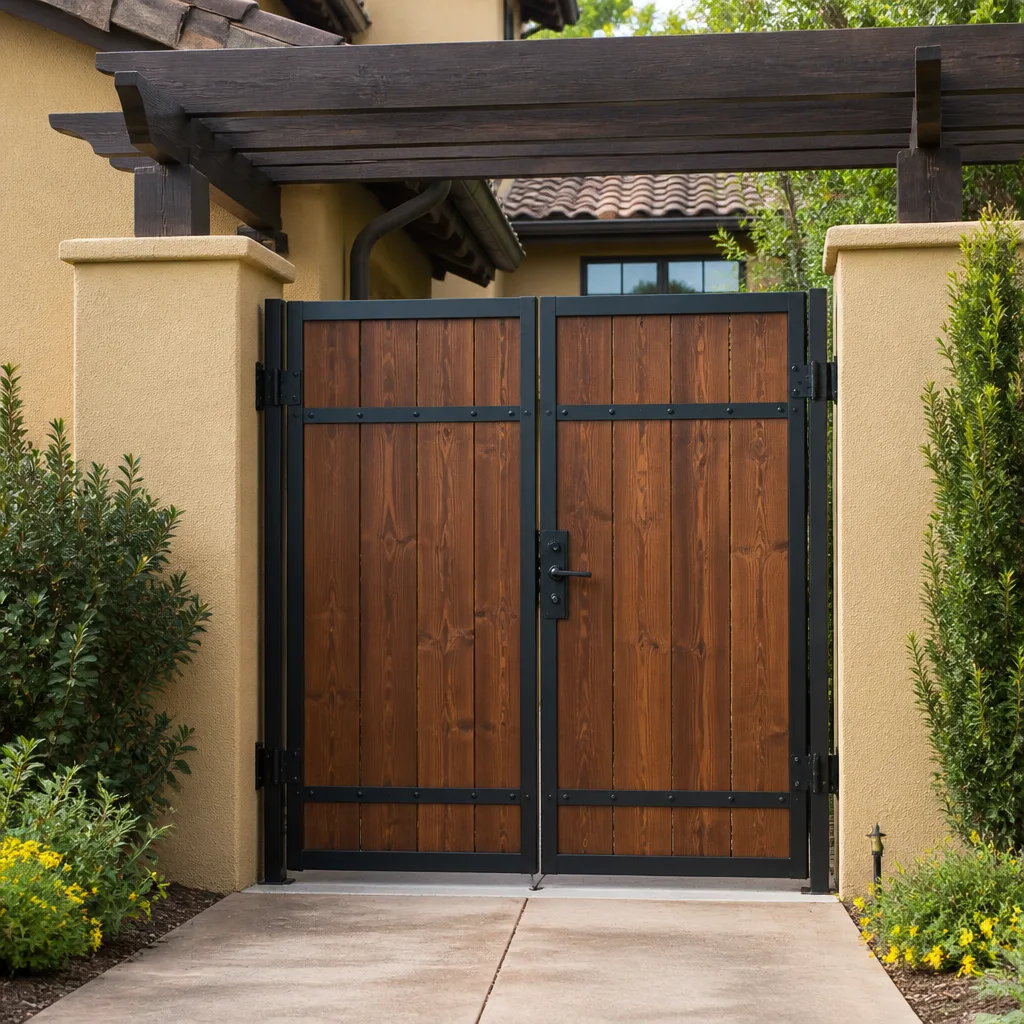 Wood & steel frame
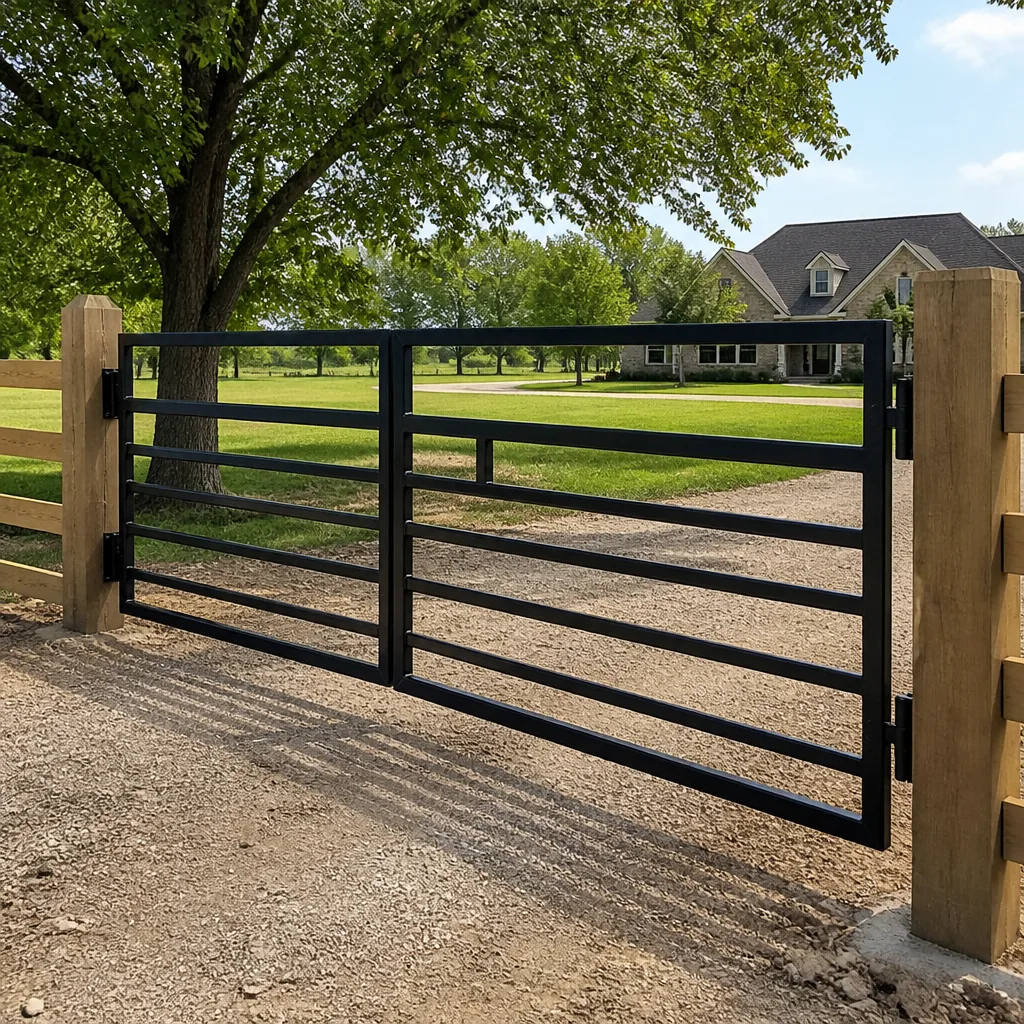 Farm & ranch
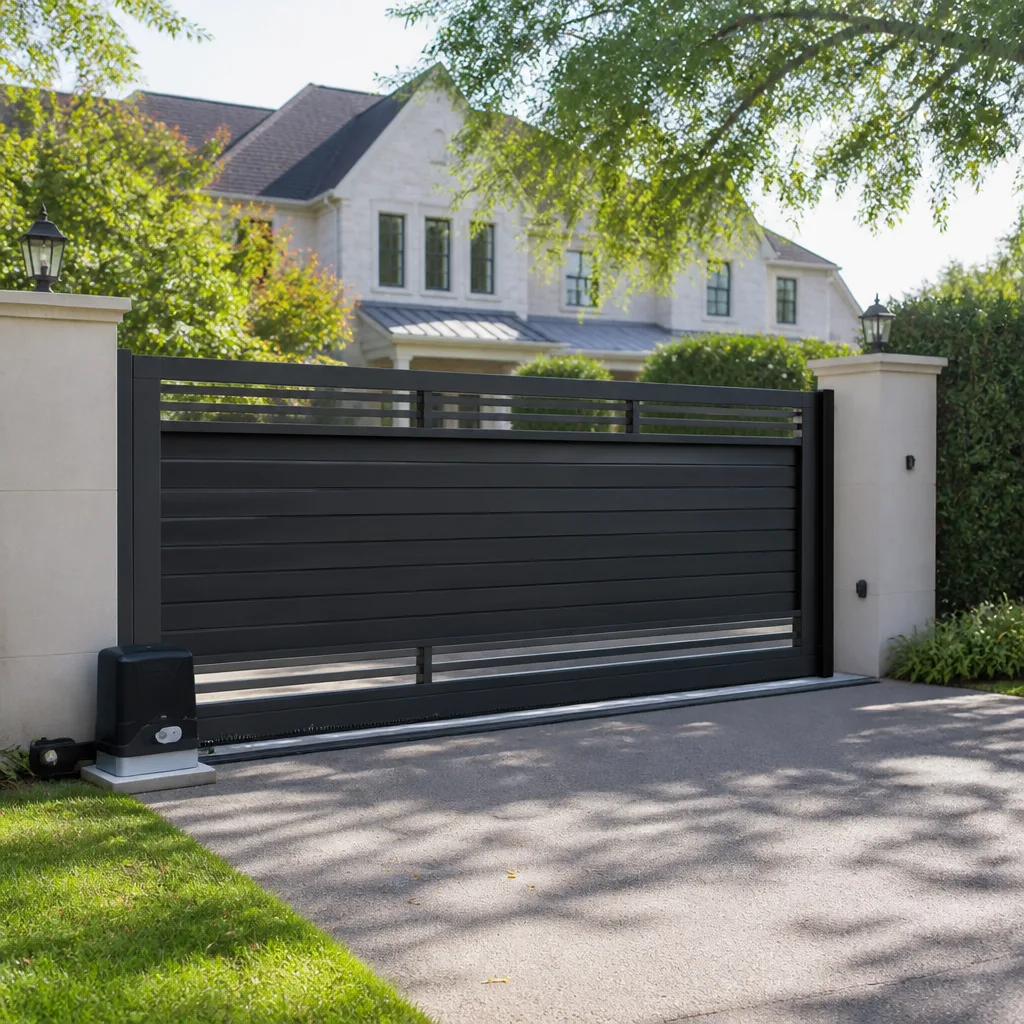 Sliding driveway gates
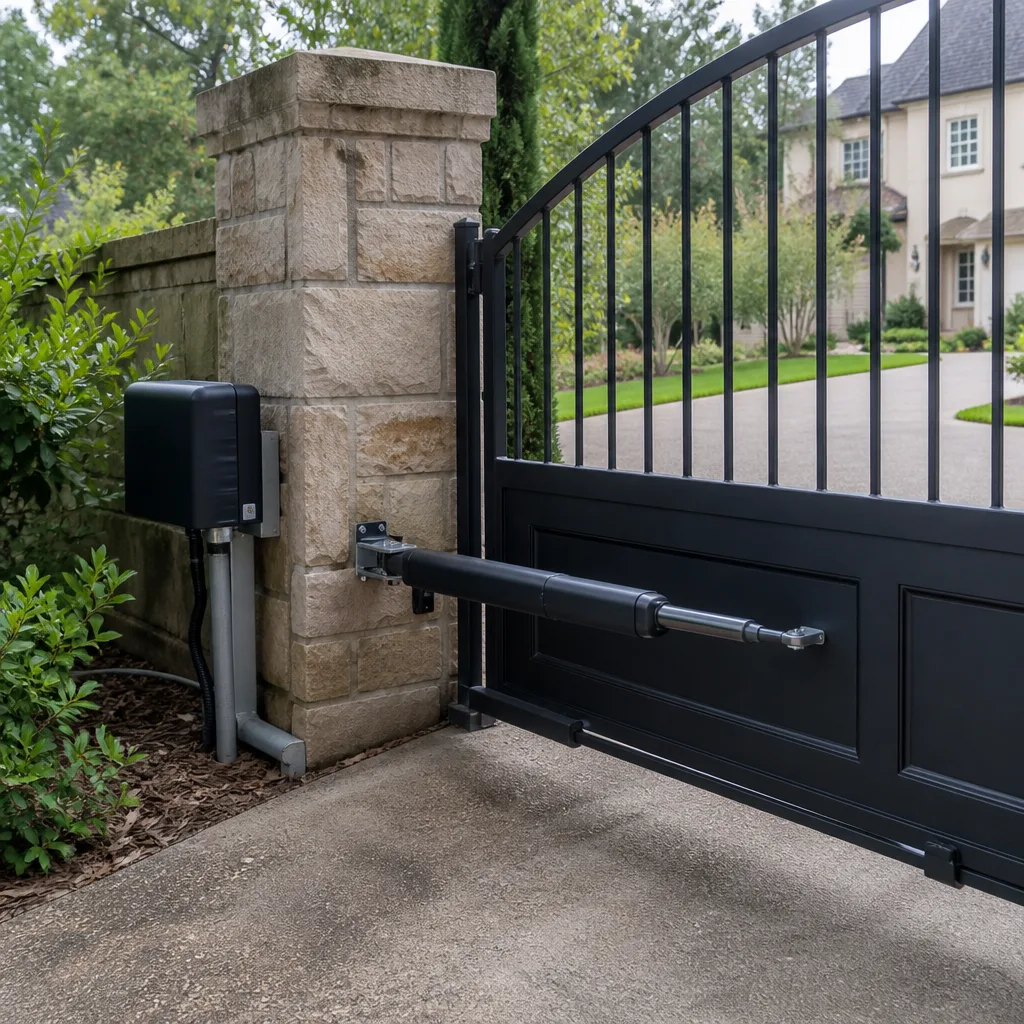 LiftMaster operators
Free on-site gate assessment - hinges, posts, and your LiftMaster or Nice gate operator checked before anything is quoted
The assessment is free and the quote is the invoice.
Get your free estimateGate Repair Emergency Preparedness Guide for Rialto Homes
Every automated gate has a manual release, and roughly half of Rialto homeowners have never tested theirs. They don’t know where it is, don’t know it needs a key, or discover at 2 AM that the key hangs on a hook inside the garage behind the very gate that won’t open. This guide is built for that moment before it happens. We’ll walk through locating and testing manual releases on the operator brands we see most often in Rialto, what actually happens during a power outage, how to build a gate emergency card your whole household can use, and what to do when a gate fails open and your property sits exposed. If you own an automated gate in Rialto, the time to learn this is now, not while you’re standing in the dark wondering why the motor won’t respond.
Quick Answer
A gate stuck closed during an emergency is a life-safety problem, not an inconvenience. Every automated gate has a manual release mechanism that lets you open it without power, but you need to know where it is, how it works, and whether it requires a key before the emergency happens. Gate Repair Rialto recommends testing your manual release quarterly and keeping a written gate emergency card accessible to every household member. If your gate has failed and you can’t get it open, call (866) 569-6584 for immediate help in Rialto.
Styles & brands we work with
- Wrought iron
- Wood & steel frame
- Farm & ranch
- Sliding driveway gates
- LiftMaster operators
Table of Contents
- Locating and Testing Your Manual Release Before You Need It
- Power Outage Protocol: Battery Backup and What to Do Without One
- Building a Gate Emergency Card That Actually Works
- When a Gate Fails in the Open Position: Temporary Security
- Talking to Emergency Services About Gate Access
- Brand-Specific Manual Release Notes for Rialto’s Most Common Operators
- Rialto-Specific Seasonal Gate Checks
- Common Mistakes to Avoid
Locating and Testing Your Manual Release Before You Need It
The manual release is the mechanical override that disconnects the gate from the motor, letting you push it open by hand. On swing gates it’s usually a lever, knob, or keyed cylinder on the operator arm. On slide gates it’s typically a release handle on the motor housing or a chain disconnect. The problem in Rialto is that gate installations vary widely by builder and by who installed the operator. We’ve seen manual releases mounted at ankle height behind shrubs, inside weatherproof boxes that have seized shut, and in positions that require a ladder to reach. If you’ve never located yours, now is the time.
Here’s the step-by-step process we recommend to every Rialto homeowner with an automated gate:
- Find the operator. Walk to the gate motor. On swing gates it’s the box mounted near the hinge post or mid-gate. On slide gates it’s the box near the driveway edge where the gate parks when open.
- Look for the release. Check for a lever, a pull handle, a T-handle, or a keyed lock cylinder. Some operators hide the release behind a small access panel with a single screw.
- Identify the key requirement. Many BFT and Viking operators use a keyed manual release, and that key is small, brass, and easy to lose. If yours needs a key, put a duplicate on your gate emergency card and another in your vehicle.
- Test it now. With the gate closed, activate the manual release and push the gate open by hand. If it’s heavy or binds, that’s a mechanical issue that will only get worse, and it’s worth having a gate repair specialist in Rialto inspect it before you need it in an emergency.
- Re-engage it. Push the gate back to its closed position and reset the release so the motor reconnects. Test the automatic operation once to confirm it’s seated correctly.
Do this quarterly. In our experience, a manual release that hasn’t been touched in three years has about a coin-flip chance of working smoothly when you actually need it. Rust, dirt, and disuse are the enemies, and Rialto’s dry heat plus occasional Santa Ana dust events accelerate the buildup on outdoor mechanical parts.
Power Outage Protocol: Battery Backup and What to Do Without One
When the power goes out in Rialto, your gate operator stops working unless it has a functioning battery backup. The key word is functioning. We regularly find battery backups in Rialto homes that are dead, disconnected, or were never installed even though the homeowner believed they had one. A backup battery that hasn’t been replaced in four or five years is often a plastic paperweight.
How to Know If Your Backup Works
Most operators with battery backup run a self-test and will indicate battery status with an LED on the control board or a beep pattern. But the only way to know for certain is to simulate an outage. Find the circuit breaker that powers your gate operator and switch it off, then try opening the gate with the remote. If it opens, your backup is functional. If it doesn’t, you now know something important: in a real outage, you’d be relying entirely on the manual release. Check your operator manual for the specific testing procedure, or contact an electric gate repair specialist to test it for you.
During an Actual Outage
If the power goes out and your gate won’t operate, here’s the sequence:
- Try the remote once. Some operators with backup power will open normally, just slower.
- If nothing happens, locate your manual release. This is why you test it before you need it. Release the operator and push the gate open by hand.
- Decide on positioning. If you need vehicle access for a medical emergency or evacuation, leave the gate open but secure the property another way. If you’re sheltering in place, close the gate manually and leave the operator disengaged so you can open it by hand as needed.
- Check the operator after power returns. Some systems need a manual reset. If the gate won’t re-engage, won’t respond to remotes, or makes a grinding noise, something got knocked out of alignment during the outage. That’s a service call.
If your gate has no battery backup and you want one added, that’s a modification we handle regularly. The cost depends on the operator brand and whether your control board supports a backup module. Gate installation in Rialto often includes operators with backup capability, but many older systems in Rialto predate that feature.
Building a Gate Emergency Card That Actually Works
A gate emergency card is a single sheet of paper, laminated, that tells anyone in your household how to get the gate open without power. The mistake most people make is storing this information in a phone that’s dead, a file cabinet that’s locked, or a memory that’s not home when the emergency hits. The card needs to be physical, obvious, and accessible from both inside and outside the gate.
Here’s what goes on it:
- Operator brand and model. This matters more than you might think. When you call for emergency service, the technician needs to know what they’re working with before they arrive. A Linear operator has a different release mechanism than a Ghost Controls unit, and bringing the right parts on the first trip saves time when time matters.
- Manual release location. Written in plain language: “Pull the T-handle on the operator box mounted on the left gate post, about knee height.” Not “the release is by the hinge.”
- Manual release key location. If your release requires a key, note exactly where the key lives. If the key is inside the house, put a duplicate in a lockbox mounted outside the gate. Many Rialto homeowners keep one in a magnetic key box on the operator itself, which is fine as long as it’s not visible from the street.
- Operator override code. If your keypad has a master code or override, write it down. In an emergency, family members who don’t usually use the gate will need it.
- Installer or service contact. The company that installed or last serviced your gate knows its history. If that’s us, we keep records. If not, write down whoever it was.
- Circuit breaker location. The breaker that powers the gate is sometimes labeled “gate” but often isn’t. Find it, test it, and note it on the card.
Laminate the card, keep one copy in the house near the main entry, one in each vehicle, and one in a weatherproof pouch on the inside of the gate itself. In our experience, the vehicle copy is the one that gets used most, because that’s where you are when the gate won’t open and you’re trying to get in or out.
When a Gate Fails in the Open Position: Temporary Security
A gate stuck open is a different emergency. The security your gate provides is gone, and Rialto homeowners tell us the exposed feeling is the worst part. The gate that protected your backyard, your equipment, your kids’ play area, or your commercial yard is now a decorative fence panel doing nothing.
Here’s how to handle it while waiting for repair:
- Disconnect power to the operator. Kill the breaker. A gate that’s stuck open may still be under power, and a shorted control board or damaged sensor can cause the gate to move unexpectedly. This is a genuine safety issue, especially with heavier slide gates.
- Lock the gate in position if possible. For swing gates, a chain and padlock around the gate frame and the post works. For slide gates, chain the gate to the receiver post or a fixed anchor. Don’t rely on the operator’s internal lock, which may be part of the failure.
- Block the opening temporarily. If you have a vehicle, position it across the opening as a physical barrier. Not a permanent solution, but it deters casual intrusion.
- Bring valuables inside. Anything visible from the street that’s now exposed becomes a target. Tools, bicycles, packages, anything with resale value.
- Don’t try to force the gate closed. If the operator is damaged, forcing the gate can bend the rack, snap a hinge, or cause the motor to bind worse than it already is. A gate that’s stuck open is a security problem. A gate you’ve forced and bent is a bigger repair bill on top of the security problem.
If your gate is stuck open in Rialto, call us at (866) 569-6584. We’ll tell you over the phone what we think is happening and get a technician dispatched as quickly as possible. While you wait, the steps above keep your property as secure as it can be without a functioning gate.
Talking to Emergency Services About Gate Access
If you need to call 911 to your Rialto home and your gate is automated, the dispatcher needs to know how responders are getting in. This is a conversation most homeowners have never had, and it’s one that can cost critical minutes.
What to tell the dispatcher:
- Your gate is automated and may be closed. State it plainly. Don’t assume the dispatcher or the responding crew knows anything about your property.
- Whether it’s currently open or closed. If you’re home and can check, do. If the gate is open, say so. If it’s closed and you can’t open it, say that too.
- Where the manual release is and whether it needs a key. This is where your gate emergency card pays off. You can read the location off the card to the dispatcher, and they can relay it to the crew.
- The gate type. Swing or slide. A slide gate that’s closed blocks a wider opening than a swing gate, and responders need to know what they’re dealing with.
- Any secondary access point. A pedestrian gate, a side door, a gap in the fence. If there’s another way in, the crew needs to know it.
Rialto fire and police crews deal with gated properties regularly, but every gate is different. Your operator’s manual release, your keypad code, your specific gate configuration, none of that is standardized. The information you give the dispatcher is the information the responding crew uses to get to you. Keep your gate emergency card near your home phone if you have one, and know where it is if you’re calling from a cell.
For non-emergency situations where the gate has failed and you need service, calling Gate Repair Rialto directly is the fastest path. We know how these systems fail and we know how to get them open safely.
Brand-Specific Manual Release Notes for Rialto’s Most Common Operators
Rialto homes run a mix of gate operator brands depending on when the property was built and who did the installation. The manual release mechanism varies by brand, and knowing yours matters in an emergency. Here’s what we see most often and what to look for:
BFT Operators
BFT swing gate operators typically use a keyed release on the operator body. The key is a small flat key, often stamped with the BFT logo, and it’s the kind of thing that ends up lost in a junk drawer. The release itself disengages the piston from the gate leaf, and once released, the gate swings freely by hand. If your BFT release key is missing, it’s worth getting a replacement cut before you need it. We keep BFT release keys on our service trucks for emergency access.
Linear Operators
Linear swing and slide operators generally use a mechanical release lever rather than a key. On swing gate models, the release is usually a pull-up lever on the operator arm itself. On slide gate models, the release is typically a T-handle or a pull chain on the motor housing. Linear releases tend to be more forgiving of disuse than keyed systems, but they still benefit from quarterly testing, especially in Rialto’s dusty conditions where grit can work its way into the mechanism.
Viking Operators
Viking operators, common on Rialto commercial and larger residential properties, often use a keyed manual release similar to BFT. The keyed cylinder is typically mounted on the operator housing or the gate post. Viking systems are robust, but the release key has a way of disappearing into the same junk drawer as the BFT key. If you own a Viking operator and don’t know where your release key is, find it now. If it’s gone, an electric gate repair specialist can replace or re-key the release.
Ghost Controls
Ghost Controls is a newer brand we’re seeing more often in Rialto, particularly on DIY and retrofit installations. The manual release on Ghost Controls systems is typically a pull handle on the operator arm that disengages the drive mechanism. The release is designed to be straightforward to use, but we’ve seen installations where the release handle is positioned in a way that’s awkward to reach or partially obstructed. Test yours and see if it’s actually usable in a real situation.
Whatever brand you have, the principle is the same: locate it, test it, document it. Every automated gate has a manual release. The only question is whether you can operate it when it matters.
Rialto-Specific Seasonal Gate Checks
Rialto’s climate does specific things to gate hardware, and the smartest homeowners we work with adjust their maintenance accordingly. The dry heat is hard on plastic components and lubricants. The Santa Ana winds coat everything with fine dust that works its way into tracks, hinges, and release mechanisms. The occasional heavy rain event, when it comes, finds every gap in weather sealing and gets water where it doesn’t belong.
Here’s a seasonal checklist that fits Rialto’s actual conditions:
- Spring: After the rainy season, inspect for rust on hinges, tracks, and the manual release. Lubricate moving parts with a dry lubricant that won’t attract dust. Test the manual release.
- Summer: Heat stress shows up as sluggish operation, particularly on older operators. Check that the gate moves freely by hand when released. If it binds in the heat, the operator is working harder than it should.
- Fall: Before Santa Ana season, clear accumulated dust from the operator housing, the track, and the sensor lenses. Dust on photo eye sensors is one of the most common causes of gates that won’t close properly in Rialto.
- Winter: Test the battery backup if you have one. Cold snaps, mild as they are by national standards, still stress batteries. Check weather seals around the control board housing.
These are simple checks, but they catch problems early. A gate that’s maintained for Rialto’s conditions fails less often and costs less over its lifespan. And when something does fail, the manual release is more likely to work because you’ve been testing it all year.
Common Mistakes to Avoid
- Assuming the manual release doesn’t need a key. Many operators, including BFT and Viking units common in Rialto, require a keyed release. The key is often small and easy to lose. Find out today whether yours needs one, and duplicate it if it does.
- Testing the manual release but not re-engaging it properly. A release that’s not fully seated will leave the gate disconnected from the motor. The next person to hit the remote gets nothing, and now you have a new problem that looks like a motor failure but isn’t.
- Leaving the gate emergency card inside the house. The moment you actually need that information, you’re often standing outside the gate trying to get in. Keep a copy in each vehicle and one in a weatherproof pouch on the gate itself.
- Assuming the battery backup works because it was installed. Backup batteries age out, and Rialto’s heat shortens their lifespan. Test yours by killing the breaker. If the gate doesn’t open, the backup is dead.
- Panic-forcing a gate that’s stuck closed. A gate that won’t move under power may be binding mechanically, and forcing it by hand can bend the rack, snap a hinge pin, or damage the operator. Release it properly, and if it still won’t move, call for service.
- Ignoring a gate that’s gotten slower or noisier. Sluggish operation is the earliest warning sign of a failing motor, capacitor, or mechanical component. The time to address it is before it becomes an emergency, not during one.
When to Call a Professional
Some gate issues are DIY territory, and some are not. If your gate won’t move under power and won’t budge with the manual release engaged, call a specialist. If the operator motor hums but the gate doesn’t move, there’s likely a capacitor or motor issue that needs diagnosis. If your gate has reversed direction on its own, stopped mid-cycle, or crushed anything in its path, that’s a safety system failure that needs professional attention immediately. If water has gotten into the control board housing after Rialto rain, don’t power it up and hope for the best. And any time you’re dealing with a slide gate that’s heavy enough to cause serious injury, which is most of them, leave the mechanical work to someone who does this every day. Gate Repair Rialto offers free estimates in Rialto, call (866) 569-6584.
See the difference
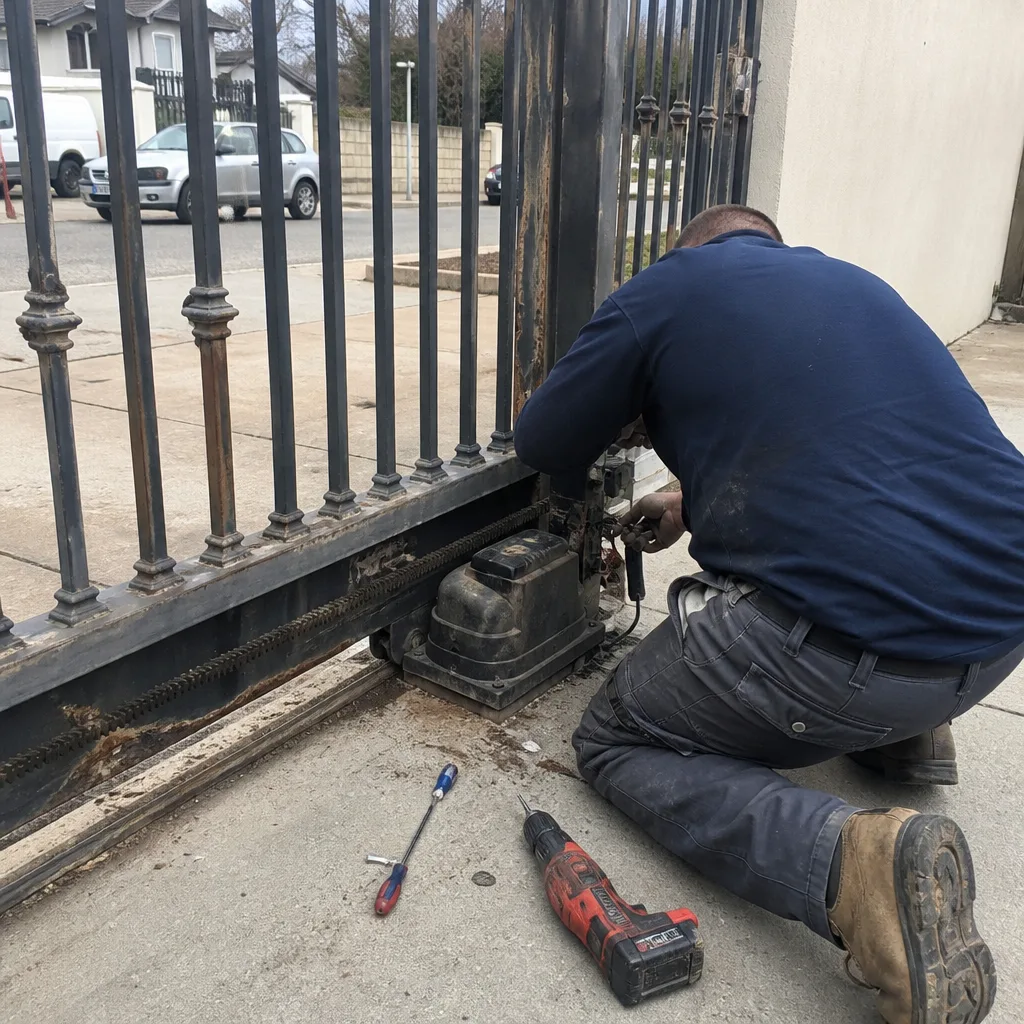 Before
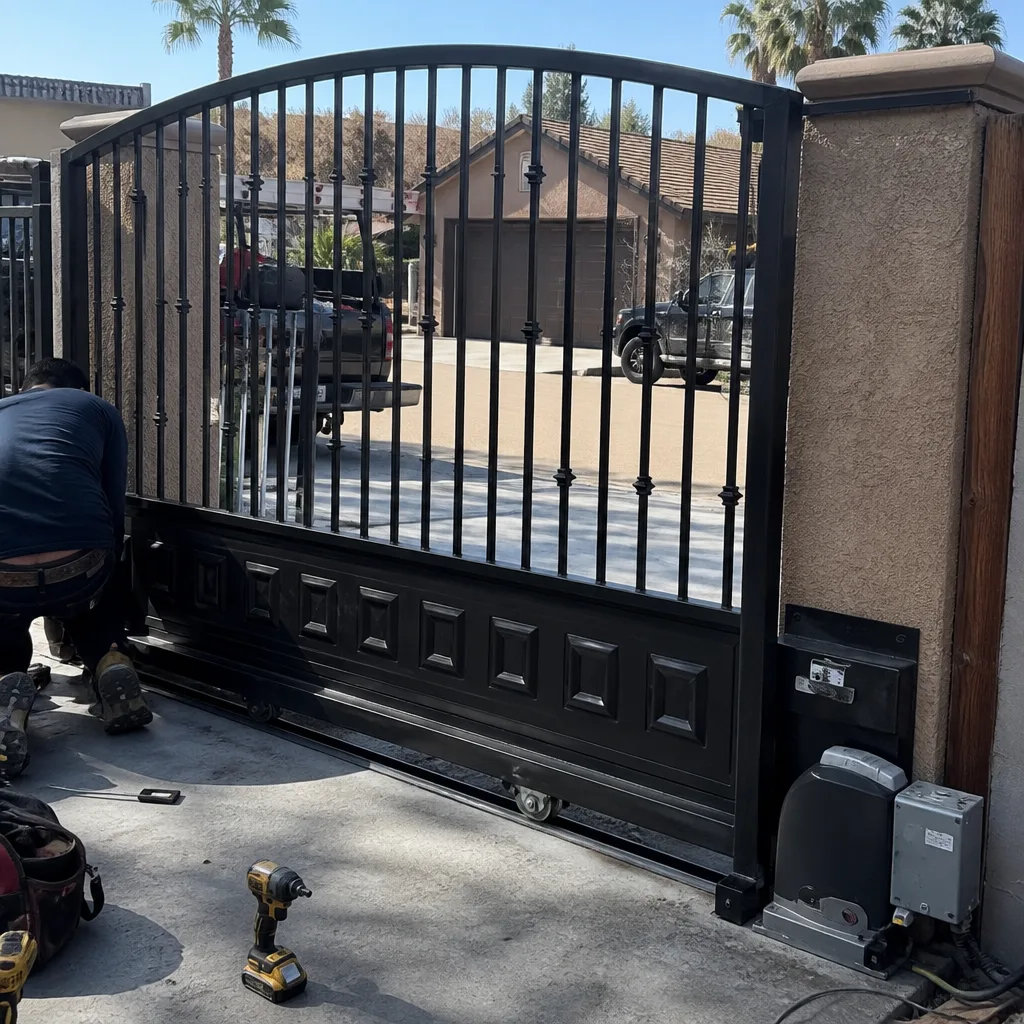 After
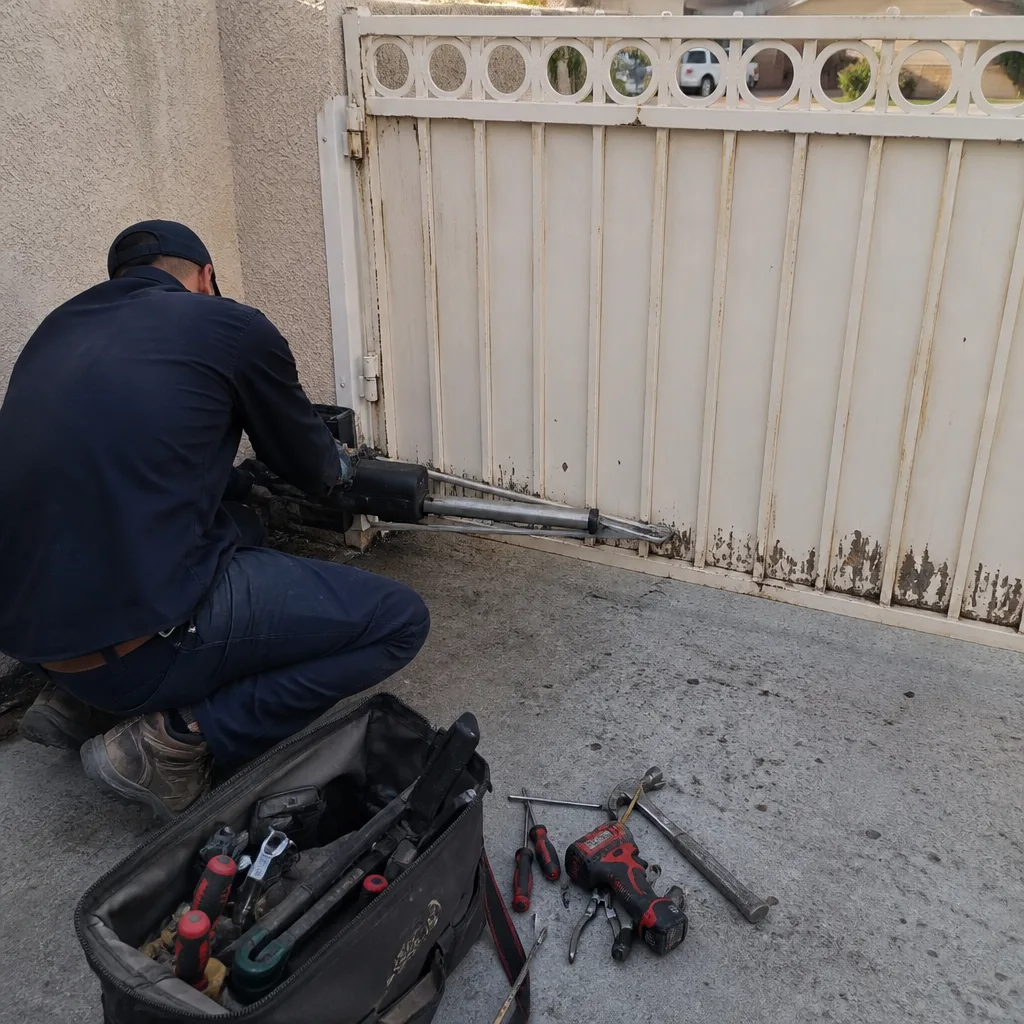 Before
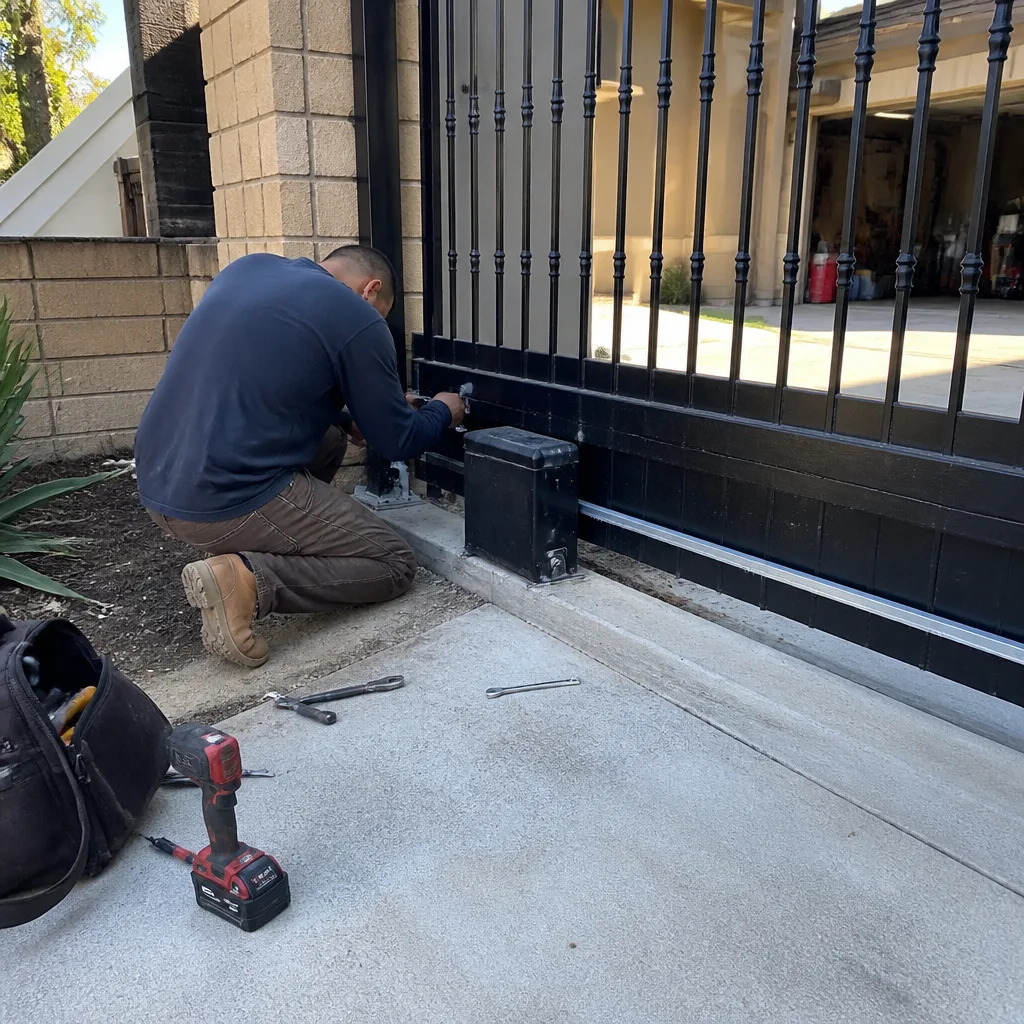 After
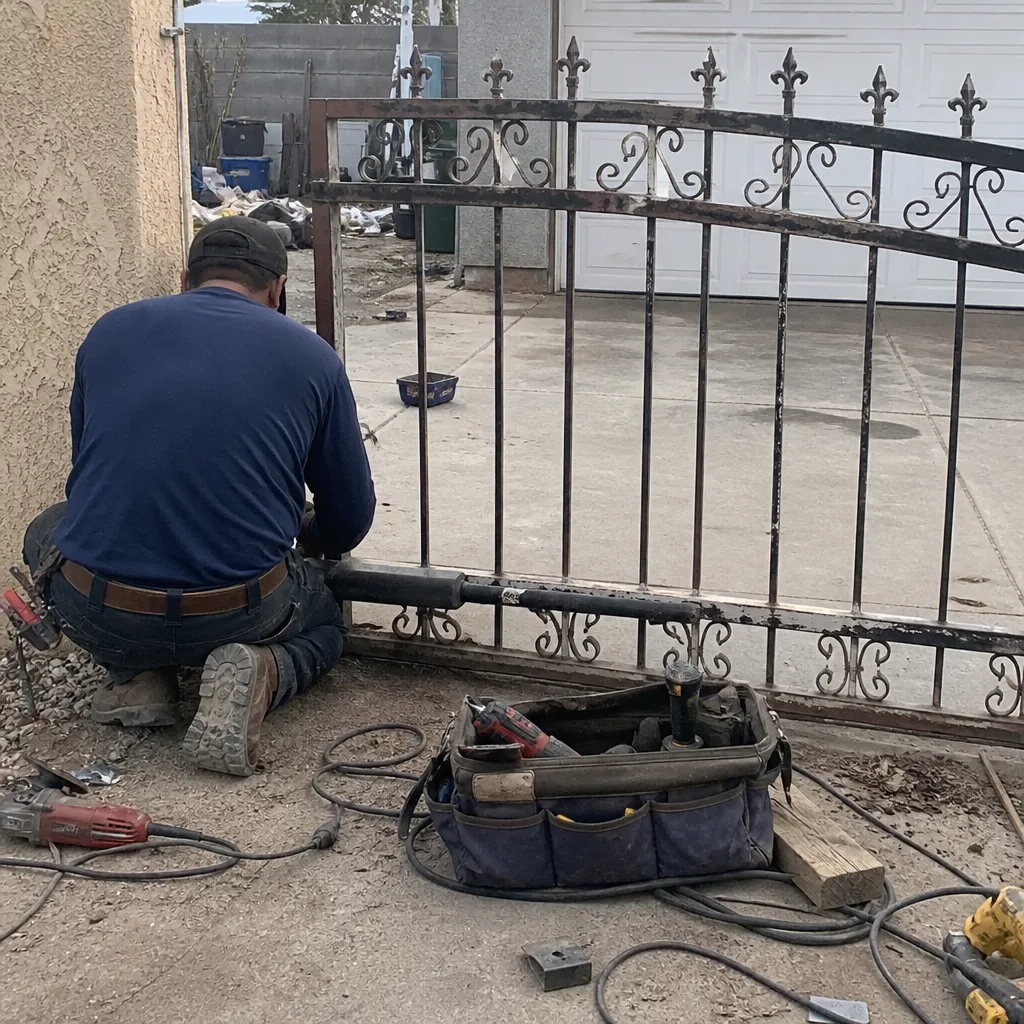 Before
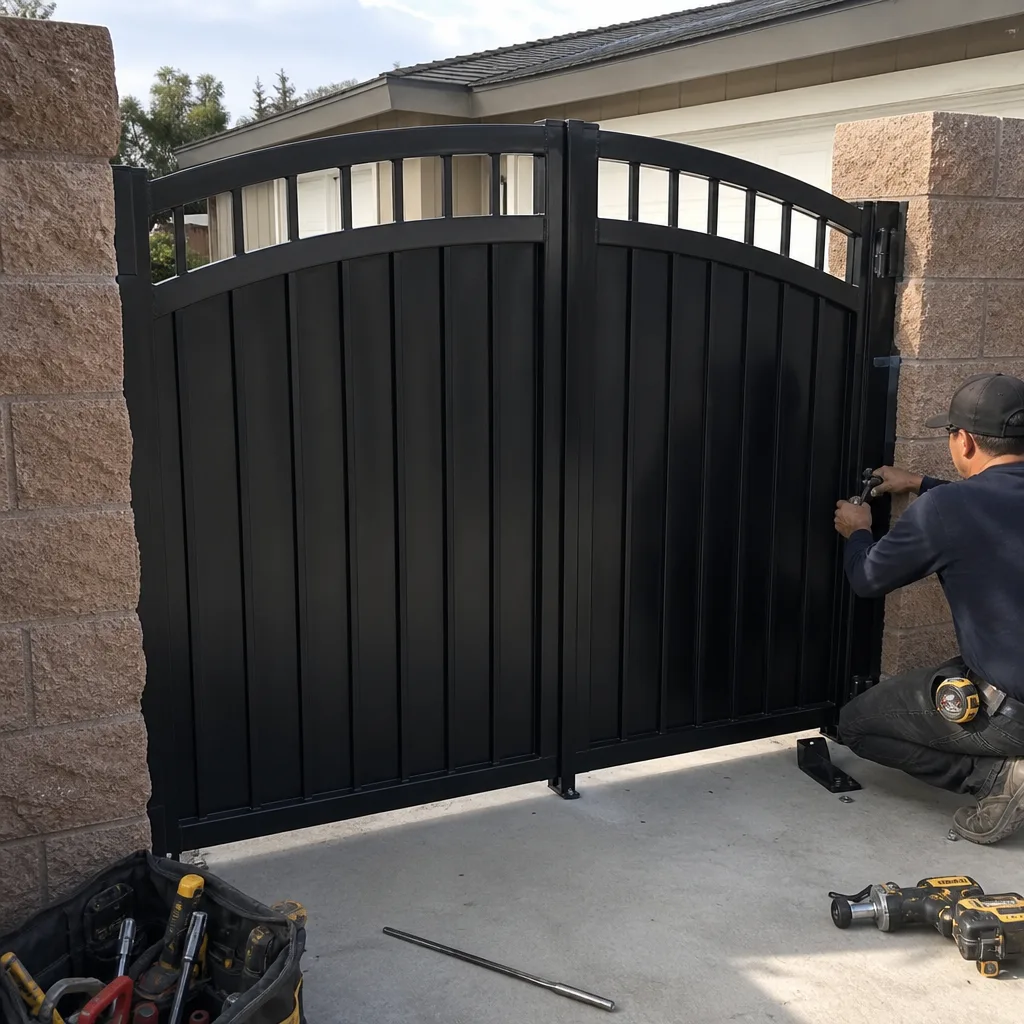 After
Frequently Asked Questions
Locate the manual release on your gate operator, which is a lever, pull handle, or keyed cylinder depending on the brand. Activate it to disconnect the gate from the motor, then push the gate open by hand. If your release requires a key and you don’t have it accessible, call (866) 569-6584 for emergency help in Rialto.
Emergency gate repair in Rialto typically ranges from $150 to $400 depending on the failure. Simple fixes like a blown capacitor or a misaligned sensor fall on the lower end. Motor replacement, control board repair, or welded hinge work runs higher. The exact quote comes after diagnosis, and we give you a firm price before any work begins. Call (866) 569-6584 for a free estimate.
In most cases, yes. We keep common parts for the major operator brands on our trucks, which means many repairs happen on the first trip. If your gate is stuck open or you’re locked out, call (866) 569-6584 and we’ll give you a realistic arrival window based on where our technicians currently are in Rialto.
Yes. Every automated gate operator, regardless of age or brand, has a manual release mechanism. On older models it’s often a pull chain or a lever on the motor housing. On newer models it may be a keyed cylinder. If you can’t find yours, we’ll locate it during a service visit and show you exactly how to use it.
First, kill power to the operator at the breaker so it can’t move unexpectedly. Then secure the opening with a chain and padlock or a vehicle blocking the entrance. Bring valuables out of sight. Then call (866) 569-6584 and we’ll walk you through what’s likely happening and get a technician dispatched to your Rialto property.
We service the brands most commonly installed in Rialto, including BFT, Linear, Viking, and Ghost Controls, along with LiftMaster, FAAC, DoorKing, Elite, and Mighty Mule. Whatever operator is on your property, we can diagnose it and source the right parts. Call (866) 569-6584 to confirm your specific brand.
The Bottom Line
A gate that won’t open in an emergency is a problem you solve before it happens. Find your manual release this week. Test it. Figure out whether it needs a key and put that key where you can reach it from outside the gate. Build a gate emergency card with your operator model, release location, override code, and service contact, and keep copies in your vehicles. Test your battery backup by killing the breaker. And know that when something does fail, Gate Repair Rialto handles the whole system, from the motor to the hinge, across every major operator brand. For more guides & resources, visit our blog. Call (866) 569-6584 for a free estimate, and get your gate ready before you need it.
Written by the team at Gate Repair Rialto, serving Rialto since 2013.