
Last updated November 2, 2026
 Wrought iron
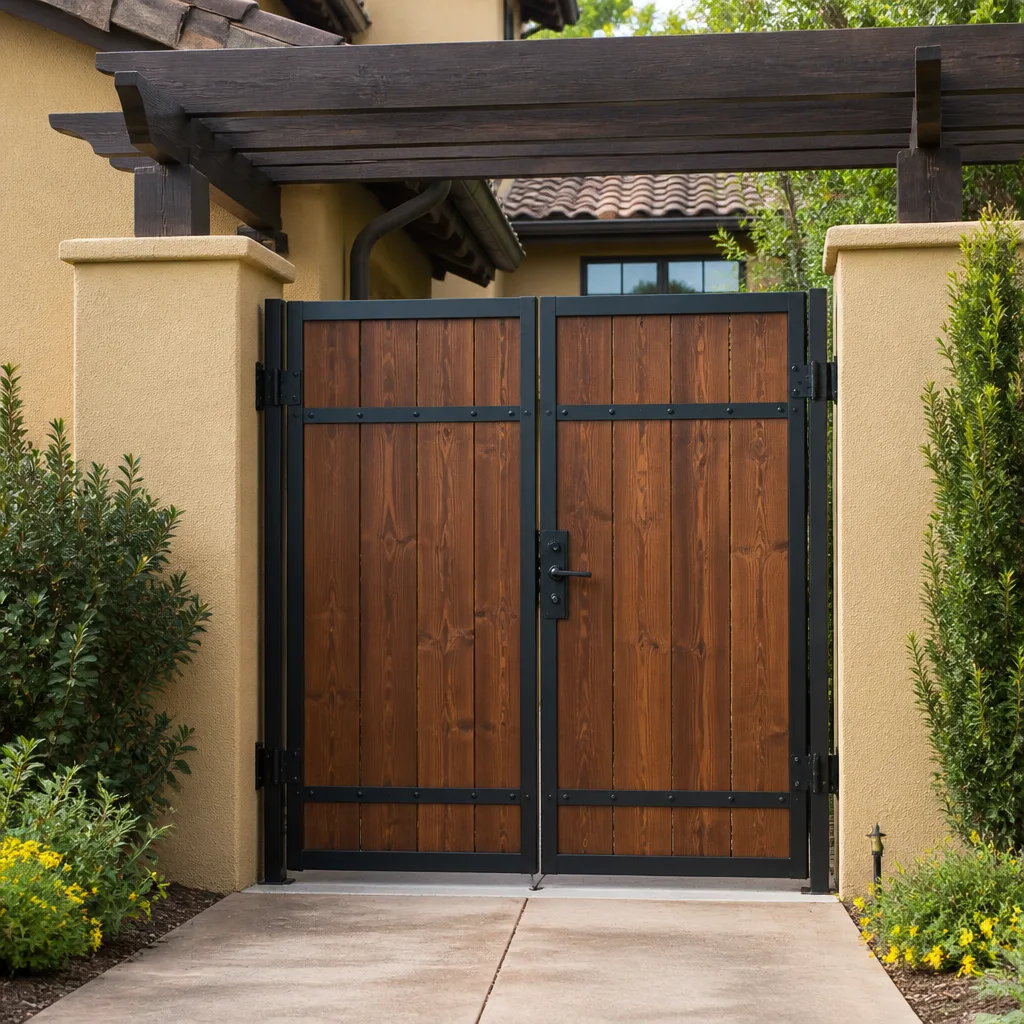 Wood & steel frame
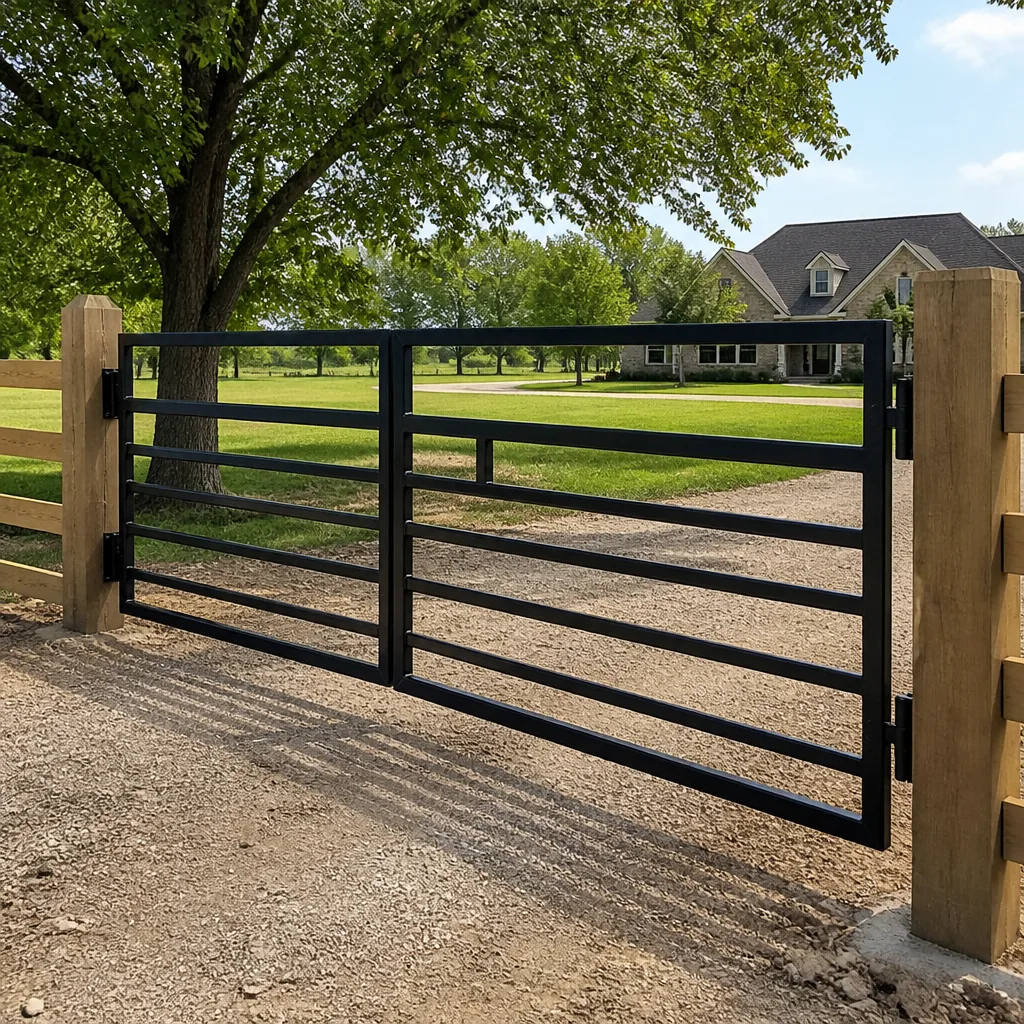 Farm & ranch
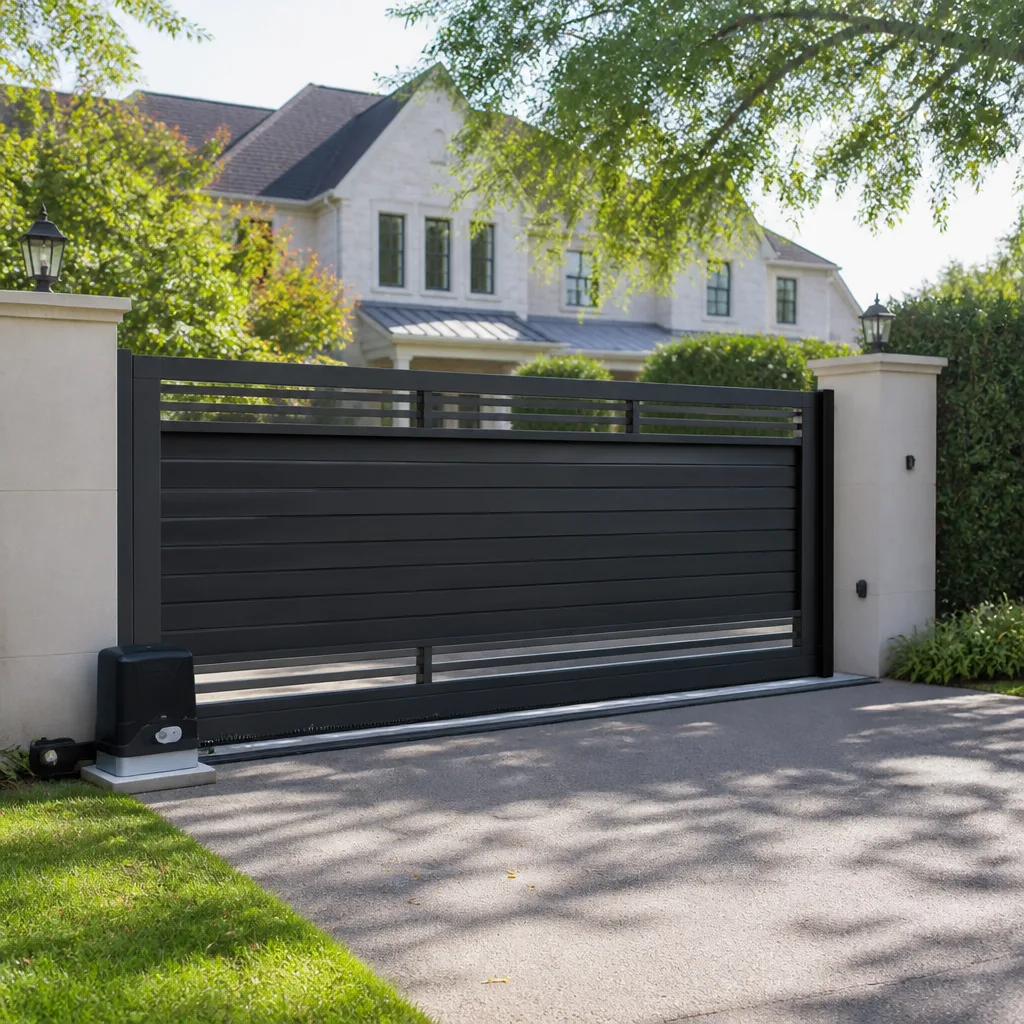 Sliding driveway gates
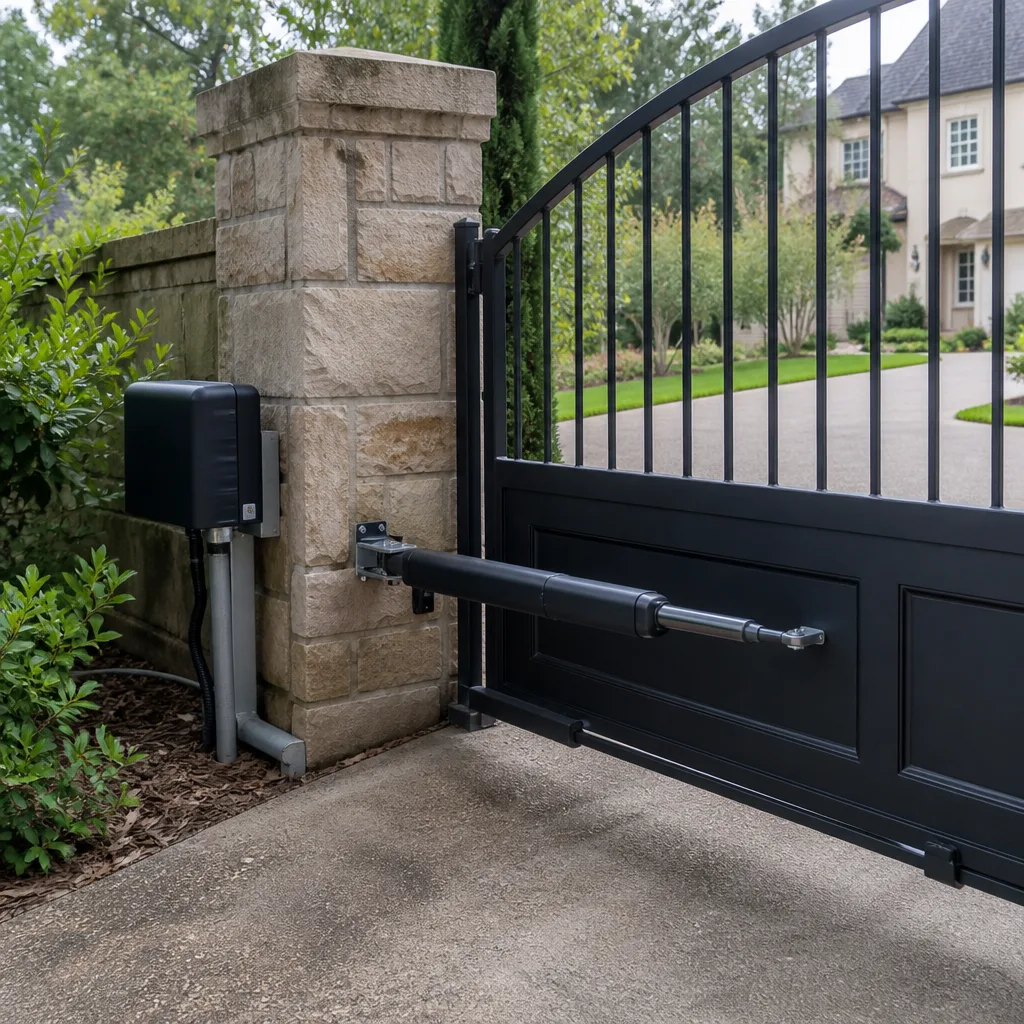 LiftMaster operators
Free on-site gate assessment - hinges, posts, and your LiftMaster or Nice gate operator checked before anything is quoted
The assessment is free and the quote is the invoice.
Get your free estimateGate Repair Permits, Codes & Inspections in CA: What You Need to Know
An unpermitted electric gate installation or major repair in California doesn’t just risk a fine. If someone is injured by that gate, the homeowner’s insurance carrier can use the permit gap to deny the claim entirely. In Rialto, where winds whip through the Santa Ana corridor and dust chews at gate hardware year-round, we see this scenario more often than most property owners would believe. This guide explains exactly where California draws the line between maintenance and permitted work, what inspectors actually verify, and how to protect yourself from liability that follows the deed, not the contractor. For Gate Repair Troubleshooting: Common Problems and How to Fix Them, see our companion resource.
Quick Answer
In California, gate repairs that replace existing components with like-for-like parts, such as swapping a hinge, control board, or wheel, generally don’t require a permit. Gate work that requires a permit includes new gate installations, moving or widening gate openings, adding a gate operator to a gate that never had one, and structural modifications to posts or footings. For professional help, consider our Gate Repair services. Electric gate systems must also comply with UL 325 entrapment protection standards regardless of permit status, and in Rialto, the City’s Building & Safety Division enforces these requirements through its inspection process.
Styles & brands we work with
- Wrought iron
- Wood & steel frame
- Farm & ranch
- Sliding driveway gates
- LiftMaster operators
Table of Contents
- Permits vs. Maintenance: Where California Actually Draws the Line
- UL 325 Entrapment Protection: What the Law Requires for Automated Gates
- How Rialto’s Permitting Process Works: Timelines, Fees, and What Inspectors Check
- The Liability Exposure of an Unpermitted Gate Installation
- HOA Approval vs. City Permits: Why They’re Separate and How They Conflict
- What a Permit Retrofit Process Looks Like
- Common Mistakes to Avoid
- When to Call a Professional
Permits vs. Maintenance: Where California Actually Draws the Line
The California Building Code treats gate work differently depending on whether you’re restoring what already exists or creating something new. Most honest contractors will tell you the same thing: routine maintenance never needs a permit. The confusion starts when a repair crosses into replacement territory, because not all replacements are created equal.
What Counts as Maintenance (No Permit Required)
- Replacing a worn gate wheel or roller with a matching part
- Swapping a failed control board on an existing electric gate operator
- Replacing hinges, brackets, or a latch with like-for-like hardware
- Lubricating tracks, tightening hardware, and adjusting the gate’s swing or slide path
- Replacing photo eyes, safety edges, or keypads that are already part of an installed system
- Welding a cracked weld on an existing gate frame without changing the gate’s dimensions or footprint
These are maintenance functions because the gate’s design, location, and operational envelope haven’t changed. You’re restoring the system to its original working condition, not altering it.
What Triggers a Permit Requirement
Permit triggers in California fall into a few consistent categories. The first is new construction: installing a gate where none existed. The second is structural modification: moving a gate post, widening an opening, or changing the gate’s size, height, or mass. The third is adding automation to a previously manual gate, because this changes the operational risk profile from a simple barrier to a powered machine. The fourth is electrical work: running new power lines, adding a subpanel, or installing a new circuit to serve the gate operator.
Here’s the nuance most contractors won’t explain: replacing an entire gate with an identical unit still technically falls under “repair” if the posts stay put and the new gate matches the old one’s dimensions. But if that replacement adds weight, changes the swing direction, or modifies the post embedment depth, you’ve crossed into permitted territory. In Rialto, the Building & Safety Division uses these same distinctions, and inspectors are trained to spot when a “repair” has quietly become an alteration.
UL 325 Entrapment Protection: What the Law Requires for Automated Gates
UL 325 is not a recommendation. It’s a federal safety standard adopted into California law, and it exists because automated gates have killed people, many of them children. The standard governs how automated gate operators must detect obstructions and stop or reverse before causing injury. Any electric gate installed or substantially modified since 2001 must comply.
Here’s what UL 325 requires for residential automated gates in plain terms:
- Primary entrapment protection: The operator must have an inherent reversing mechanism, such as a clutch or motor current sensor, that detects resistance and reverses direction within two seconds.
- Secondary entrapment protection: At least one external device is required, either photo eyes (infrared beams that detect a person in the gate’s path) or contact edges (pressure-sensitive strips that trigger reversal on physical contact). On most residential gates, both are strongly recommended, and dual protection is increasingly required by local ordinance.
- Warning signage: Two warning signs are required on each side of the gate, visible from the approach, stating that the gate is automatic and can cause injury. The specific wording and placement are dictated by the standard.
- Gate travel limits: The operator must be set so the gate stops at the correct open and closed positions without slamming or over-traveling, which can crush fingers or bend the frame.
- Manual disconnect: A manual release mechanism must be accessible so the gate can be opened by hand during a power failure or emergency.
In practice, we see gates in Rialto with missing photo eyes, disconnected safety edges, and warning signs that faded to illegibility years ago. Learn to spot these issues early with our Gate Repair Warning Signs: A Rialto Homeowner’s Reference Guide. Each of those conditions is a code violation, and each one shifts liability directly onto the property owner. If a visitor is injured by a non-compliant gate, the defense that “the gate was here when we bought the house” doesn’t hold up. The owner is responsible for the condition of the property.
How Rialto’s Permitting Process Works: Timelines, Fees, and What Inspectors Check
The City of Rialto handles gate permits through its Building & Safety Division, part of the city’s Development Services Department. Homeowners and contractors follow the same general workflow, though licensed contractors typically complete the paperwork faster because they know what documentation inspectors expect.
The Process, Step by Step
- Application and plans: A permit application is submitted with a site plan showing the gate’s location relative to the property line, a gate detail drawing showing dimensions and materials, and, for electric gates, the operator specifications and electrical plan.
- Plan review: Staff verifies setback compliance, height limits, and that the gate’s design meets California Building Code structural requirements. For automated gates, they check that UL 325-compliant equipment is specified.
- Permit issuance: Once the plans are approved and fees are paid, the permit is issued. Fees in Rialto for gate permits are calculated based on the project valuation, and typical residential gate permits run in the low hundreds of dollars.
- Inspection scheduling: The permit holder calls to schedule inspections at the required stages. For gate work, this typically means one inspection for footing and post embedment depth before concrete is poured, and a final inspection after the gate and operator are installed.
- Final approval: The inspector verifies the gate swings or slides correctly, that the operator reverses under load, that safety devices function, and that all required signage is in place. Once signed off, the permit is closed.
What inspectors actually check in Rialto often surprises people. They’re not just confirming the gate works. They check post embedment depth, which matters because wind loads in the Inland Empire can exert enormous force on a gate face. They check that the gate can’t strike a pedestrian walking on adjacent public sidewalks. They test the entrapment protection by physically blocking the gate during operation. And they verify that warning signs are present and legible. For gate operator equipment, brands like FAAC, BFT, Linear, and Viking all ship with UL 325-compliant hardware and documentation, which streamlines inspection if the installer has kept the manuals and specification sheets.
The Liability Exposure of an Unpermitted Gate Installation
We have seen this exact scenario play out in Rialto more than once. A homeowner buys a house. The previous owner installed an electric gate without a permit. Five years later, the gate’s safety edges have failed and the owner hasn’t noticed. A child or a neighbor is pinned and injured. The homeowner files an insurance claim, and the carrier’s adjuster asks one question: was this gate installed with a permit and inspected? When the answer is no, the claim is denied.
This is not hypothetical. Insurance policies contain exclusions for work performed without required permits. The rationale is that the insurer agreed to cover a property that met code, but an unpermitted installation means no third party ever verified it did. The fact that the homeowner didn’t know the gate was unpermitted is rarely a successful defense.
Beyond insurance, unpermitted work creates disclosure problems. California law requires sellers to disclose known material facts about a property. If you know your gate was installed without a permit and you don’t disclose it, you’ve created a misrepresentation claim. If you don’t know and the buyer later discovers it through a permit search during escrow, the sale can stall while you scramble to either get the work retro-permitted or negotiate a credit. In Rialto’s competitive real estate market, a permit surprise on a gate is exactly the kind of detail that kills a deal over a $5,000 credit.
The risk isn’t limited to injury claims. If the city discovers unpermitted gate work through a complaint or a code enforcement sweep, it can issue a notice of violation, assess penalties, and require the work to be brought into compliance or removed. That process is more expensive than doing it right the first time.
HOA Approval vs. City Permits: Why They’re Separate and How They Conflict
California HOAs operate under a completely different legal framework than municipal building departments. The city cares about safety, structural integrity, and code compliance. The HOA cares about aesthetics, architectural consistency, and property values. A gate installation can pass a city inspection and still be rejected by the HOA’s architectural review committee, or vice versa.
The practical sequence matters. In Rialto, homeowners in HOA-governed communities should start with the HOA’s architectural review process before pulling a city permit. Here’s why: the HOA may impose material restrictions, height limits, or color requirements that affect the gate design. If you pull a city permit first and then the HOA demands changes, you may need to amend the permit or redo plans. The reverse sequence, city permit after HOA approval, avoids that rework.
- Review the CC&Rs: Find the architectural standards section. Some HOAs ban certain gate styles outright, particularly solid swing gates that block sightlines.
- Submit an architectural request: Include drawings, material samples, and operator specifications. Allow 30 to 60 days for review.
- Obtain written approval before city submittal: The HOA’s approval letter can be referenced in the city permit application if questions about community standards arise.
- Proceed with the city permit: Now the plans reflect both the HOA’s rules and the California Building Code.
- Coordinate installation timing: HOAs often restrict construction hours and may require advance notice to neighbors.
The conflict point is most common with automated gates. A homeowner wants a specific brand, say a FAAC operator because it’s what their previous home used, but the HOA’s approved vendor list specifies something else. Most HOAs will approve a different brand if the homeowner’s contractor provides documentation showing equivalent performance and UL 325 compliance. The key is getting that approval in writing before installation.
What a Permit Retrofit Process Looks Like
If you already have an unpermitted gate and want to bring it into compliance, the process is called a permit retrofit or “as-built” permitting. It’s more involved than getting a permit before installation, but it’s manageable if the gate was built correctly in the first place.
The steps for a retrofit permit in Rialto:
- Hire a gate contractor to assess the installation: The contractor verifies post embedment depth, gate weight and balance, operator function, and entrapment protection compliance. If the gate violates code, those issues must be corrected before a permit application is submitted.
- Prepare as-built drawings: The contractor documents the existing gate’s dimensions, materials, location, and electrical connections.
- Submit to the City of Rialto Building & Safety Division: The application explains that the gate exists and seeks a permit for the as-built condition. The city may charge a double-fee in some cases for work performed without a permit.
- Complete any required corrections: If the inspector finds deficiencies, such as missing safety edges or inadequate post depth, those must be addressed and re-inspected.
- Pass the final inspection and close the permit: Once approved, the gate is officially permitted, and the liability gap is closed.
The cost of a retrofit permit is typically higher than a pre-installation permit because of the as-built documentation requirement and the double-fee provision. But it’s dramatically cheaper than an insurance claim denial or a forced removal by code enforcement. For gates with operators from brands like Linear or BFT, the retrofit process is often straightforward because the equipment already ships with UL 325 documentation that the city accepts.
If you’re buying a home in Rialto and the seller can’t produce a permit for the electric gate, that’s a negotiation point. A retrofit permit should be completed before close of escrow, or the seller should credit the cost against the purchase price. Either way, don’t take ownership of the liability without addressing it.
Common Mistakes to Avoid
- Assuming a gate repair never needs a permit because “it’s just a repair.” Replacing a gate operator with a different model that requires new electrical work can trigger a permit even if the gate itself doesn’t change. If you’re unsure, call the Rialto Building & Safety Division and ask. A ten-minute phone call prevents a much longer headache later.
- Treating UL 325 compliance as optional because “the gate’s been fine for years.” A gate that works doesn’t necessarily meet the entrapment protection standard. Photo eyes can fail silently; safety edges can degrade. If an injury occurs, the fact that the gate functioned for years won’t shield you from liability.
- Pulling a city permit without checking HOA rules first. In Rialto’s HOA communities, installing a gate that violates CC&R aesthetic standards means you’ll either fight the HOA or replace the gate. Both outcomes are expensive.
- Reusing old posts when replacing a gate. The posts might look fine above the ground, but the embedment depth or concrete condition may not meet current code for the new gate’s weight. Inspectors check this, and so should you.
- Hiring a general contractor or fence company for an automated gate install. Electric gates involve motor torque, entrapment protection wiring, and control board configuration. A fencing crew that doesn’t understand UL 325 can install something that passes a visual inspection but fails functionally, and the liability lands on you.
- Skipping the final inspection to “save time.” An open permit is a cloud on the property title. It comes up during refinancing and during sale. Close every permit you open.
- Assuming your insurance covers unpermitted work. It generally doesn’t. Check your policy’s exclusions section if you have any doubt, but the safest assumption is that unpermitted gate work is your liability, not your insurer’s.
When to Call a Professional
Gate code compliance is not a DIY project, and the stakes are higher than a failed inspection. If you’re replacing a gate operator on an automated system, installing a gate where none existed, or adding automation to a manual gate, hire someone who does nothing but gates. The difference shows up in the details: correct post embedment, proper entrapment protection wiring, correct torque settings, and documentation that satisfies both the city inspector and your insurance carrier. In Rialto, electric gate repair work is what we do every day, and we carry the brand-specific knowledge to handle whatever equipment is already on your property, whether it’s a Viking swing arm, a FAAC hydraulic operator, a BFT slide gate motor, or a Linear residential unit. Gate Repair Rialto offers free estimates in Rialto. Call (866) 569-6584 and we’ll tell you exactly what your gate needs, including whether a permit is required.
See the difference
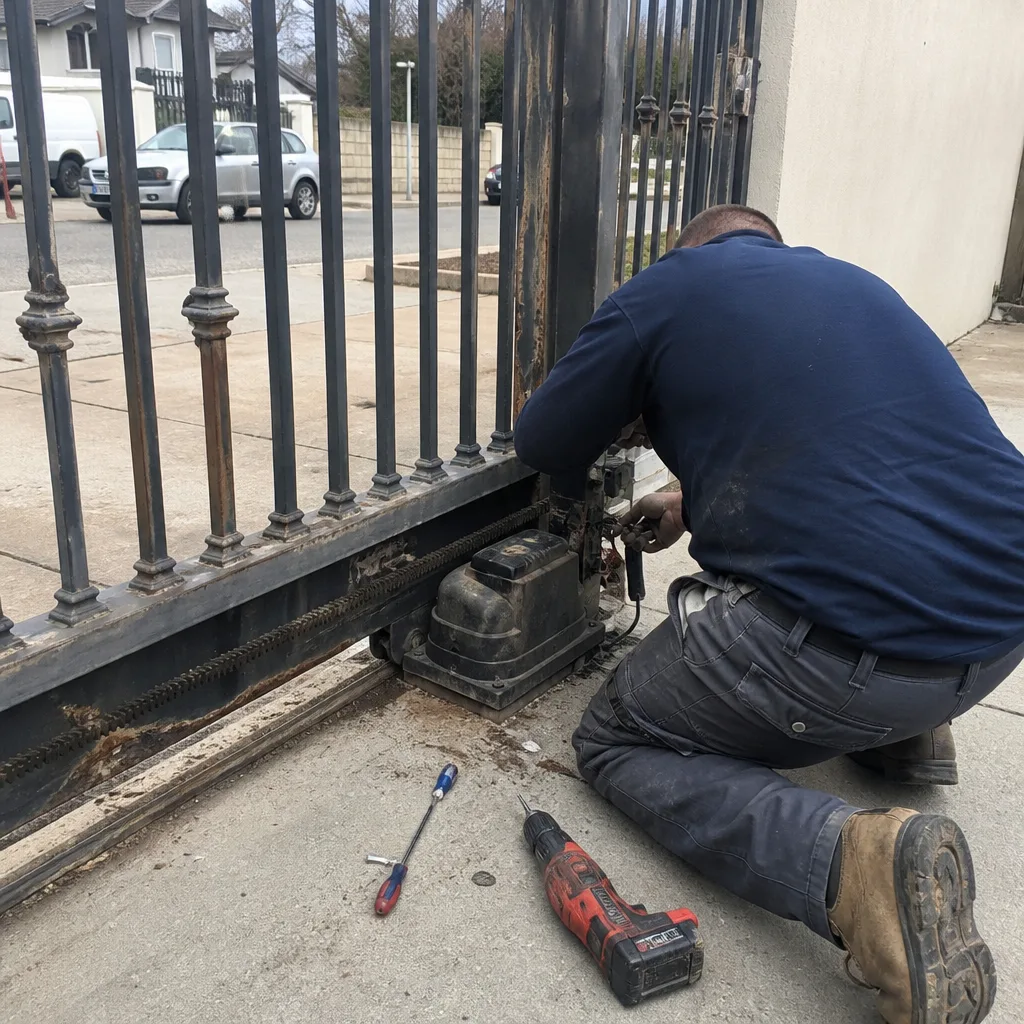 Before
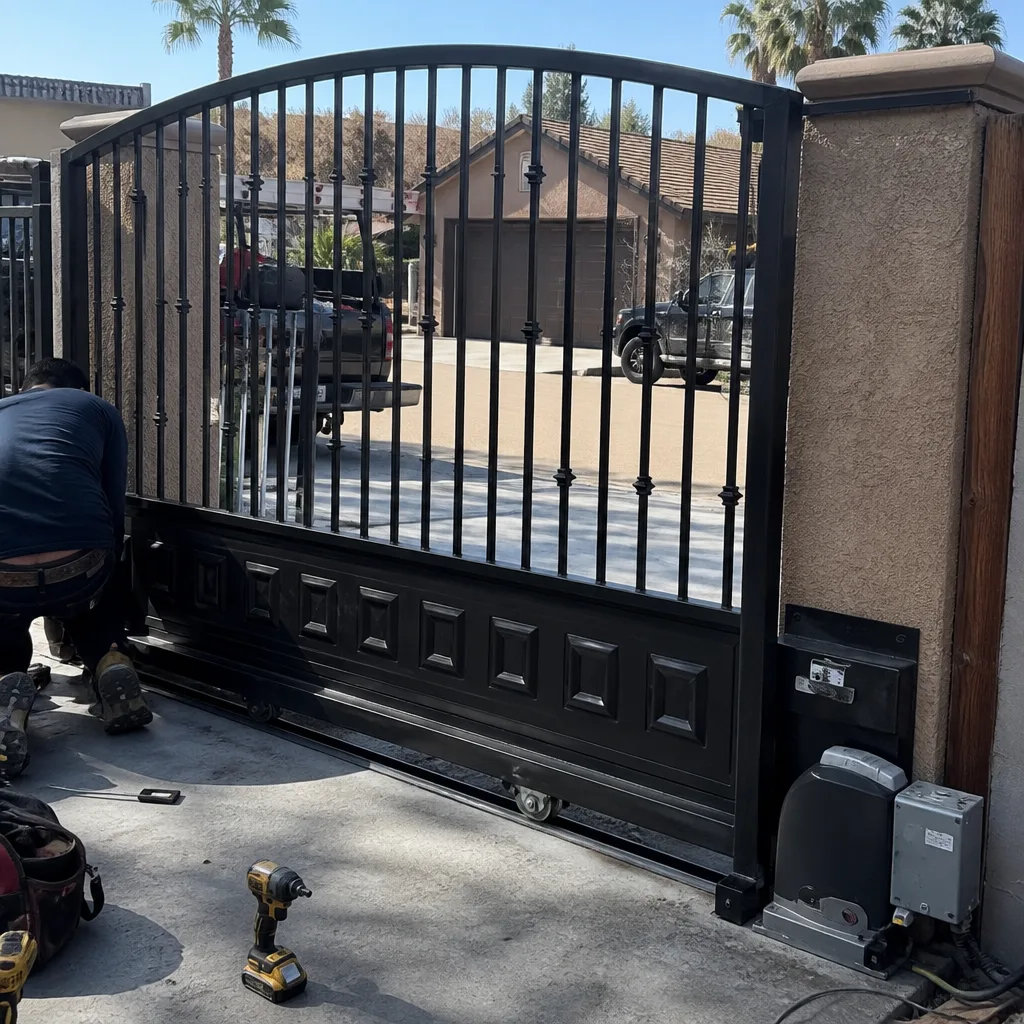 After
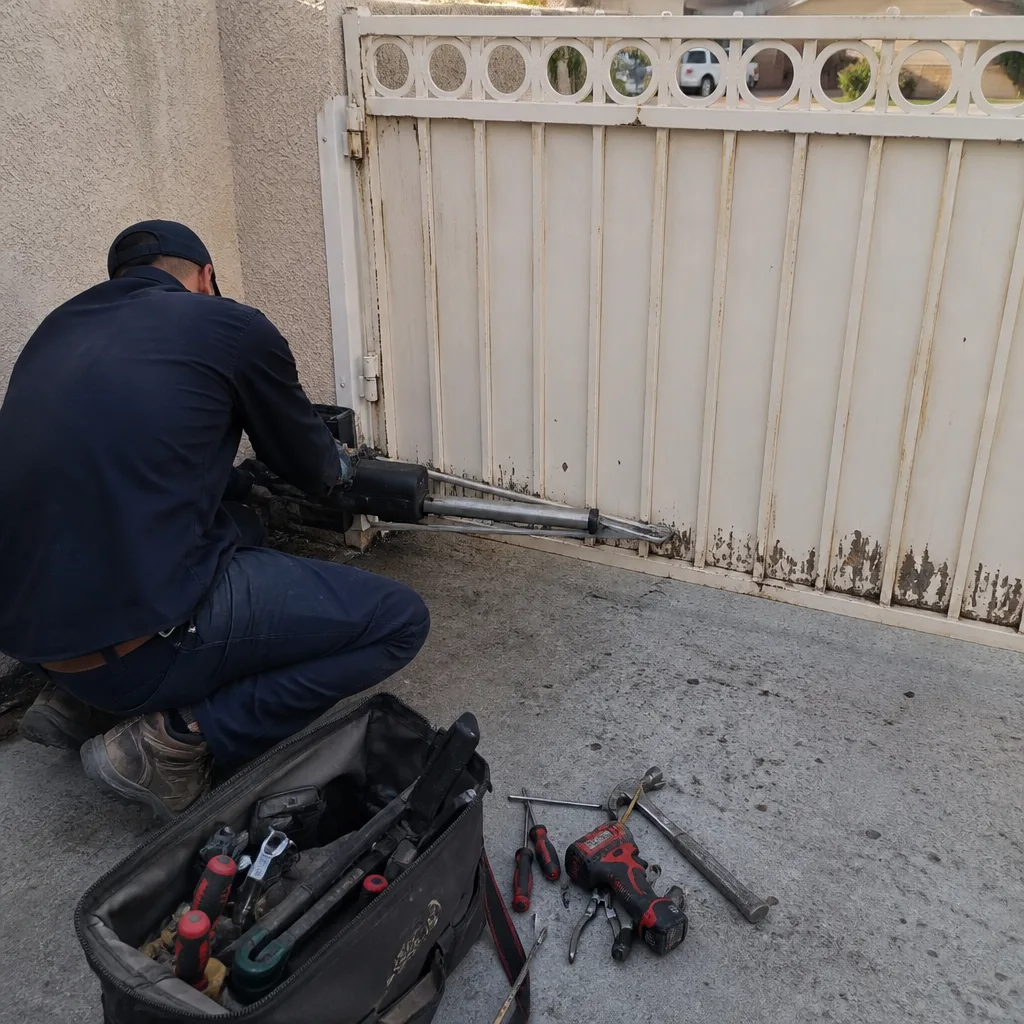 Before
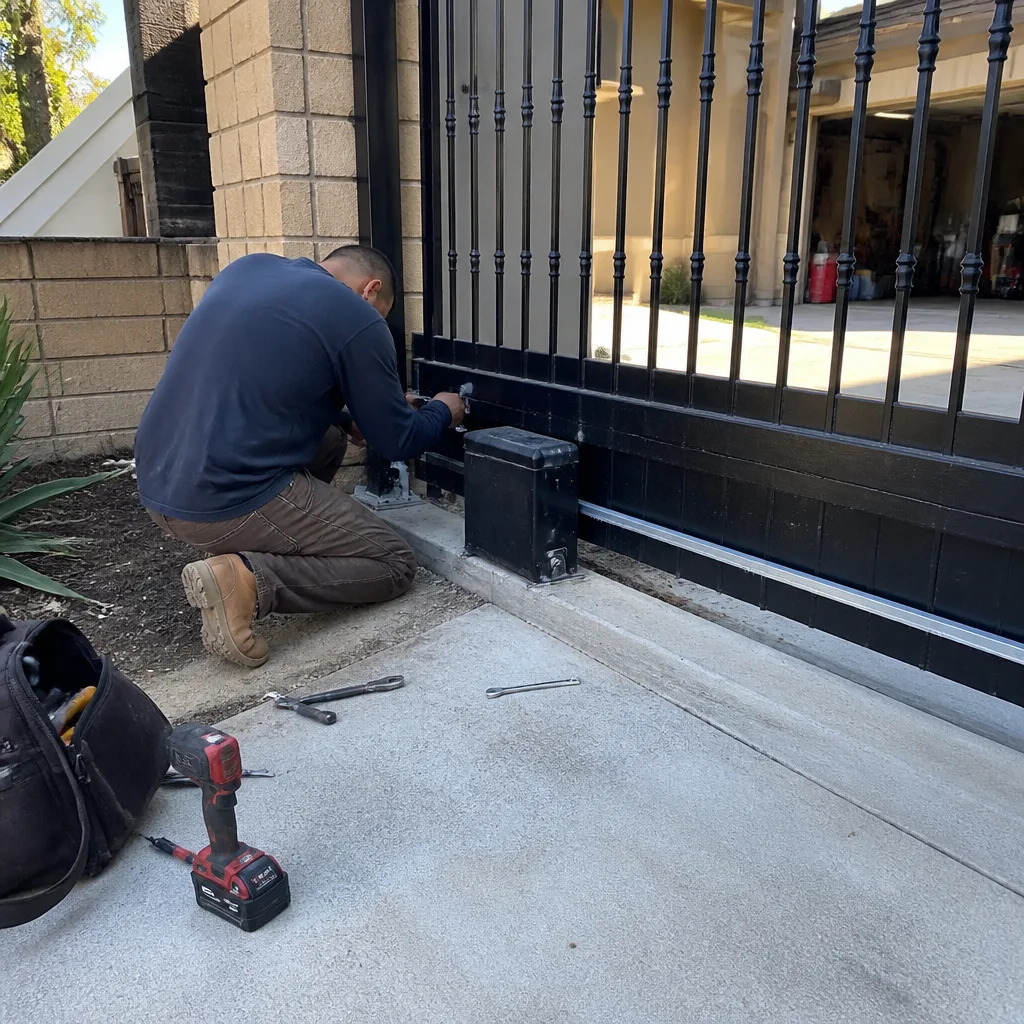 After
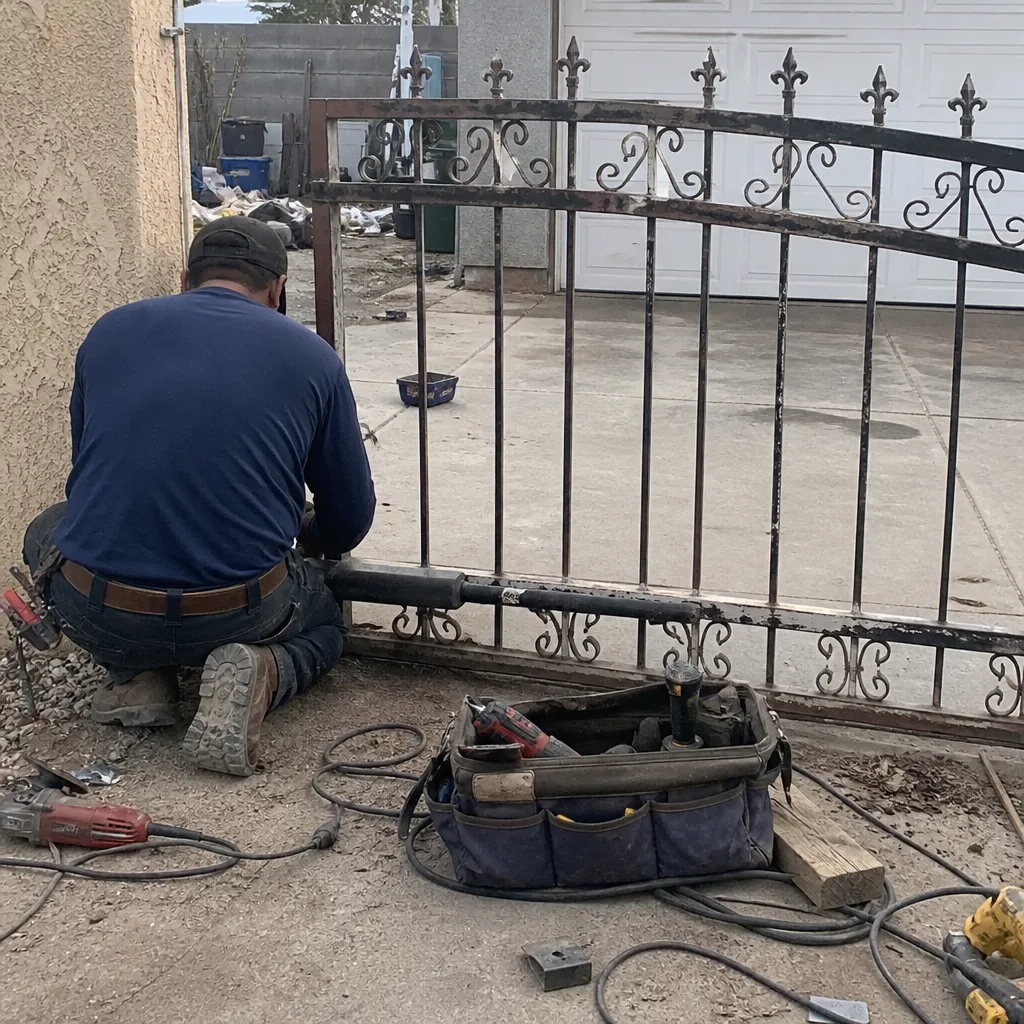 Before
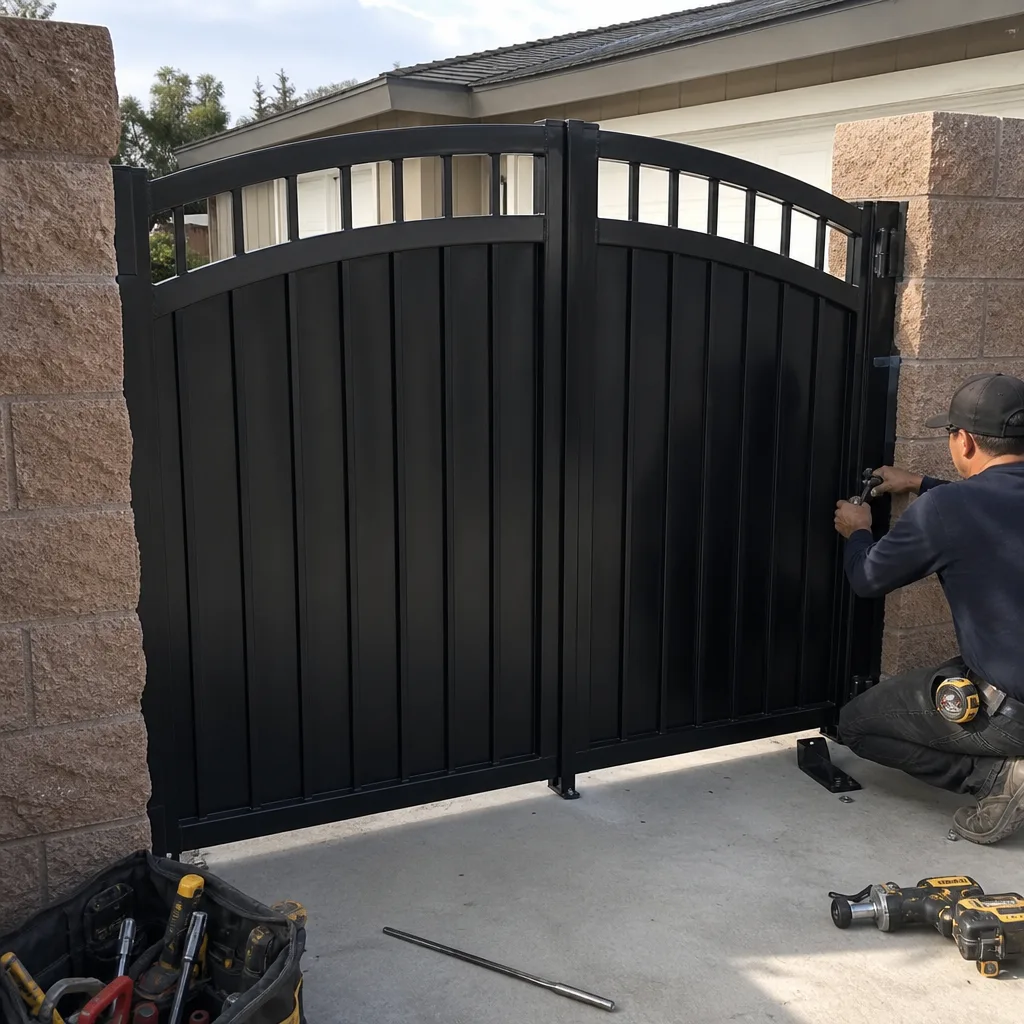 After
Frequently Asked Questions
Most repairs to existing gates in Rialto don’t require a permit, including replacing hinges, control boards, wheels, and safety devices with like-for-like parts. A permit is required when the repair changes the gate’s structure, adds an operator to a previously manual gate, or involves new electrical work.
Gate permits in Rialto are calculated based on the projected value of the work, with most residential gate permits running in the low hundreds of dollars. The total includes plan review and inspection fees, and the exact number depends on whether the project is a new installation, a structural modification, or a retrofit of existing unpermitted work. Call (866) 569-6584 and we’ll help you estimate the permit cost for your specific project.
No. Adding a gate operator changes a manual gate into a powered machine, which triggers a permit requirement under the California Building Code. The permit process verifies that the operator meets UL 325 entrapment protection standards and that the electrical connection is code-compliant.
UL 325 is a federal safety standard that governs automated gate operators, requiring entrapment protection such as auto-reverse mechanisms and photo eyes or contact edges. The standard exists to prevent crushing injuries and deaths, and compliance is mandatory in California for all automated residential gates regardless of when they were installed.
You inherit the liability. If someone is injured by an unpermitted gate, the insurance carrier may deny the claim based on the permit gap. You should have the gate retro-permitted through the City of Rialto or negotiate a credit from the seller before close of escrow. For guidance on what a retrofit involves, see our gate installation page or call (866) 569-6584.
Yes. HOA approval and city permits are separate processes with different standards. The city enforces building code and safety; the HOA enforces aesthetic and architectural rules. You need both approvals, and the HOA approval should come first so your gate design doesn’t require a city permit amendment later.
All major brands sold in the U.S. market must comply with UL 325, including FAAC, BFT, Linear, and Viking. Compliance isn’t brand-specific; it’s about how the operator is installed and configured. A compliant operator can be installed incorrectly and fail an inspection.
The Bottom Line
California’s gate permit and code requirements exist for a reason. UL 325 compliance prevents serious injuries, and the permit process ensures a trained inspector has verified your gate won’t become a liability. In Rialto, the distinction between maintenance and permitted work is clear once you understand it, and ignoring it carries consequences that follow the property through every future sale. Get the permit when the law requires one, make sure your automated gate has working entrapment protection, and work with a gate repair specialist in Rialto who understands the difference between a real repair and a code violation. The price of doing it right is always less than the cost of doing it over.
Written by the team at Gate Repair Rialto, serving Rialto since 2013. Explore more guides & resources on gate maintenance and compliance.