
Last updated November 2, 2026
 Wrought iron
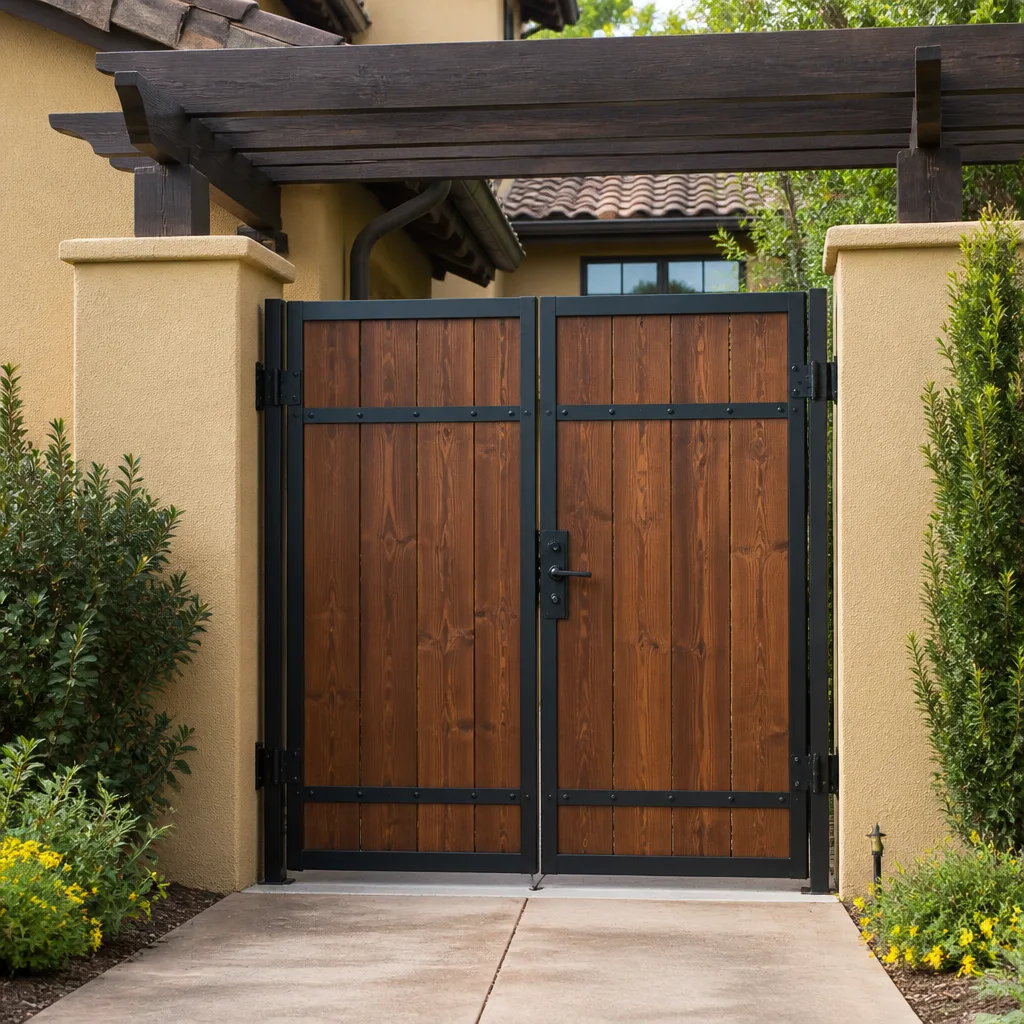 Wood & steel frame
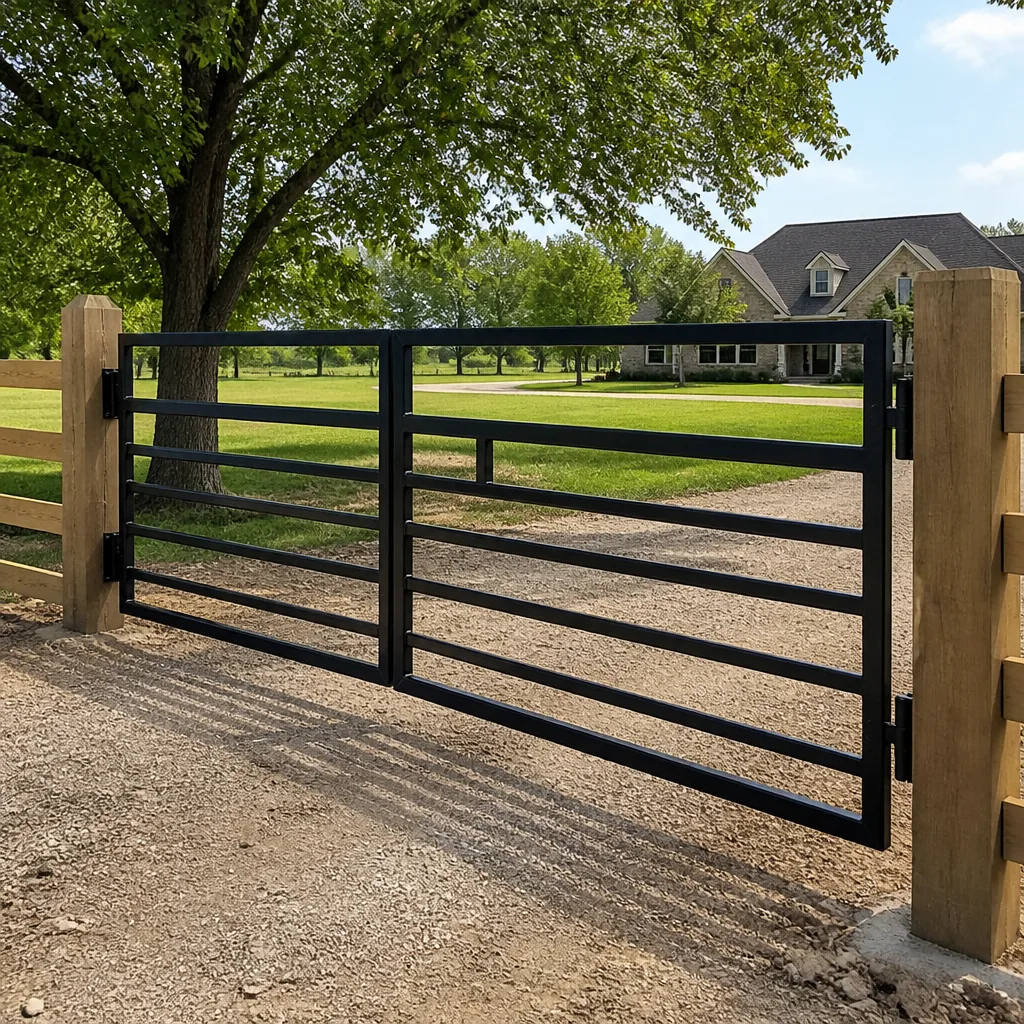 Farm & ranch
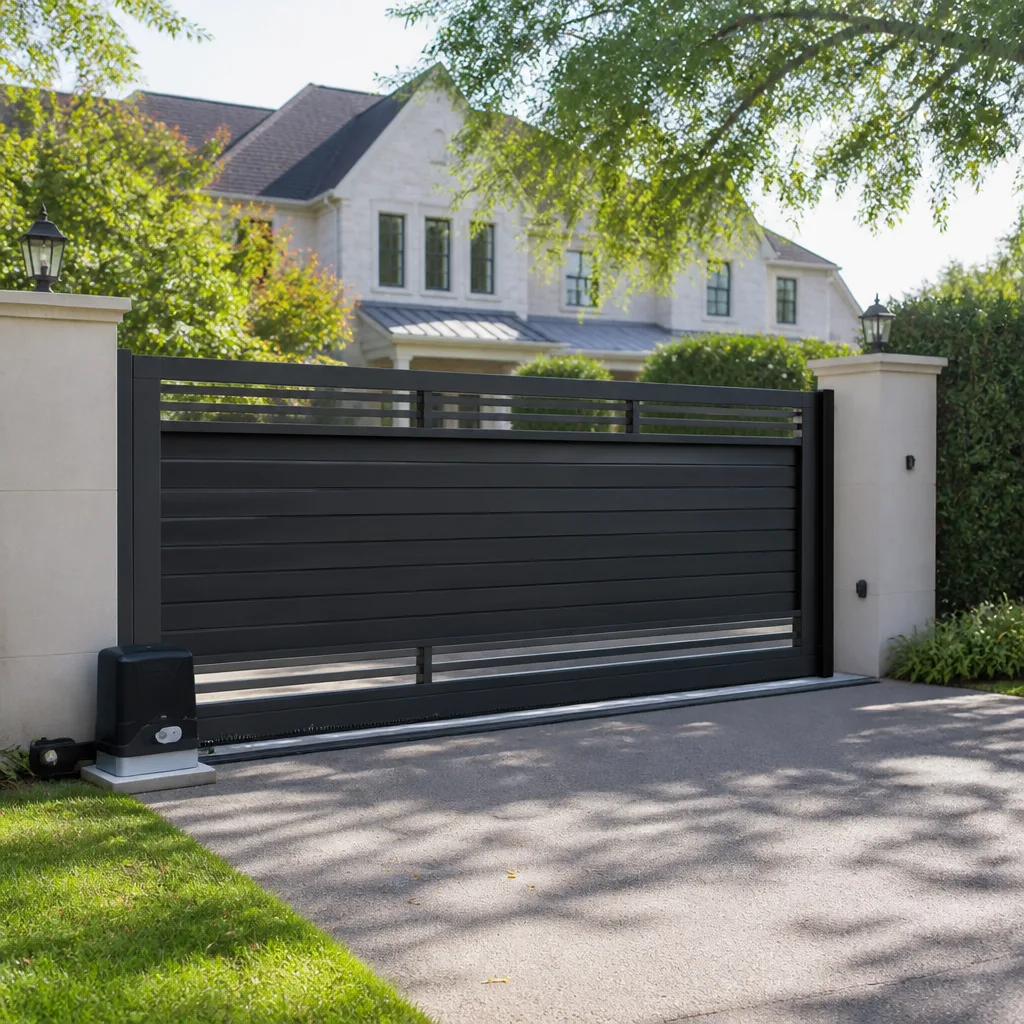 Sliding driveway gates
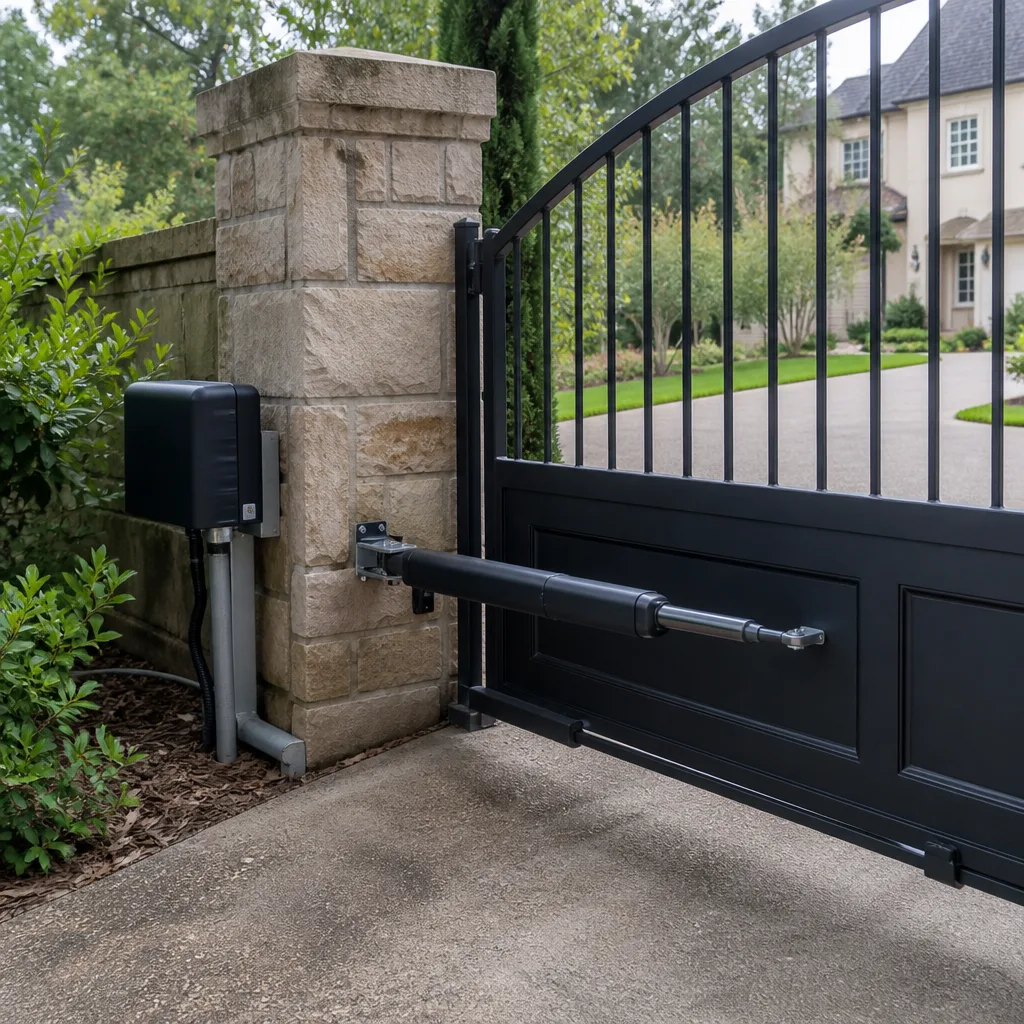 LiftMaster operators
Free on-site gate assessment - hinges, posts, and your LiftMaster or Nice gate operator checked before anything is quoted
The assessment is free and the quote is the invoice.
Get your free estimateGate Repair Warning Signs: A Rialto Homeowner’s Reference Guide
A gate that hesitates for two seconds before moving isn’t “warming up.” It’s showing you a motor, capacitor, or track problem that will become a complete failure within weeks, usually at the least convenient moment. Gates don’t die suddenly. They communicate through sound, timing, and movement patterns long before the final breakdown. Rialto homeowners who learn to read these signals can schedule repairs on their own terms instead of scrambling for emergency service at 6 a.m. on a workday. This guide walks you through every warning sign that matters, what each one actually means, and which ones demand immediate attention, or you can check How to Hire a Gate Repair Contractor in Rialto: A Step-by-Step Guide if you’re ready to bring in a pro.
Quick Answer
The most common gate repair warning signs in Rialto are grinding or clicking sounds during operation, a gate that moves slower than it used to, a gate that stops mid-travel or reverses without obstruction, visible rust streaking or weld cracks near hinges, and remote or keypad response that fades or becomes intermittent. Any of these signals means a component is already failing. Waiting weeks to address them almost always turns a $150 hinge replacement into a $900 motor and control board job. If your Rialto gate shows any combination of these symptoms, call a gate specialist or explore our Gate Repair services before the gate stops moving entirely.
Styles & brands we work with
- Wrought iron
- Wood & steel frame
- Farm & ranch
- Sliding driveway gates
- LiftMaster operators
Table of Contents
- Sound-Based Diagnostics: What Your Gate Is Telling You
- Movement Pattern Warnings: Slow, Stuttering, and Stopping
- Visual Indicators Most Homeowners Walk Past
- Remote and Keypad Behavioral Clues
- The “Last Chance” Warning Signs
- Electric Gates vs. Manual Gates: Different Failure Profiles
- Common Mistakes to Avoid
- When to Call a Professional
- Frequently Asked Questions
Sound-Based Diagnostics: What Your Gate Is Telling You
A gate produces a baseline sound when it operates: motor hum, wheel roll, the soft clunk of the latch engaging. When that baseline changes, something specific is happening. Here’s a breakdown of the four sounds we hear most often on service calls across Rialto and what each one points to.
Grinding. A grinding sound almost always means metal-on-metal contact where there shouldn’t be any. On a sliding gate, this typically points to worn or seized rollers, debris packed into the track, or a drive chain that’s lost tension and is dragging against the housing. On a swing gate, grinding usually comes from the hinge area when hinge pins have worn out of round, or from the bottom of the gate dragging against the driveway because the post has shifted and the gate now sits lower than it was designed to. Left alone, grinding accelerates wear on every downstream component. The motor works harder, draws more current, and ages faster. In our experience working on gates in Rialto, a grinding sound addressed within the first week or two is usually a roller, hinge, or track issue in the $150 to $400 range. The same sound ignored for two months becomes a motor replacement.
Clicking. A rapid clicking sound when you press the remote or keypad typically means the operator is receiving power but not enough current to engage. On electric gate systems, this often points to a failing capacitor, which stores and releases the initial surge of energy needed to start the motor. Clicking can also indicate a dead or dying battery in a solar-powered system, a relay inside the control board that’s failing to close, or a low-voltage condition at the transformer. If the gate clicks once and does nothing, that’s the start circuit. With brands like Viking and Mighty Mule, we often see capacitor failure present exactly this way: single click, no movement, then nothing until power cycles.
Humming without movement. When you hear the motor humming but the gate doesn’t move, the motor is getting power but the mechanical system isn’t responding. This is one of the most time-sensitive warning signs because a stalled motor can burn out in under a minute. Usually, the cause is a seized drive mechanism: a bound chain, a broken gear, a frozen roller, or a foreign object jammed into the track. On swing gates, a humming motor with no movement sometimes means the gearbox has stripped internally. If you hear this, do not hold the button and keep trying. Cut power at the breaker, kill the battery disconnect if there is one, and call for service. Humming-without-movement is a same-day repair, not a weekend project.
Intermittent squealing. A squeal that comes and goes, often louder when the gate first starts moving or on hot afternoons, usually indicates a bearing or bushing that’s starting to dry out and fail. In Rialto’s summer heat, grease breaks down faster than it does in coastal climates. Temperatures above 100°F thin out lubricants and accelerate bearing wear on electric gate operators from every manufacturer. Squealing is often the first audible clue that a bearing is on its way out, and it tends to show up weeks before the bearing seizes or fractures.
Movement Pattern Warnings: Slow, Stuttering, and Stopping
Sound is one channel. Movement is another. A gate that moves differently than it did six months ago is giving you data. The specific pattern matters because different patterns point to different systems.
Slow Operation
A gate that moves noticeably slower than it used to is almost always a drive-side problem. On electric systems, the most common causes are a weakening motor, a failing capacitor, a drive belt that’s stretched and slipping, or a battery in a solar or backup system that no longer holds full charge. On mechanical gates, slowness often means degraded rollers, hinge pins that have started to bind, or a track that’s been subtly deformed by heat expansion over multiple Rialto summers. Gate operators from DoorKing and Elite are designed to move within a specific speed range. When they slow down, it’s not a setting issue. It’s a component issue. Waiting until the gate stops entirely is the expensive way to handle it, because a motor that’s been laboring for months under increased load is a motor that’s closer to complete failure.
Stopping Mid-Travel
When a gate starts moving and then stops partway, the most common culprits are safety sensors, limit switches, or an obstruction detection system triggering falsely. On an automatic gate, the operator constantly monitors resistance. If the system detects more resistance than expected, it assumes something is blocking the path and stops. A failing capacitor can cause this pattern because voltage sags halfway through the travel cycle. A limit switch that’s drifted out of alignment can also cause the gate to stop short of its full open or closed position. Ghost Controls and Viking systems use magnetic or mechanical limit sensing; when those limits drift, the gate stops at the wrong spot. This is also one of the most common causes of a gate that won’t fully close, which is both a security problem and an invitation for further damage as wind catches the partially open leaf.
Reversing Without Obstruction
A gate that reverses direction in the middle of its travel with nothing in the path is nearly always a safety system fault. Modern gate operators are required by code to reverse when they detect an obstruction. When the detection system fails or becomes oversensitive, the gate reverses when it should keep moving. This can be caused by dirty or misaligned photo eyes, a damaged safety edge strip, a control board input that’s shorted, or interference on the sensor wiring. On some systems, the reversal is tied to a force-sensing circuit that’s drifted out of calibration. In Rialto, we see false reversals more often in the months after heavy winds, because dust and debris blown into sensor lenses fouls the beam. A gate that reverses randomly is not safe to leave powered, because each false reversal cycles the motor and wears the drive components faster.
Visual Indicators Most Homeowners Walk Past
Some warning signs don’t make sound and don’t show up in movement. They’re visible only if you look. These are the ones Rialto homeowners miss most often, usually because they seem too small to matter. They are not too small.
Hairline weld cracks. A hairline crack at a weld joint is the beginning of a structural failure. On swing gates, cracks most often appear where the horizontal rails meet the vertical stiles, or at the hinge ears. On sliding gates, they appear at the point where the drive chain attaches to the gate frame. A hairline crack today is a full separation within months, and a separated gate section is a liability problem, not just a repair problem. Rialto’s temperature swings between summer highs and winter lows cause repeated expansion and contraction cycles, and each cycle propagates a weld crack a little further. If you see one, mark it with a permanent marker and check it weekly. If it grows, it’s time to call a welder before it becomes a structural emergency.
Hinge plate separation. When the hinge plate starts pulling away from the gate frame or the post, the fasteners are failing and the load is shifting. This is common on heavy gates where the original install used through-bolts without reinforcement plates or where corrosion has eaten into the fastener. You’ll often see a subtle gap that opens and closes as the gate swings. This movement concentrates stress on the remaining fasteners and accelerates their failure. We see this issue frequently on older Rialto properties where gates were installed decades ago and fasteners have been quietly corroding in our summer heat and occasional heavy rain.
Track rust streaking. On sliding gates, rust streaks running down from the track or the drive chain are a sign that water is sitting somewhere it shouldn’t. Rust itself weakens metal over time, but the streaking also tells you that moisture is reaching parts of the system that are supposed to stay dry. This matters more on electric gates, where a rusted track creates drag that loads the motor, shortens its life, and in severe cases causes the gate to bind entirely. If you notice fresh rust streaks, trace them upward. The source is usually a leaking seal, a missing cover, or drainage that’s been routed incorrectly.
Post tilt measurement. Take a 4-foot level to your gate posts every few months. A post that was plumb and is now off by even a quarter inch over four feet is moving. On swing gates, a tilting post changes the gate’s hinge geometry and causes uneven loading on both the hinges and the operator. On sliding gates, a tilting post affects the track alignment and causes the gate to bind. In Rialto’s clay-heavy soils, posts shift seasonally as the ground expands and contracts with moisture. A post that’s consistently moving in one direction isn’t a seasonal shift. It’s a foundation problem, and the fix gets more expensive the longer it goes unaddressed.
Remote and Keypad Behavioral Clues
Your remote and keypad are talking to you too, and not just when the batteries die. The way the signal behaves tells you a lot about the health of the receiver, the board, and the antenna system.
Reduced range. If your remote used to open the gate from 100 feet away and now only works from 30 feet, the receiver or antenna is degrading. On systems from brands like DoorKing or Ghost Controls, the antenna is often a wire that runs from the control board into the housing. If that wire has been pinched, corroded, or partially disconnected, range drops. Reduced range can also indicate a failing receiver module or radio interference from new electronics near the gate. In Rialto, we sometimes see range loss after neighbors install new LED lighting or other RF-emitting devices that crowd the same frequency band.
Intermittent response. A remote that works sometimes and not others, at the same distance and angle, usually points to a receiver that’s losing sensitivity or a control board input that’s becoming flaky. On electric gate systems, it can also indicate a power supply issue: borderline voltage at the board causes intermittent logic failures. If you find yourself pressing the button three or four times for a response, the system is telling you that a component is close to failure. The same applies to keypads. A keypad that drops digits, requires repeated presses, or sometimes doesn’t respond at all is often a symptom of failing membrane contacts, degraded wiring, or a board-side input issue.
False triggers. A gate that opens or closes without anyone pressing anything is a more serious symptom. Intermittent false triggering usually comes from a short in the external control wiring, a failing safety edge sensor, or a control board that’s receiving spurious inputs. On some systems, radio frequency interference can cause sporadic actuation. A false trigger is dangerous: a gate that starts moving without command can catch a person, a pet, or a vehicle. If your gate moves without input, disable the operator and call for service. This is not a wait-and-see situation.
The “Last Chance” Warning Signs
We group warning signs into two categories: ones you can schedule around, and ones that mean the gate has days, not weeks, and you can find more guides & resources on our blog. Here’s what the days-from-failure pattern looks like.
- The gate makes a different sound than it did yesterday. A sudden change in sound means a component reached the end of its functional life. The noise you hear now is the part failing in real time.
- The gate only works in one direction. It opens but won’t close, or closes but won’t open. This often indicates a failing limit switch or a directional relay on the control board. Each cycle stresses the remaining functional components harder.
- The gate stops in a different position every cycle. Inconsistent stopping points mean the limit system has failed or the encoder is no longer tracking position reliably. The board no longer knows where the gate is, and that’s a step away from the board refusing to run at all.
- The operator smells hot or shows dark scorch marks near the motor housing. Overheating is the final symptom before burnout. When the motor or transformer is running hot enough to smell, the internal insulation is breaking down. Stop using the gate until it’s serviced.
- The gate won’t respond at all, even with repeated attempts. Once the system goes unresponsive, you’re already in emergency territory. The good news is that gates rarely fail this way without prior warning. The bad news is that if you’ve been ignoring the earlier signals, this is where it ends.
Any one of these five signs means the gate needs service the same week, not next month. Every day that passes increases the chance of a complete failure, and a complete failure means a non-functional gate, which for many Rialto homeowners also means a compromised property perimeter and a vehicle stuck either inside or outside.
Electric Gates vs. Manual Gates: Different Failure Profiles
Rialto has a mix of manual gates and electric operators across its residential neighborhoods. They fail differently, and the warning signs are not always the same.
Manual gates tend to fail mechanically. The hinges wear, the post shifts, the latch corrodes, or the frame picks up rust at the joints. Because there’s no motor to strain, the failures are slower and more predictable, which means homeowners have more runway to address them. The danger with manual gates is that structural problems go unnoticed longer. A weld crack on a manual gate may not announce itself until someone leans on the gate or the wind catches it. That’s when a six-foot gate leaf comes off its hinges.
Electric gates fail in layers. The mechanical components (hinges, rollers, track, chain) wear exactly like a manual gate, but they’re loaded by a motor that can keep pushing even when the mechanism is struggling. This masks the problem until the motor finally overheats or strips a gear. Then the failure appears electrical: the board faults, the capacitor dies, or the operator stops responding. That’s why electric gate repair requires diagnosing both the mechanical and the electrical sides of the system. A technician who only checks voltage and swaps boards will miss the binding roller that’s been overloading the motor for months. Our single-trade focus on gates means we’re looking at the whole system, not just the symptom. The team at Electric Gate Repair in Rialto sees this pattern often: a homeowner was told they needed a new motor when the real culprit was a seized bearing that $180 and an hour of labor would have fixed.
Brand familiarity matters on electric systems because different manufacturers build their controls differently. A Viking operator doesn’t troubleshoot the same way a FAAC or BFT board does. Knowing the difference between a Ghost Controls capacitive issue and a DoorKing limit fault is the difference between a one-visit repair and weeks of parts swapping. That’s why we became certified to service nine major gate and operator brands, including Viking, Ghost Controls, DoorKing, and Elite. Your gate brand, our expertise, means the diagnosis is right the first time.
Common Mistakes to Avoid
- Lubricating without diagnosing. Spraying grease on a noisy gate without figuring out why it’s noisy masks the symptom for a week or two while the underlying problem gets worse. A loose chain, a failing bearing, or a cracked weld won’t fix themselves with lubricant.
- Ignoring a slow gate because it still works. “Still works” is the most expensive phrase in gate repair. A motor that’s straining against a mechanical problem is burning through its service life at an accelerated rate, and the eventual failure is more costly than the early fix would have been.
- Replacing the remote when the receiver is the problem. If a new remote doesn’t fix the range issue, the problem is the receiver or the antenna. We see homeowners in Rialto buy three remotes before discovering the board needed attention.
- Leaving a false-triggering gate powered. A gate that moves without command is dangerous, period. Disconnect power until a technician can look at it. The risk of injury or property damage outweighs any convenience.
- Waiting for “a good time” to schedule a repair. Gates don’t wait for convenient weeks. Every warning sign we’ve described worsens on its own schedule, and a gate that fails completely usually does so at the worst possible time.
- Using a generalist for electric gate diagnosis. A fence company that welds gates may not understand control boards. A garage door company may not know gate operators. If the technician needs to call a hotline to read error codes, you’re paying for their learning curve. Gate Repair in Rialto means calling a gate-only specialist.
When to Call a Professional
Call a professional when the gate makes a new sound and you don’t know what it means. Call when the gate moves slower than it moved a month ago, stops mid-travel, or reverses without an obstruction. Call when you see a weld crack, a separating hinge plate, or a post that measures out of plumb. Call when the remote range shrinks, the keypad needs repeated presses, or the gate triggers without command. And call immediately if you hear humming with no movement, because every second the motor stalls is a second of heat building inside the windings. If you’re seeing any of these signs on a Rialto property, Gate Repair Rialto offers free estimates and straightforward diagnosis. Call (866) 569-6584 and we’ll tell you what’s wrong and what it costs to fix before any work starts. You’ll know the price before we begin, because that’s how estimate transparency should work.
Frequently Asked Questions
Gate repair costs in Rialto typically range from $150 to $400 for common mechanical fixes like hinge replacement, roller service, or track cleaning, while electric gate repairs involving control boards, motors, or capacitor replacement typically run between $350 and $1,200 depending on the brand and the specific component. Larger structural repairs like post replacement or full gate re-hanging cost more. The most accurate way to get a number is to have a gate specialist look at the specific gate, because two gates with the same symptom can have very different underlying causes. Call (866) 569-6584 for a free estimate on your specific repair.
Many electric gate repairs in Rialto can be completed the same day, especially common issues like sensor realignment, limit switch adjustment, or capacitor replacement where we carry the part in our inventory. More complex repairs involving proprietary control boards or brand-specific components may require sourcing the part, which can add a day or two. When you call, we’ll tell you honestly whether your repair is a same-day fix or a parts-order situation. Call (866) 569-6584 and describe what your gate is doing and what brand it is; that information helps us tell you what to expect.
We service nine major gate and operator brands: LiftMaster, FAAC, BFT, Linear, Viking, Ghost Controls, DoorKing, Elite, and Mighty Mule. If your Rialto property has an operator from any of these manufacturers, we know the specific diagnostic procedures, error codes, and replacement parts for that system. That brand coverage matters because each manufacturer designs its control logic differently, and a technician who knows your specific brand diagnoses the problem faster and fixes it right the first time. If you’re not sure what brand you have, check the operator housing for a label and we’ll confirm it when you call.
A good starting test is whether the motor responds. If the motor hums but the gate doesn’t move, the problem is mechanical, usually a bound chain, seized roller, or stripped gearbox. If the motor doesn’t respond at all, clicks once, or resets randomly, the problem is electrical, usually a failed capacitor, a control board issue, or a power supply problem. If the gate moves but does so erratically, stopping mid-travel or reversing without obstruction, the issue is typically a sensor or limit switch problem on the electrical side. If you want a definitive answer, call (866) 569-6584 and describe the exact behavior; we can usually narrow it down over the phone.
Yes, we offer Gate Installation in Rialto for homeowners who want a new manual gate, a new electric gate system, or a complete replacement of an existing gate and operator. Since we’re gate-only specialists, the same technicians who install your new gate understand how it should be repaired years down the road, which means installations are done with serviceability in mind. We’ll help you choose a gate and operator that fit your property’s layout, your access patterns, and your budget, then quote a complete price before work starts.
First, check whether there’s power to the operator. Look for indicator lights on the unit or a display screen, and check the breaker. If power is present and the gate still won’t move, do not keep pressing the remote; repeated attempts can damage a stalled motor. Disconnect power if possible and call a gate specialist right away. An unresponsive gate is often repairable without replacing the operator, but the sooner a technician diagnoses the issue, the better the chance that a relatively inexpensive repair solves it. Call (866) 569-6584 and we’ll walk you through what to check and what to expect.
The Bottom Line
Your gate talks. It talks in grinding sounds and clicking relays, in slow movement and sudden reversals, in rust streaks and hairline cracks. The Rialto homeowners who avoid emergency calls are the ones who listen to those signals and act on them early. A $200 hinge replacement is a choice. A $1,200 motor rebuild after months of ignoring a grinding sound is also a choice, just a more expensive one. Whether you have a manual gate that needs mechanical attention or an electric system from Viking, DoorKing, Ghost Controls, or Elite that’s behaving erratically, the path forward is the same: diagnose it early, fix it right, and keep the gate serving your property for years. If you’re seeing any of the warning signs in this guide, call (866) 569-6584 for a free estimate. You’ll know exactly what’s wrong and exactly what it costs before any work begins. For more on what we do, visit the Gate Repair Rialto home page.
Written by the team at Gate Repair Rialto, serving Rialto since 2013.
See the difference
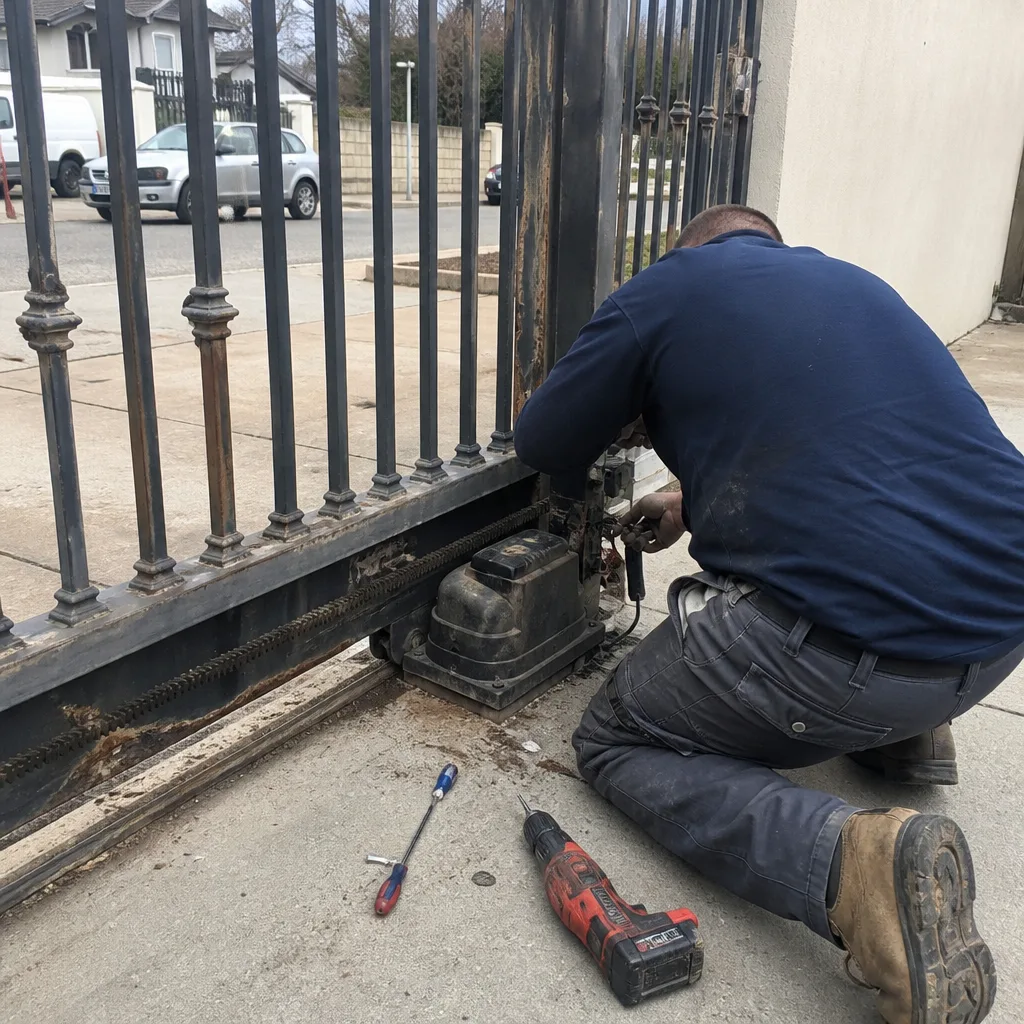 Before
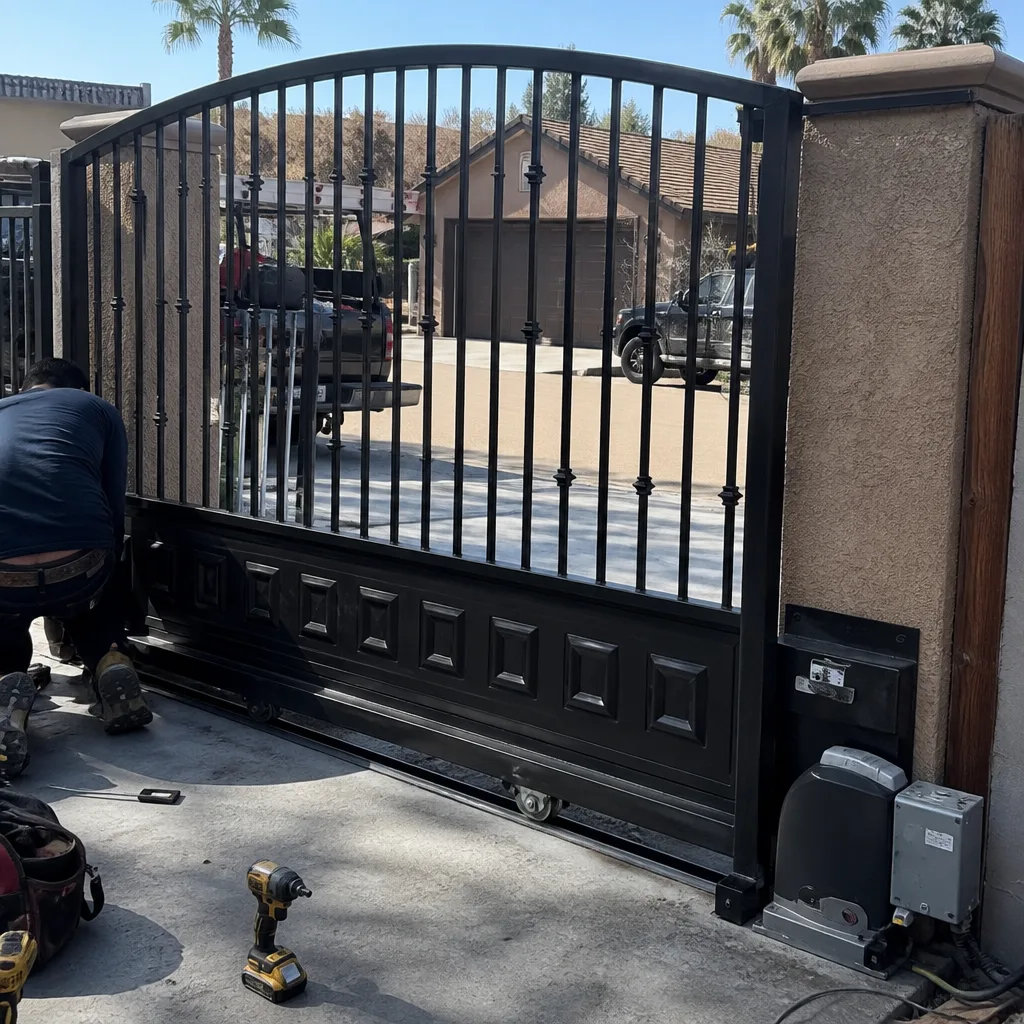 After
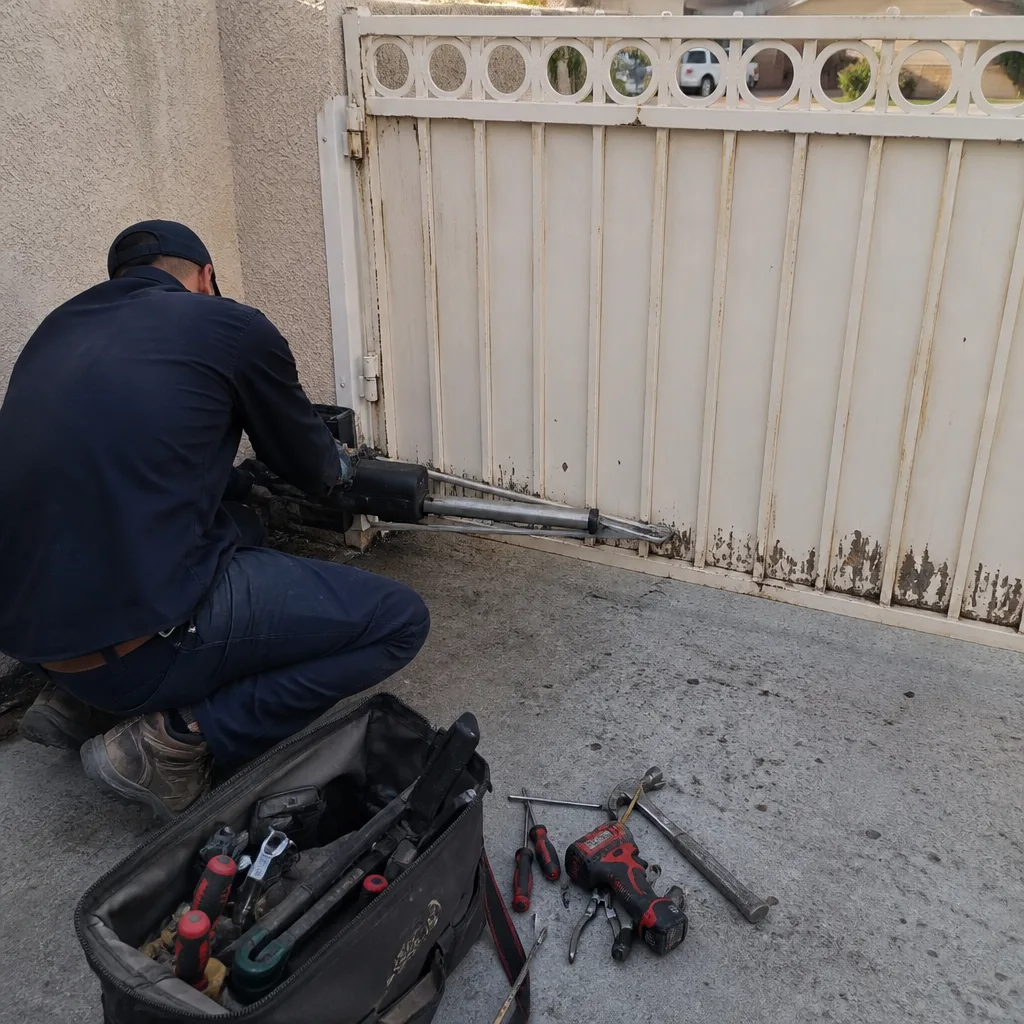 Before
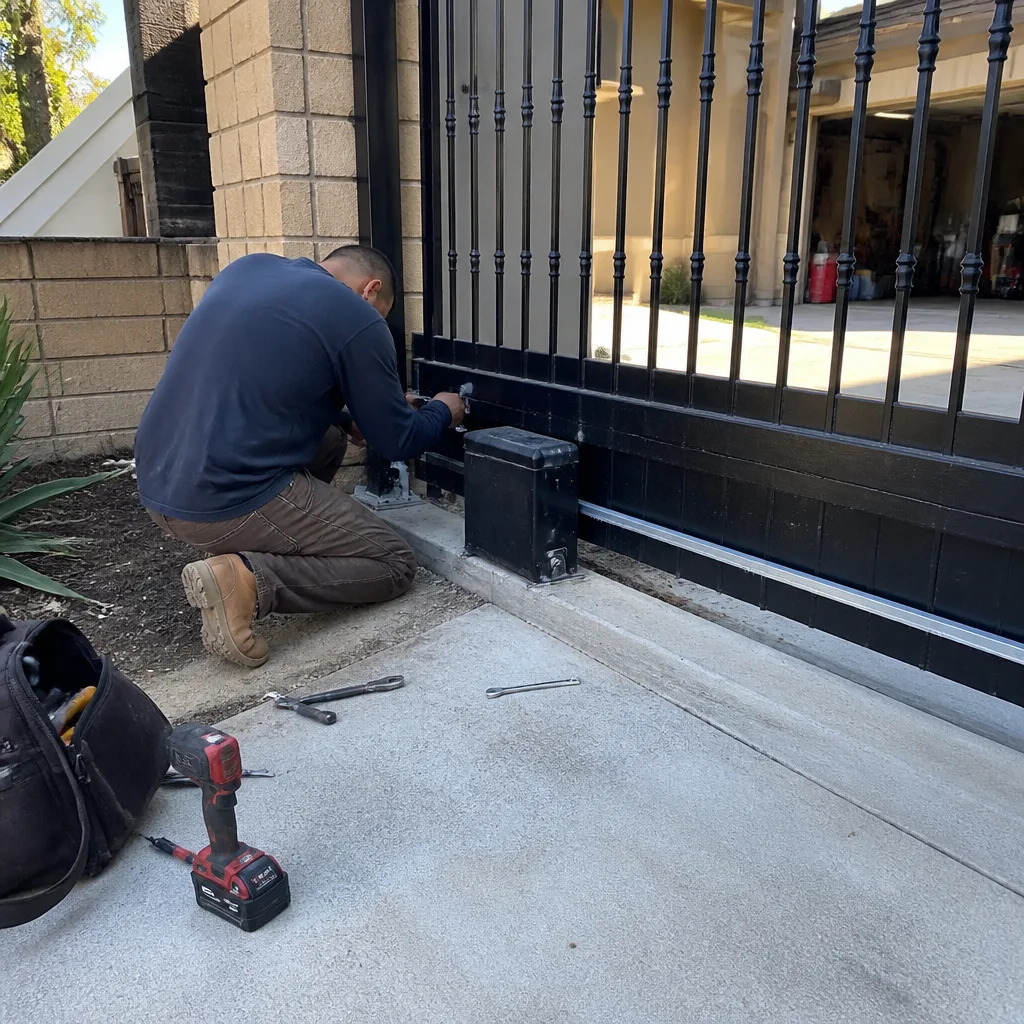 After
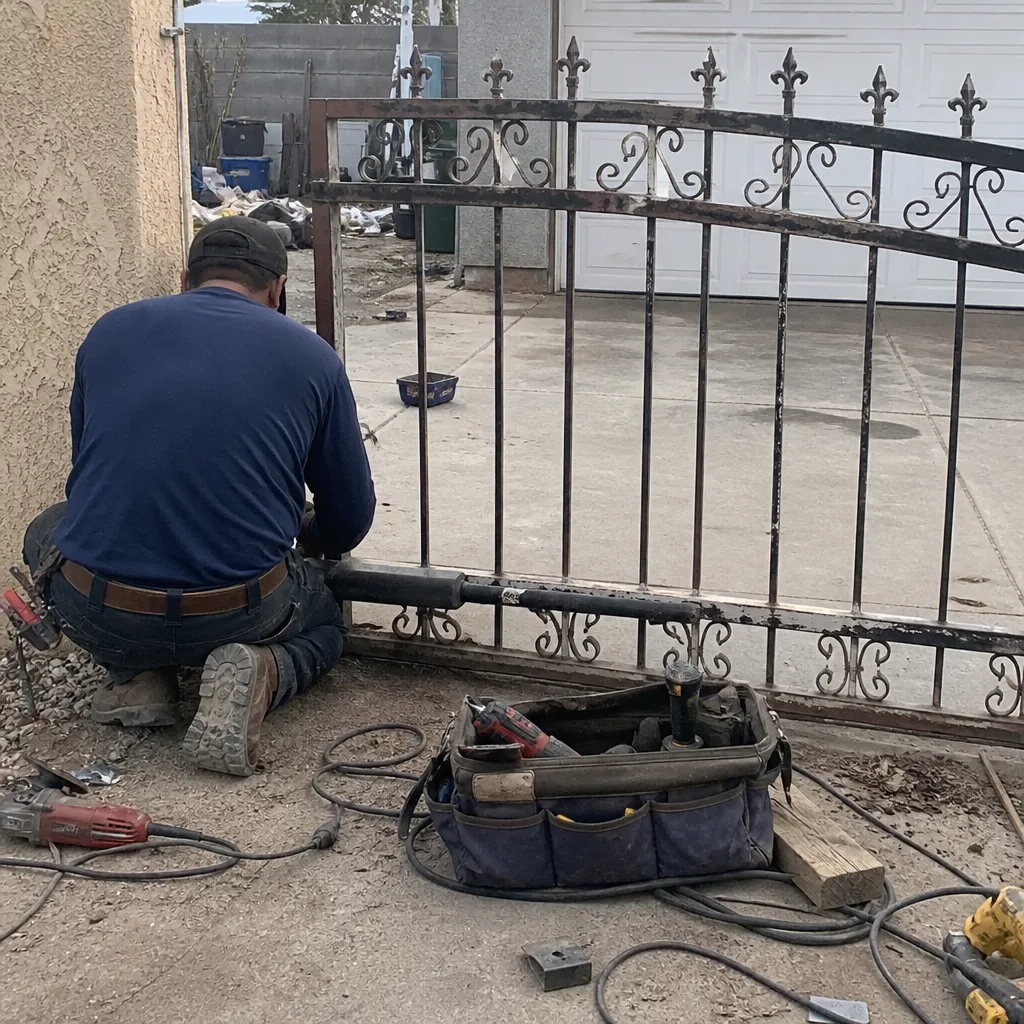 Before
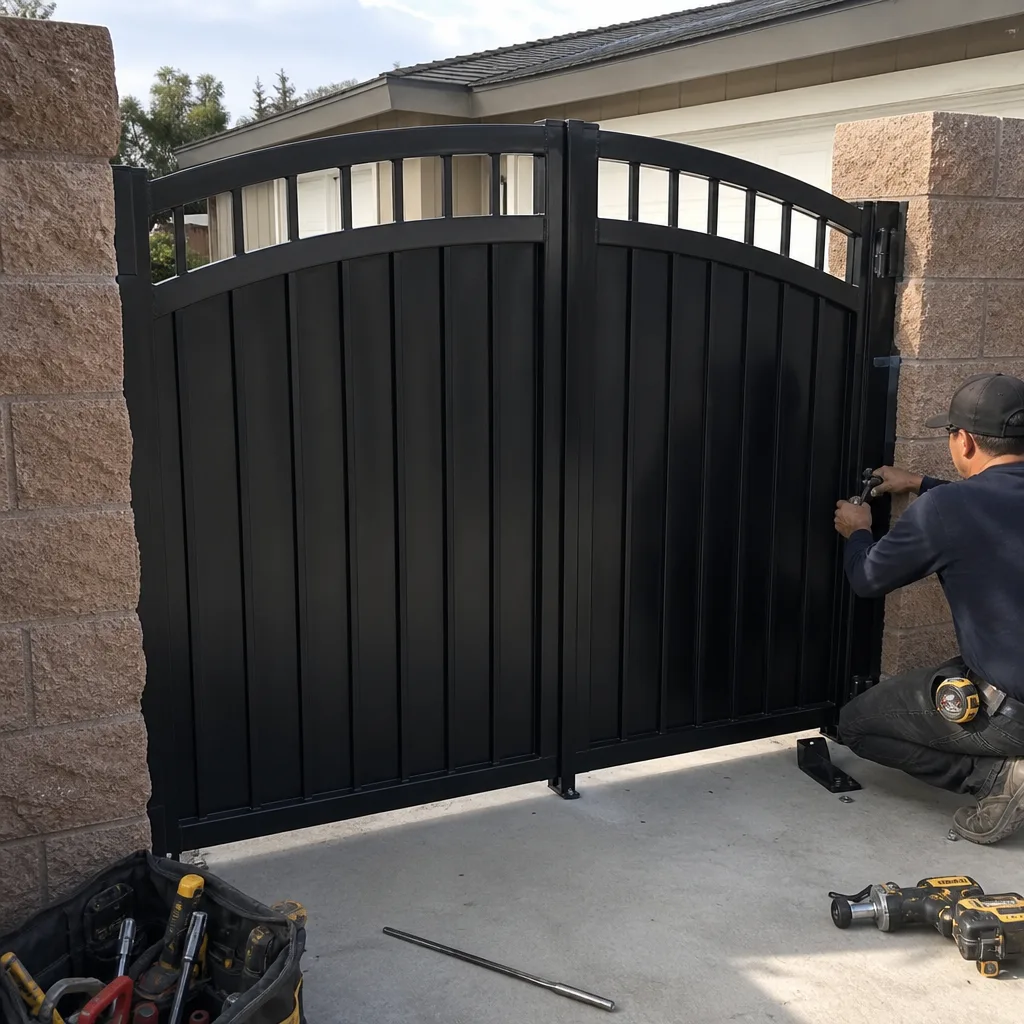 After