
Last updated November 2, 2026
 Wrought iron
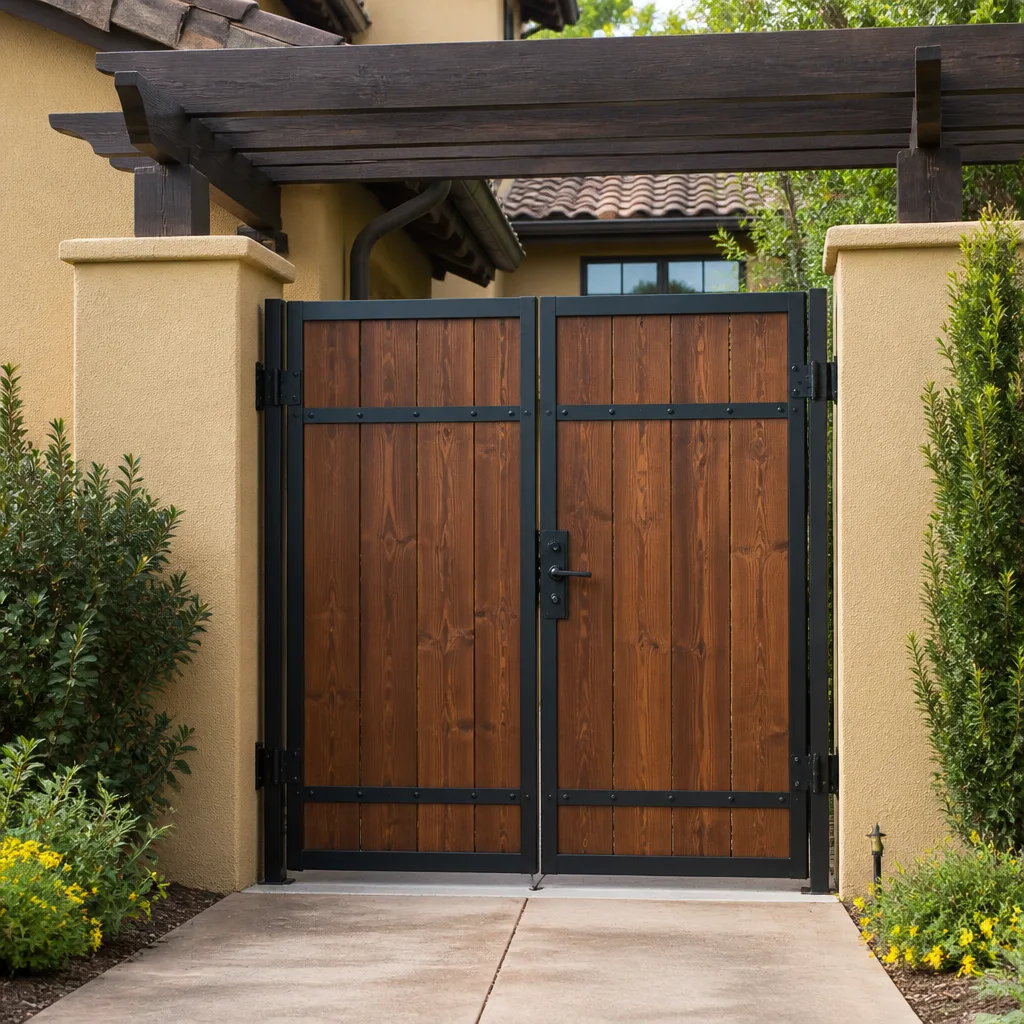 Wood & steel frame
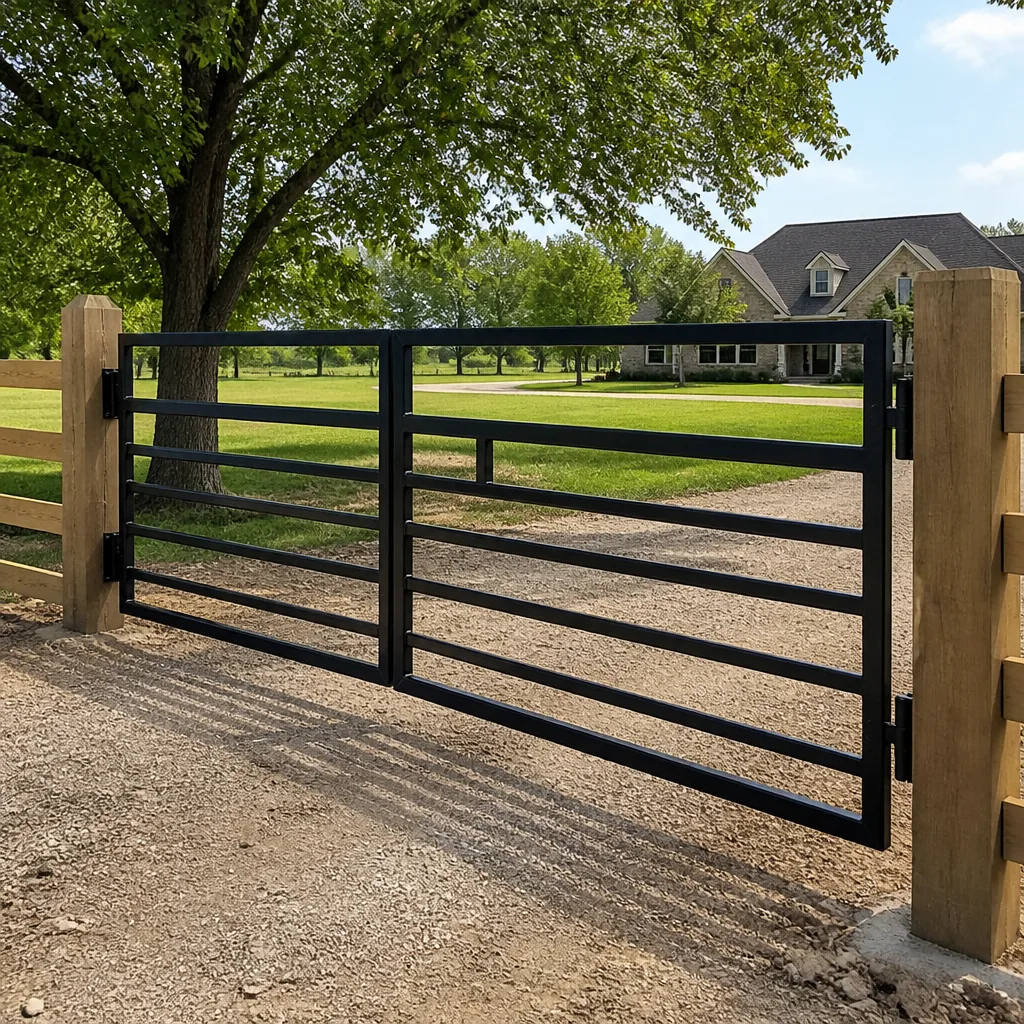 Farm & ranch
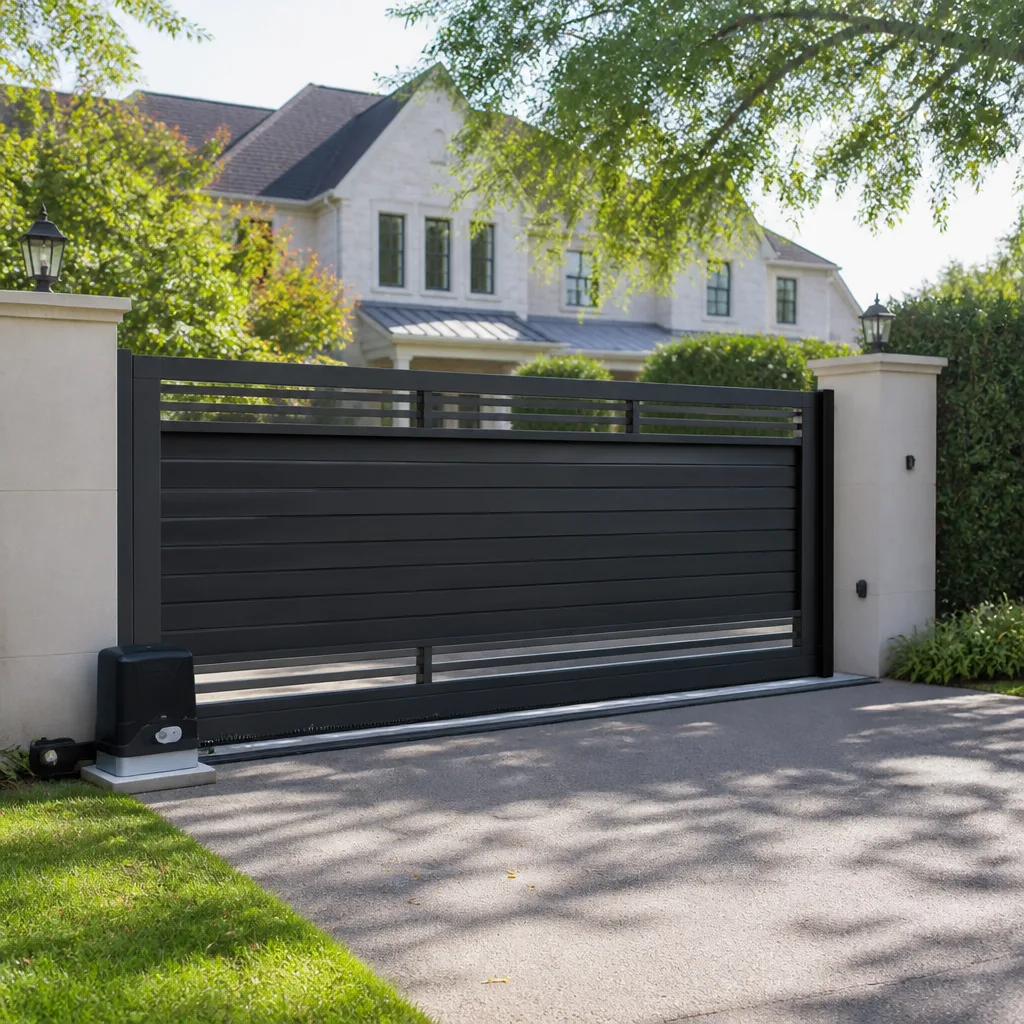 Sliding driveway gates
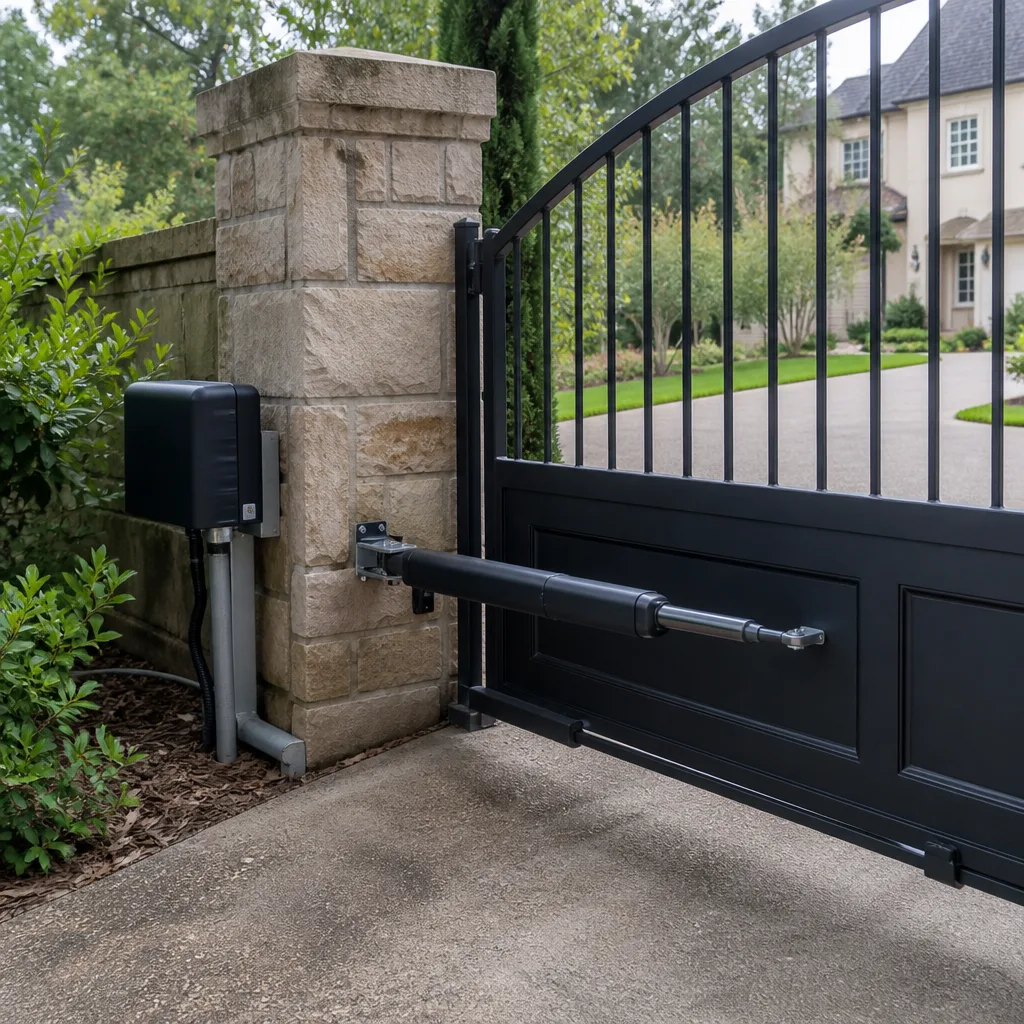 LiftMaster operators
Free on-site gate assessment - hinges, posts, and your LiftMaster or Nice gate operator checked before anything is quoted
The assessment is free and the quote is the invoice.
Get your free estimateDIY vs Professional Gate Repair: The Rialto Homeowner’s Decision Guide
Lubricating your gate hinges is DIY. Adjusting the auto-reverse force on an automated gate opener is not. In California, improperly calibrated entrapment protection on a residential gate creates personal injury liability that falls on the property owner, not the manufacturer, not the installer, and certainly not the YouTube channel that showed you how. This guide walks Rialto homeowners through exactly which gate repairs are safe to attempt, which ones carry legal or physical risk, and where spending an afternoon with a wrench actually saves money versus where it quietly adds hundreds of dollars to the eventual professional bill.
Styles & brands we work with
- Wrought iron
- Wood & steel frame
- Farm & ranch
- Sliding driveway gates
- LiftMaster operators
Quick Answer
DIY gate repair is appropriate for lubrication, tightening loose hardware, cleaning photo-eye sensors, and clearing debris from slide tracks. Professional repair is necessary for any electrical work, control board diagnosis, safety sensor calibration, weld repair, or spring and cable replacement. The dividing line is not skill; it is liability and specialized equipment. Homeowners in Rialto should attempt only the mechanical tasks that have no interaction with electricity, motors, or entrapment protection systems.
Table of Contents
- The Real Division: What Makes a Gate Repair DIY-Safe
- What a Rialto Homeowner Can Safely Do
- What Requires a Trained Gate Technician
- California Legal Context: UL 325 and Entrapment Liability
- The True Cost Comparison: When DIY Saves and When It Drains
- Tools for Legitimate Gate Maintenance
- The Middle Path: Reducing Professional Labor Costs
- Common Mistakes to Avoid
- When to Call a Professional
- Frequently Asked Questions
- The Bottom Line
The Real Division: What Makes a Gate Repair DIY-Safe
The DIY versus professional decision is not about whether you’re handy. Plenty of Rialto homeowners who rebuild engines in their garages call us for gate control board failures. The question is whether the task involves components that can injure someone if done incorrectly, or systems governed by California safety code.
Three characteristics separate a safe DIY gate task from a professional one.
First, mechanical versus electrical. Greasing a hinge, tightening a lag bolt, or straightening a sagging gate leaf is purely mechanical. The risk of getting it wrong is cosmetic or functional, not physical. But the moment a task touches wiring, a capacitor, a motor, or a control board, the risk profile changes. An electric gate opener stores enough energy to cause serious injury. In our experience in Rialto, homeowners who open a control box without understanding how to discharge the capacitor often make a small problem into a board replacement.
Second, interactive safety systems. Automatic gates in California must comply with UL 325, the safety standard governing entrapment protection. That includes photo eyes, safety edges, and the force settings on the motor. These are calibration systems, not assembly systems. A wrench does not calibrate them. They require specific testing equipment and knowledge of the acceptable force thresholds. A gate that closes with too much force on a child or pet is a liability, not a nuisance.
Third, structural integrity. Welds, gate springs, and counterbalance cables are load-bearing components. When one fails, the gate’s weight distribution changes unpredictably. A homeowner who attempts to release tension from a gate spring without the right restraint tool can be seriously injured. Rialto sees enough wind and dust accumulation that a seemingly stable gate can suddenly shift during disassembly.
Our position at Gate Repair Rialto home is simple: we’d rather see a homeowner spend twenty minutes on monthly hinge lubrication than ever attempt a spring release by themselves.
What a Rialto Homeowner Can Safely Do
These are the tasks we tell our Rialto customers to handle on their own. None of them interact with electricity, motors, or loaded springs. They require basic tools you likely already own, and none of them carry entrapment liability.
Lubrication. Gate hinges, rollers, and slide tracks need lubrication every three to six months in Rialto’s dry, dusty climate. Use a silicone-based or lithium grease spray. Apply it to the hinge pins, the top of roller tracks, and any moving pivot points. Wipe away excess. This single habit prevents more gate problems in Rialto than any other maintenance task, because the fine dust that blows through the area mixes with old grease to form an abrasive paste that accelerates metal wear.
Tightening loose hardware. Gate hinges, latch plates, and post brackets vibrate loose over time. A socket set and fifteen minutes every season will catch most issues before they become structural. Pay attention to the top hinge on swing gates; it takes the most lateral load. If you find a bolt that will not stay tight, that is a sign the hole has wallowed out, which requires a professional repair, not a larger bolt.
Cleaning photo-eye sensors. The small lenses at the base of an automatic gate get filmed with dust and spider webs in Rialto’s dry months. Wipe them with a soft dry cloth. Do not use water or glass cleaner, which can leave conductive residue. If the gate will not close after cleaning, do not attempt to bypass the sensor. That is the point to call us.
Clearing slide gate tracks. Gravel, leaves, and wind-blown debris collect in V-track and box-track slide systems. Remove the debris with a brush or a stick. Never use a pressure washer on a track that contains rollers with sealed bearings.
Visual stock inspection. Walk the full length of your gate monthly. Look for rust at weld points, sag at the latch side, and any change in how the gate sits on its hinges. You are not fixing anything; you are gathering information that tells you when to call a professional before a small issue becomes a structural failure. For more on what our standard service includes, see Gate Repair in Rialto.
What Requires a Trained Gate Technician
These tasks should be handled by a gate specialist only. Attempting them without the right training, tools, and testing equipment creates injury risk or legal liability, or both.
Anything involving wiring, motors, or control boards. Electric gate systems run on AC or DC power and include capacitors that hold a charge even after the breaker is off. Diagnosis requires a multimeter and knowledge of the specific board’s voltage points. Gate brands differ significantly in their control logic. A technician certified on DoorKing boards knows exactly what the flashing LED sequences mean; a homeowner with a general YouTube tutorial is guessing. Our electric gate repair service in Rialto handles the full electrical side, from board replacement to motor swaps. See Electric Gate Repair in Rialto for specifics.
Safety sensor and force calibration. Photo-eye alignment and auto-reverse force settings are not “set and forget” adjustments. UL 325 specifies maximum closing force, and the test equipment used to verify that force is not something most Rialto homeowners own. A gate that closes too hard on a small child is a devastating liability. Do not adjust force dials without understanding the entrapment implications.
Weld repair. Gate frames crack at stress points over time, especially swing gates exposed to Rialto’s high daytime heat and cooler nights. Repairing a cracked weld requires a welder with enough amperage for the gate’s metal gauge, proper surface preparation, and often reinforcement plating. A homeowner with a 110-volt flux-core welder from a big-box store may lay a bead, but the result is often a weaker joint than the original. We have repaired DIY welds in Rialto that failed within months and required cutting the bad bead out completely before a proper repair was possible.
Gate spring and counterbalance cable replacement. Sections of a swing gate act as a lever arm. The spring or cable holds stored tension. Releasing that tension incorrectly is one of the few gate repair scenarios that can genuinely injure someone. Never cut a cable or pry a spring without the proper winding and restraint tools, and the experience to use them safely.
Motor and operator replacement. Replacing a gate operator involves the electrical work above plus mechanical mounting, limit switch setting, safety edge installation, and entraptment testing. The operator must be compatible with the gate’s weight, length, and duty cycle. Ghost Controls and Mighty Mule make popular residential operators, but each has specific installation requirements that a general overview cannot capture.
California Legal Context: UL 325 and Entrapment Liability
California has adopted UL 325 as the governing safety standard for automatic gates. The standard exists because automatic gates have killed and injured people, primarily children. The liability chain in a gate entrapment incident typically lands on the property owner, not the gate manufacturer, because the owner is responsible for maintaining the system in a compliant condition.
Here is what that means for the DIY decision.
A homeowner who adjusts the closing force on an automatic gate is now personally responsible for whether that setting meets the UL 325 force threshold. If a child is injured by a gate closing with excessive force, and an inspection finds the force setting was altered by an unqualified person without proper testing, the homeowner faces serious civil liability. Homeowners in Rialto sometimes tell us they “just turned the dial a little” to make the gate close faster. That dial adjustment is precisely the adjustment that the standard regulates.
Photo-eye sensors are another UL 325 requirement. The standard requires that a gate reverse or stop when an object interrupts the beam. A homeowner who disconnects a malfunctioning photo eye to keep the gate operational has created an immediate entrapment hazard. If that gate closes on a person or pet, the homeowner’s action, not the failed sensor, becomes the central fact in any injury claim.
Professional gate technicians carry the testing equipment needed to verify force, timing, and sensor response to the standard. That testing is not a luxury; it is the difference between a gate that functions and a gate that is legally defensible.
Rialto’s specific climate adds one more consideration. High heat and UV exposure degrade wiring insulation and plastic sensor housings faster than coastal California climates. Components that look fine visually may be brittle or internally compromised. A trained technician knows what degraded insulation looks like in this climate and where to inspect for it. A homeowner doing a visual check does not know what they are not seeing.
The True Cost Comparison: When DIY Saves and When It Drains
The honest answer: DIY saves money on maintenance and small adjustments. It costs money, often significantly, on repairs and electrical work.
Where DIY saves. Door lube costs about eight to fifteen dollars per can. A professional lubrication service call runs $85 to $150 in the Rialto market. If you lubricate quarterly, you save roughly $300 to $500 annually. Tightening bolts and cleaning photo eyes costs nothing but time. Keeping the slide track clear costs nothing. These are real savings for tasks that take minutes.
Where DIY breaks even. Minor hinge replacement on a lightweight pedestrian gate can be a reasonable DIY task if you have the right measurements and a drill. Hinges cost $20 to $60. Professional replacement runs $150 to $300 in Rialto. The savings are real, but so is the time cost, and an incorrectly hung hinge that causes the gate to drag accelerates wear on everything else.
Where DIY costs more. This is the category most guides do not discuss. A gate control board that is misdiagnosed and replaced unnecessarily costs $250 to $500 for the board alone, more if the real problem was a wiring fault. A force dial adjusted too high leads to a motor that burns out prematurely, a $300 to $700 replacement. A DIY weld that fails within months means paying to cut out the bad weld and do it properly, often costing 30 to 50 percent more than a clean professional repair of the original crack. A stripped capacitor discharge that shorts a board turns a $150 repair into a $600 replacement.
In our experience across Rialto, the most expensive calls are the ones that follow a failed DIY attempt. The collateral damage is rarely just monetary, either. A gate left partially functional after a DIY attempt is a gate that may fall, jam, or close improperly while waiting for a professional to arrive.
Tools for Legitimate Gate Maintenance
A properly equipped Rialto homeowner can perform all of the safe maintenance tasks listed above with a modest tool kit. Here is what you actually need, and what improvised alternatives will cause damage.
- Silicone spray or lithium grease. Use a product specifically labeled for metal moving parts. Do not use WD-40 as a hinge lubricant. It is a solvent and water displacer, not a long-term lubricant, and in Rialto’s dust it leaves hinges dry and squeaking within weeks.
- Socket set with metric and SAE sizes. Gate hardware on different brands uses different standards. A set that covers both prevents rounding off bolt heads. DoorKing and Elite hardware typically uses SAE; many imported components use metric.
- Torque wrench. Optional but useful for tightening hinge bolts to specification without over-torquing. Over-tightened hinge bolts crack welds and stress the gate frame.
- Soft brush and dry cloth. For cleaning sensors and clearing slide tracks. Never use a metal scraper on a sensor lens; it will score the plastic and permanently degrade the sensor’s beam.
- Spirit level. For checking whether a gate has drifted out of level between service calls. A visibly leaning gate is a sign of hinge wear or post movement.
- Work gloves and safety glasses. Basic protection. Gate edges are sharp, and Rialto’s sun-cracked metal can leave burrs that cut through thin work gloves.
What you should not improvise: a multimeter for testing electrical components if you do not know how to read voltage versus continuity on a control board. A car jack used to lift a sagging gate. A grinder used to notch a gate frame for clearance. We see the results of these improvised tools in Rialto regularly, and the repair cost always exceeds the tool cost the homeowner was trying to avoid.
The Middle Path: Reducing Professional Labor Costs
There is a third option between full DIY and writing a blank check. Homeowners in Rialto can do prep work that reduces the time a professional spends on site, which directly lowers the labor portion of the bill.
Documentation. Before calling us, note the gate brand and model if visible, the operator brand, any error codes or blinking light patterns on the control board, and exactly when the problem started. A technician who arrives with the right parts and a clear diagnostic direction spends less time troubleshooting. We see this pay off regularly with Ghost Controls and Mighty Mule systems, where error code interpretation differs significantly from DoorKing or Elite boards.
Cleaning and clearing access. Remove vegetation and debris around the gate, the operator arm, and the control box before the technician arrives. Time spent waiting for a homeowner to clear a path is billable time. Clear access also lets the technician see the full situation immediately.
Part sourcing. If you know your gate brand and model, you can research which replacement parts are needed and have them on hand. Be cautious here: buying the wrong part because an online listing looked right is common. Confirm with the technician before purchasing. The right part saves a second visit; the wrong part wastes the purchase price and often delays the repair.
Knowing your gate’s history. Has this gate been repaired before? Was the operator replaced at some point? Has the gate been hit by a vehicle? The answers to these questions give a technician valuable diagnostic information. Homeowners who keep a simple maintenance log help us resolve problems faster.
For Rialto homeowners planning to replace rather than repair, the prep work is similar. Measure the gate opening accurately, identify what you want in a replacement, and review our Gate Installation in Rialto page to understand the process. A homeowner who arrives at the first conversation with measurements and a clear wishlist moves through the quoting process much faster.
Common Mistakes to Avoid
- Using WD-40 as a gate lubricant. It is a solvent that strips existing lubrication and evaporates, leaving metal surfaces dry. In Rialto’s dusty climate, a WD-40-lubed hinge squeaks again within a week and wears faster than an unlubricated one.
- Disconnecting a photo-eye sensor to keep the gate operational. This is the single most dangerous thing we see Rialto homeowners do. A disconnected sensor means the gate will close on whatever is in its path. The liability exposure is immediate and severe.
- Turning the force adjustment dial without testing equipment. Higher force makes the gate close faster and harder. It also makes the gate dangerous. Without a force gauge, there is no way to know if the new setting violates UL 325 thresholds.
- Attempting a weld repair with an underpowered welder. Gate frames are structural steel, not sheet metal. A low-amperage bead may look solid but fails under the cyclical load of daily opening and closing, often within months.
- Replacing a control board before diagnosing the actual fault. Boards fail, but so do wiring connections, limit switches, and motors. Replacing the most expensive component first without diagnosis is the most costly mistake a DIY electric gate repair can make.
- Buying the cheapest replacement part available. Gate hardware spans quality ranges, and the low end fails quickly. A knockoff hinge that costs half as much and fails in a year means paying for labor twice. Brand-specific parts for DoorKing, Elite, and other systems exist for a reason.
- Ignoring a gate that has started sagging or dragging. A gate that slightly drags on one side is sending a clear signal that hinge wear or post movement is underway. Waiting until the gate fails completely turns a $200 hinge replacement into a $1,200 rebuild.
When to Call a Professional
Call a professional gate technician when the problem involves wiring, a motor, a control board, a safety sensor, a loaded spring, a cable, or a structural weld. Also call when you have already tried the safe DIY tasks and the gate still is not working correctly, because repeated unsuccessful attempts mean you are now diagnosing a problem that may be deeper than the initial symptom. And call immediately if your gate has struck a person or pet, or if you see exposed wiring, scorching, or any sign of electrical arcing. If your gate will not open or close and you are in Rialto, Gate Repair in Rialto starts with a conversation.
Gate Repair Rialto offers free estimates in Rialto. Call (866) 569-6584 to describe what your gate is doing, and we will tell you honestly whether it is a maintenance task you can handle or a repair that needs a technician.
Frequently Asked Questions
Professional gate repair in Rialto typically ranges from $150 to $350 for common mechanical repairs such as hinge replacement, latch adjustment, and track realignment. Electric gate repairs involving control boards, sensors, or motors typically run $300 to $800 depending on the component and the gate brand involved. Structural repairs such as weld cracks and gate frame realignment range from $250 to $900. The exact price depends on the gate type, weight, brand, and the specific failure. Call (866) 569-6584 for a free estimate and an exact quote before any work is agreed upon.
You can perform basic maintenance on an electric gate, such as cleaning the photo-eye sensors and clearing debris from the slide track, but you should not attempt any repair that involves wiring, control boards, motors, or safety sensor calibration. Electric gate systems carry stored energy in capacitors, and safety systems are regulated under California’s adoption of UL 325. Improper repairs create injury risk and personal liability. For electric gate issues, call a trained technician.
The most common gate problem we see in Rialto is hinge and track wear accelerated by the region’s fine dust and wide temperature swings. Dust mixes with old grease to form an abrasive compound that accelerates wear at moving points. This is why quarterly lubrication is the highest-value maintenance task for Rialto homeowners with any gate type.
Gate openers in Rialto typically last 8 to 12 years when properly maintained, though extreme summer heat combined with heavy use can shorten that lifespan to 5 to 7 years. Motors, control boards, and capacitors all degrade faster with sustained high temperatures. Brand matters too; better-built operators from Ghost Controls and Elite tend to last longer in Rialto’s climate than economy options.
Repairing an existing gate does not require a permit in Rialto, but replacing a gate or installing a new automatic system may require one depending on the gate’s size, location, and whether it includes new electrical work. It is best to verify with the city before starting any project. A professional gate company that does Gate Installation in Rialto will handle the permitting question as part of the process.
If your gate will not close, first check for obvious obstructions in the track or at the gate’s path, and wipe the photo-eye sensor lenses with a dry cloth. If the gate still will not close, do not bypass any sensors or force settings. This indicates an electrical or sensor fault that requires diagnosis with proper testing equipment. Call (866) 569-6584 for a free estimate.
The Bottom Line
The DIY versus professional decision comes down to one question: does this task touch electricity, a motor, a safety system, or a structural component? If the answer is no, handle it yourself with the right tools and materials. If the answer is yes, the risk of injury, liability, or a botched repair that costs more than the original problem is too high. Rialto homeowners who stick to lubrication, tightening, cleaning, and observation will catch most problems early and save money. For everything else, a gate specialist with brand-specific knowledge is the less expensive option in the long run.
Written by the team at Gate Repair Rialto, serving Rialto since 2013.
See the difference
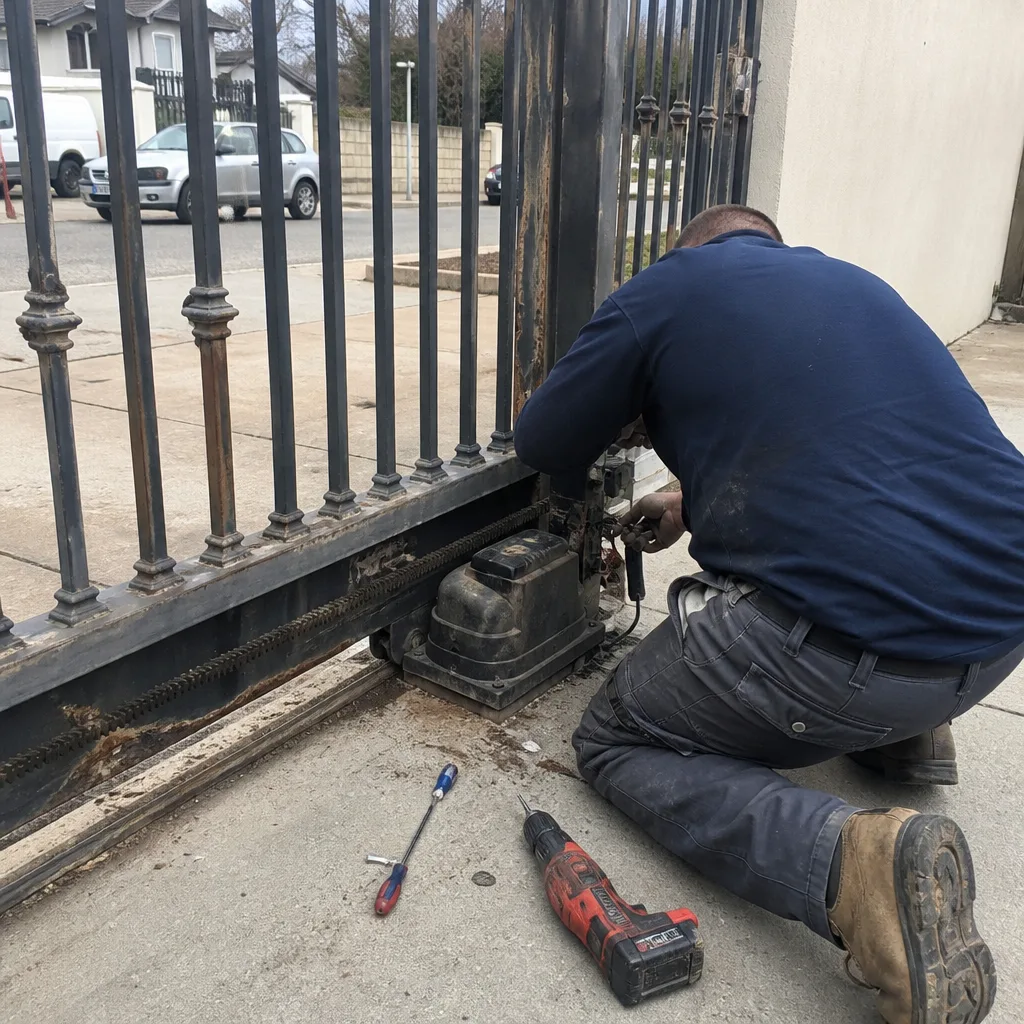 Before
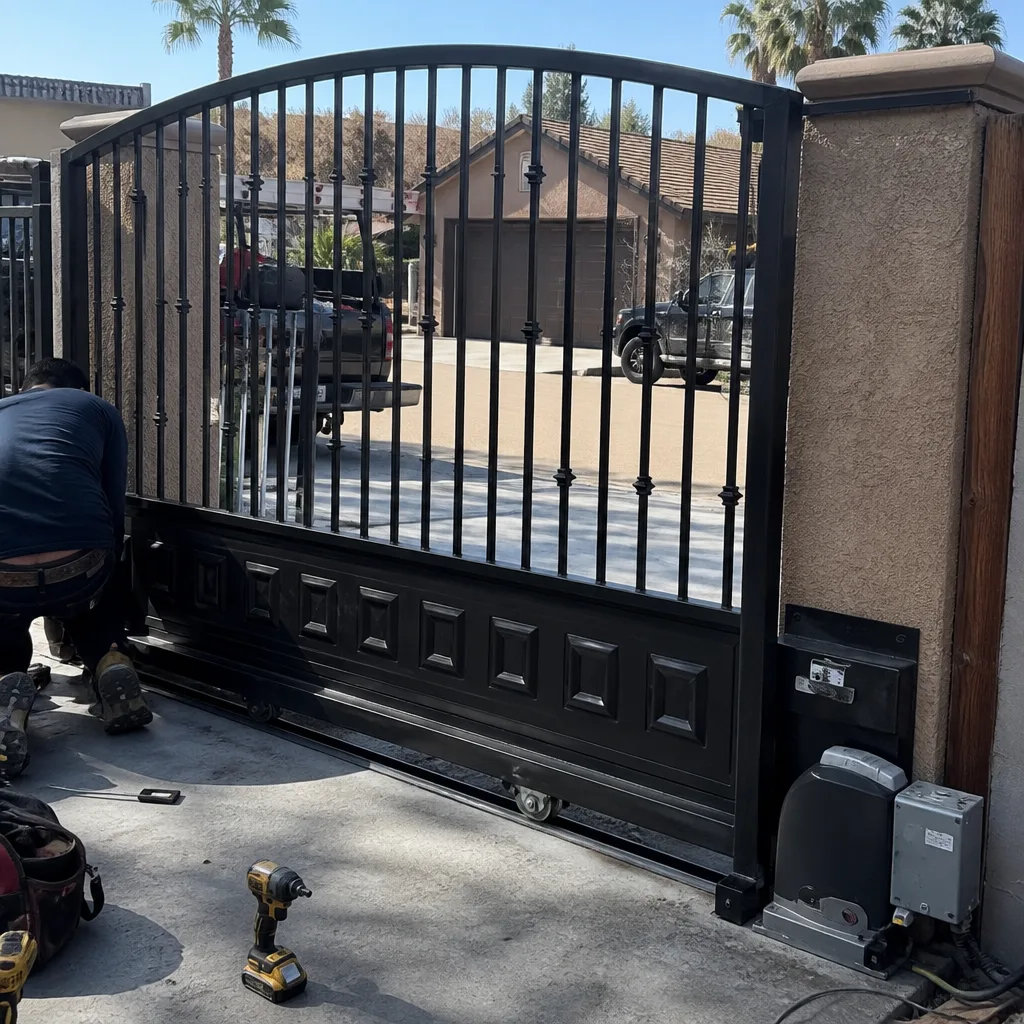 After
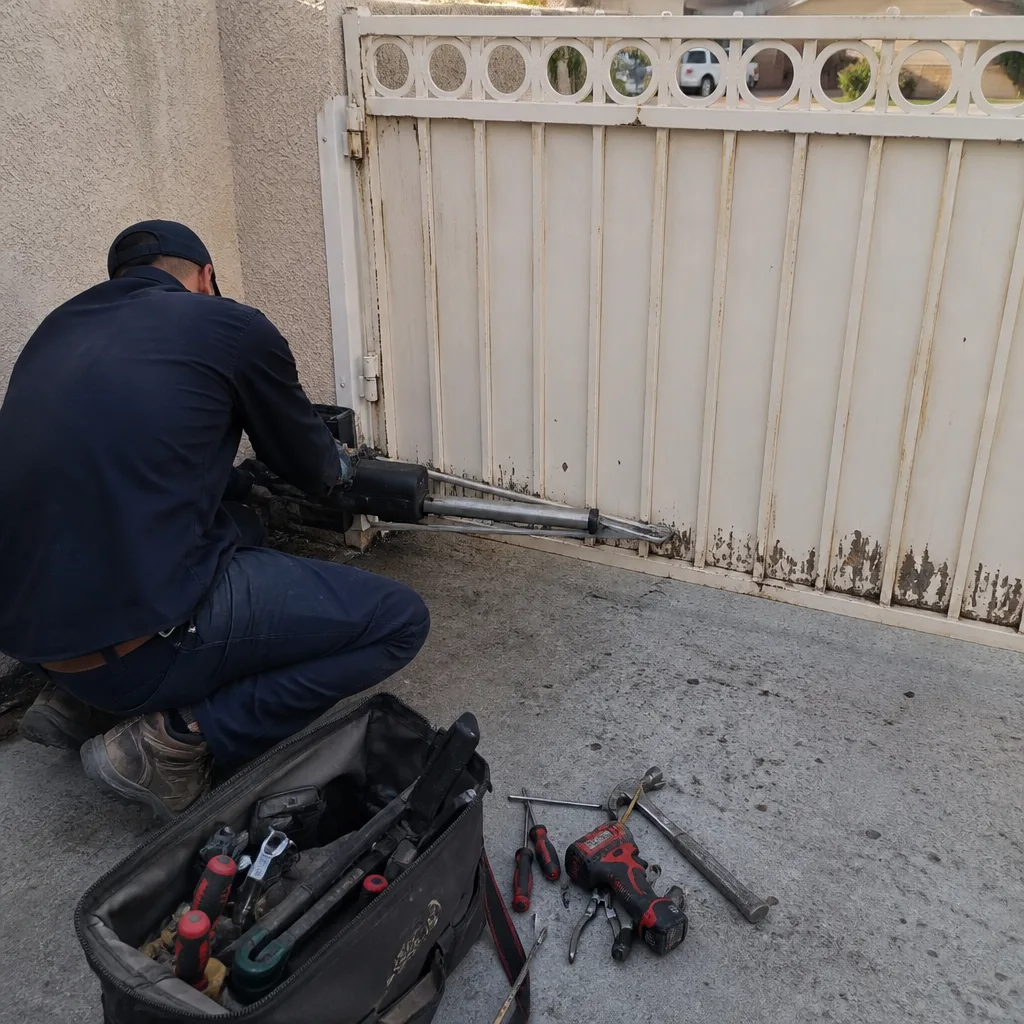 Before
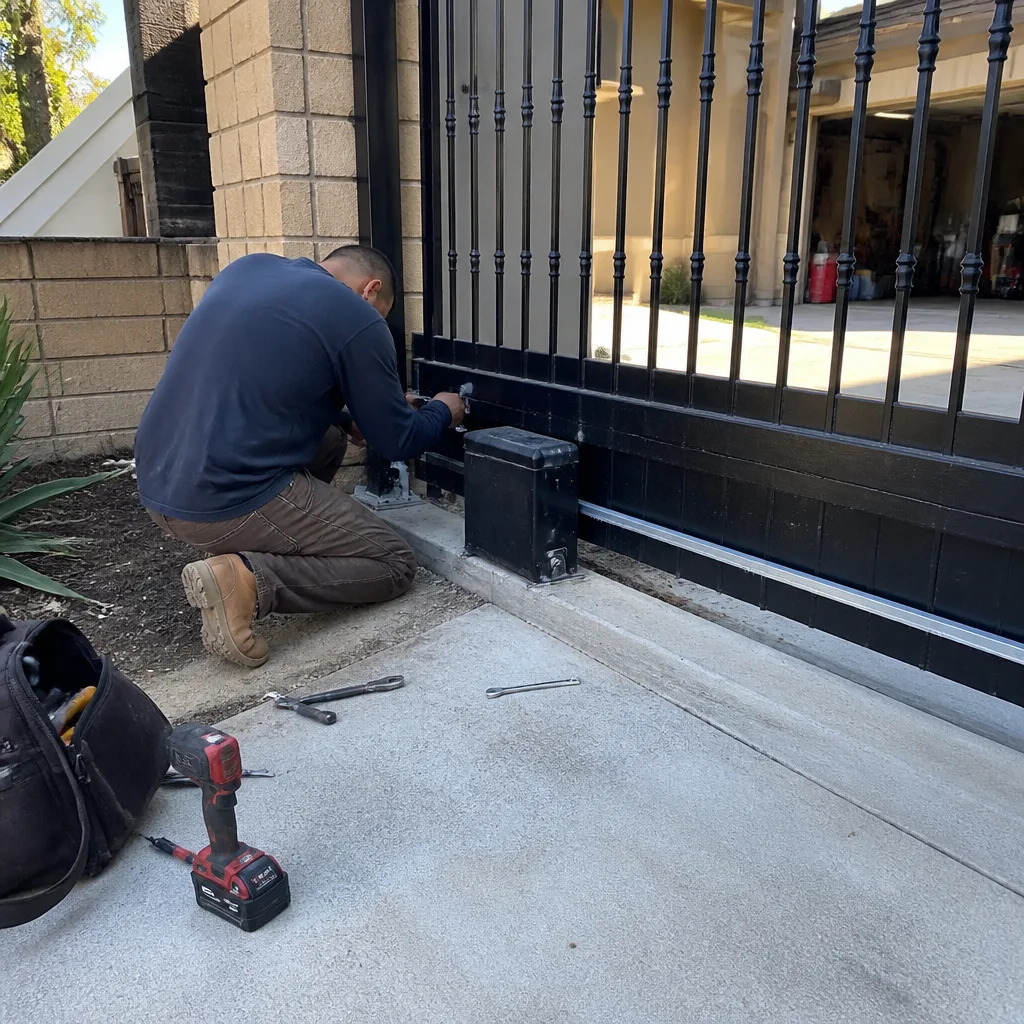 After
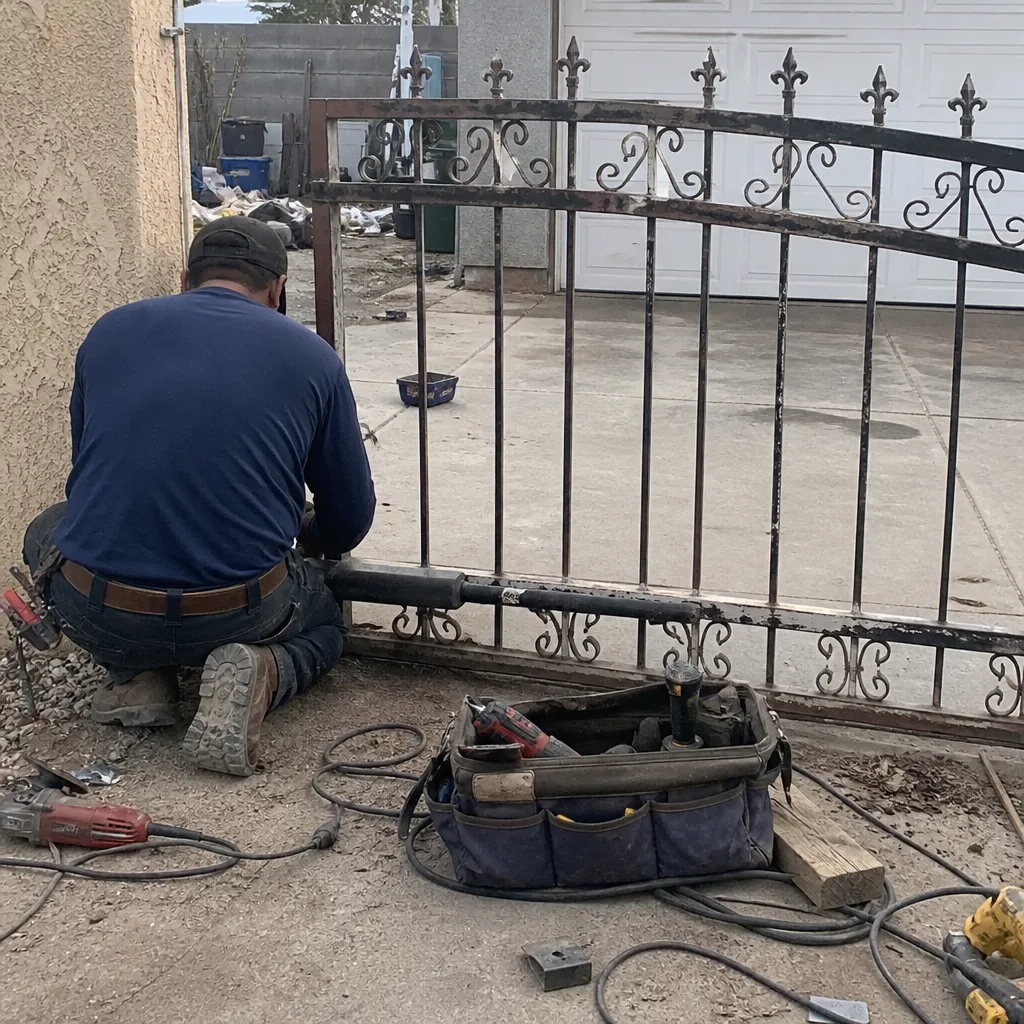 Before
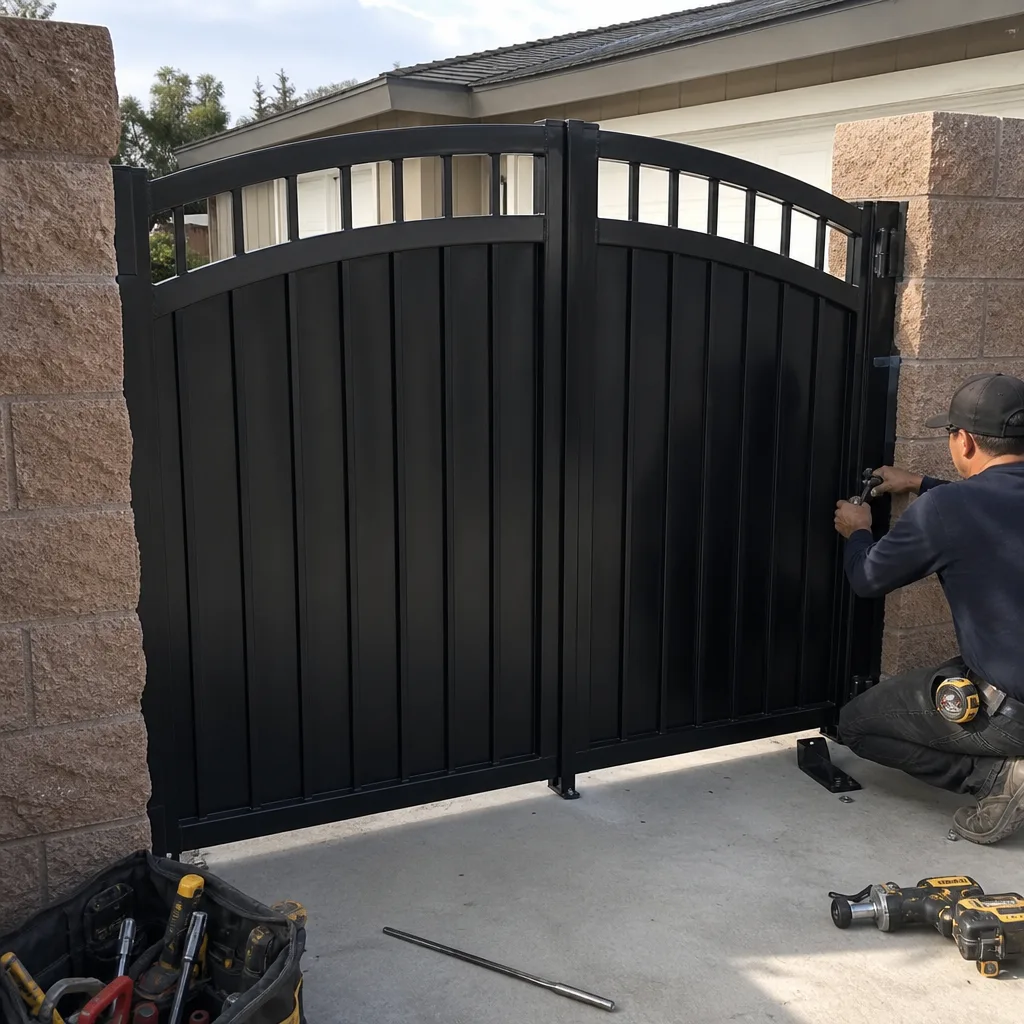 After